
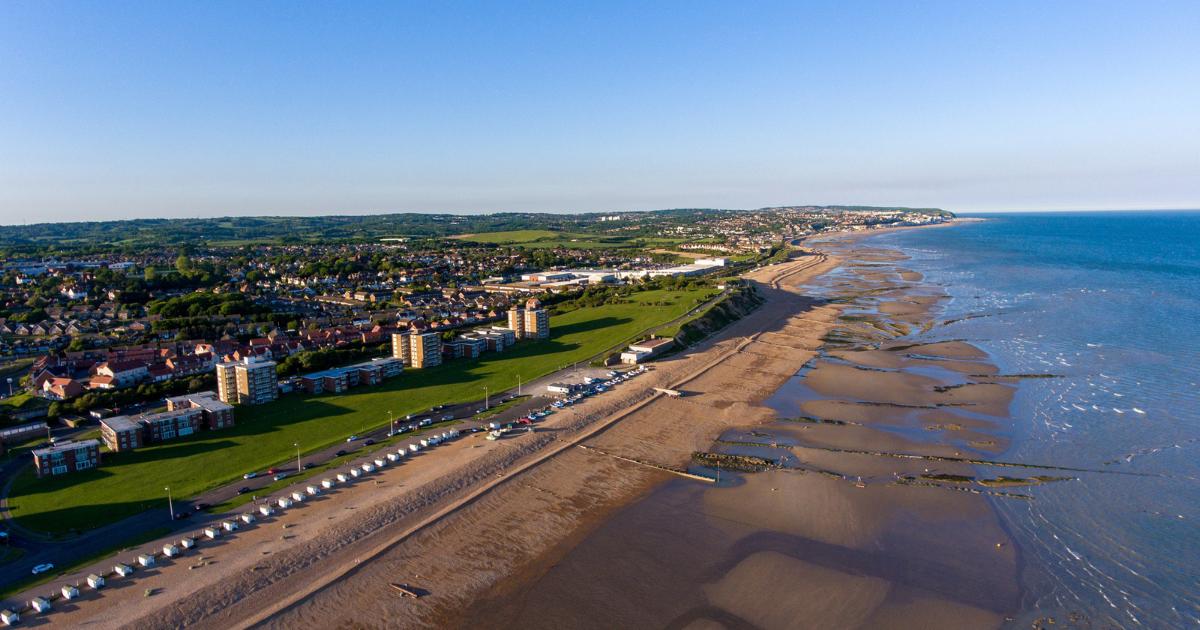
Cordelia Slaughter, a passionate beachcomber from Bexhill, was walking along Galley Hill on Saturday morning (December 6) when she spotted the skull “high up” on the beach.
“It wasn’t until I got really close that I suddenly realised what it was,” she said.
The skull of what looks to have been a dolphin or porpoise was found by Galley Hill (Image: Cordelia Slaughter)
“It was covered in the remains of its flesh.
“My thought was, I need to get this off the beach in case dog walkers come along with dogs off the lead – before they know it their dog will be eating the rotting flesh off this.”
With difficulty, Cordelia heaved the large skull into a bag and handed it in to a local coastal officer.
“I struggled because it was so heavy,” she said.
Cordelia says the skull is “one of the most unusual things I have found”. Although she has found several dead mammals on the beach over the years, including seals, she has never found a head on its own.
She has speculated that the creature, which looks either to have been a dolphin or porpoise, may have been decapitated by a boat.
The beachcomber has also reported her find to the Sussex Dolphin Project.
Cordelia began beachcombing during the pandemic.
“At the time of covid when we could only go to open spaces, I would take myself down to the beach,” she said.
“I thought, ‘this is pretty boring’. Then I started noticing the amount of rubbish, so I decided to make some use of my walks by picking things up and it became an obsession.
“I started taking things home and putting them it into categories and photographing them.
“This time of year is most exciting. The full moon and heavy seas mean that more unusual things wash up and when it has been raining, a lot more washes up.”
Cordelia on the beach (Image: Supplied)
Sometimes Cordelia finds items which seem to have entered the sea during container spills.
She has found a number of Lidl water bottles which came from a 2022 cargo spill as well as finding several paint rollers – which she thinks must also have come from a cargo spill.
She once found three containers of soda lime, used by divers in rebreathers to absorb exhaled carbon dioxide.
After contacting the Essex-based manufacturers, the company used the containers’ lot numbers to track down the divers they had supplied the soda lime to and request that they stop disposing of the products in the sea.
She volunteers for Strandliners, a Sussex-based voluntary organisation which surveys beaches for plastic pollution and records the data for organisations.
She was the one of the first people to identify and photograph the millions of plastic bio-beads which washed up on Camber Beach in November.
She has even been asked by the Environment Agency to be an expert witness in their investigation into the incident.
“I love it – the dirtier the beach, the more to find,” she said. “When I’m on a beach I’m like a child let out in a sweet shop.”