
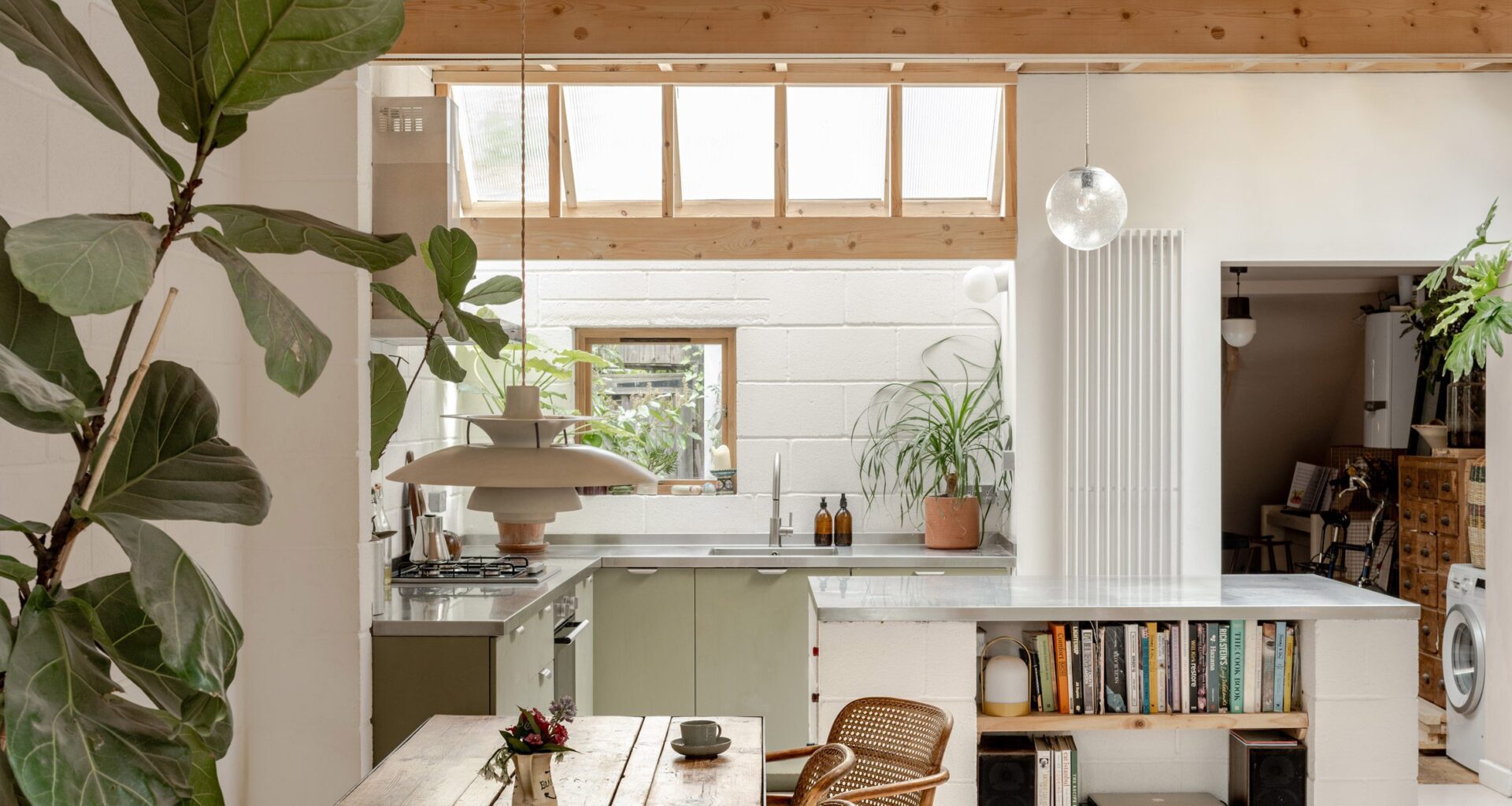
Instead of the typical L-shaped extension, OEB Architects added a “full-width shed” in this rework of a family home in north London.
A Simple Addition, as it’s named, adds a generous new kitchen and dining room to the rear of the semi-detached, two-storey Tottenham home.
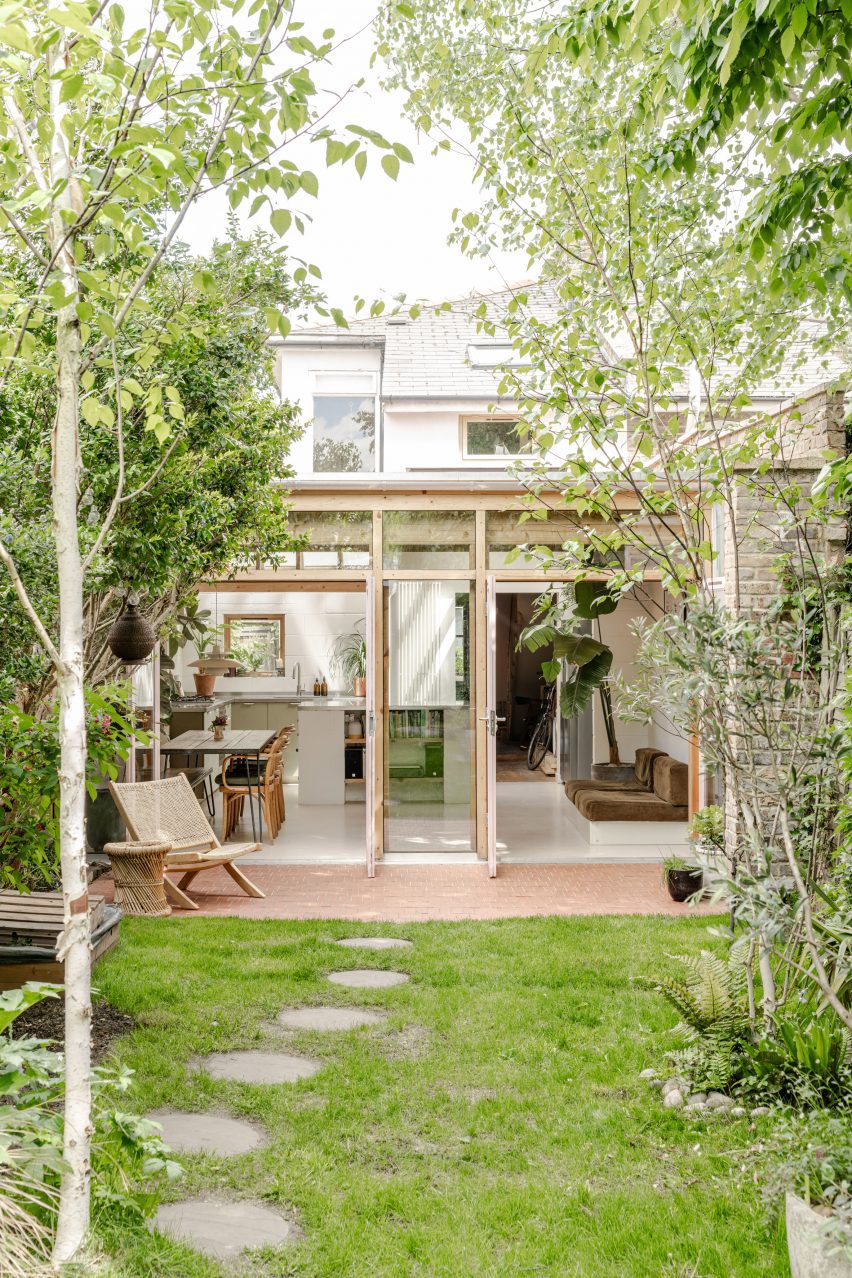 The project added a new kitchen and dining room at the rear of the two-storey house
Built from simple, low-cost materials, the 30-square-metre extension offers an alternative to the wraparound extensions that are commonly added to London’s Victorian terraces.
OEB Architects instead designed an extension that is wider than the original house, realising that this was the best way to give the clients and their two young children the space they needed.
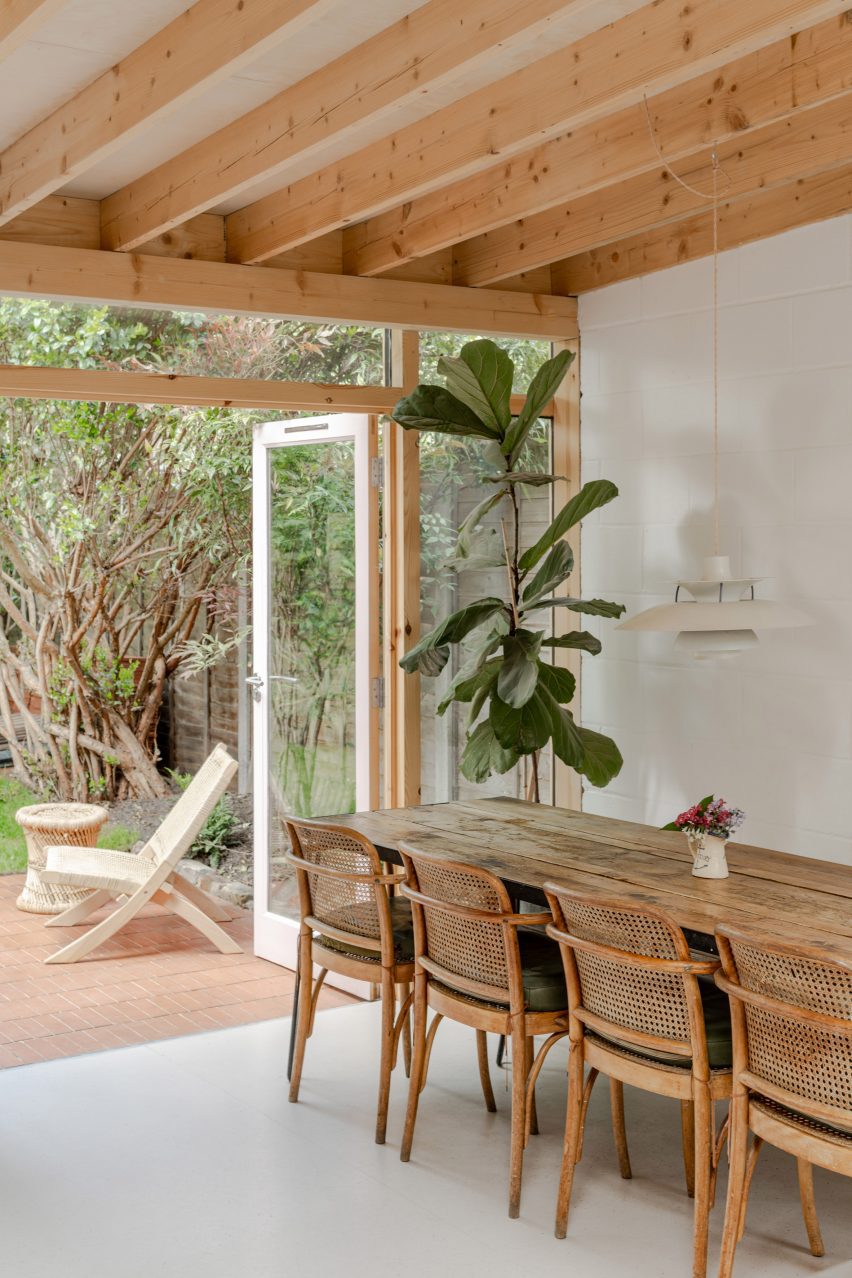
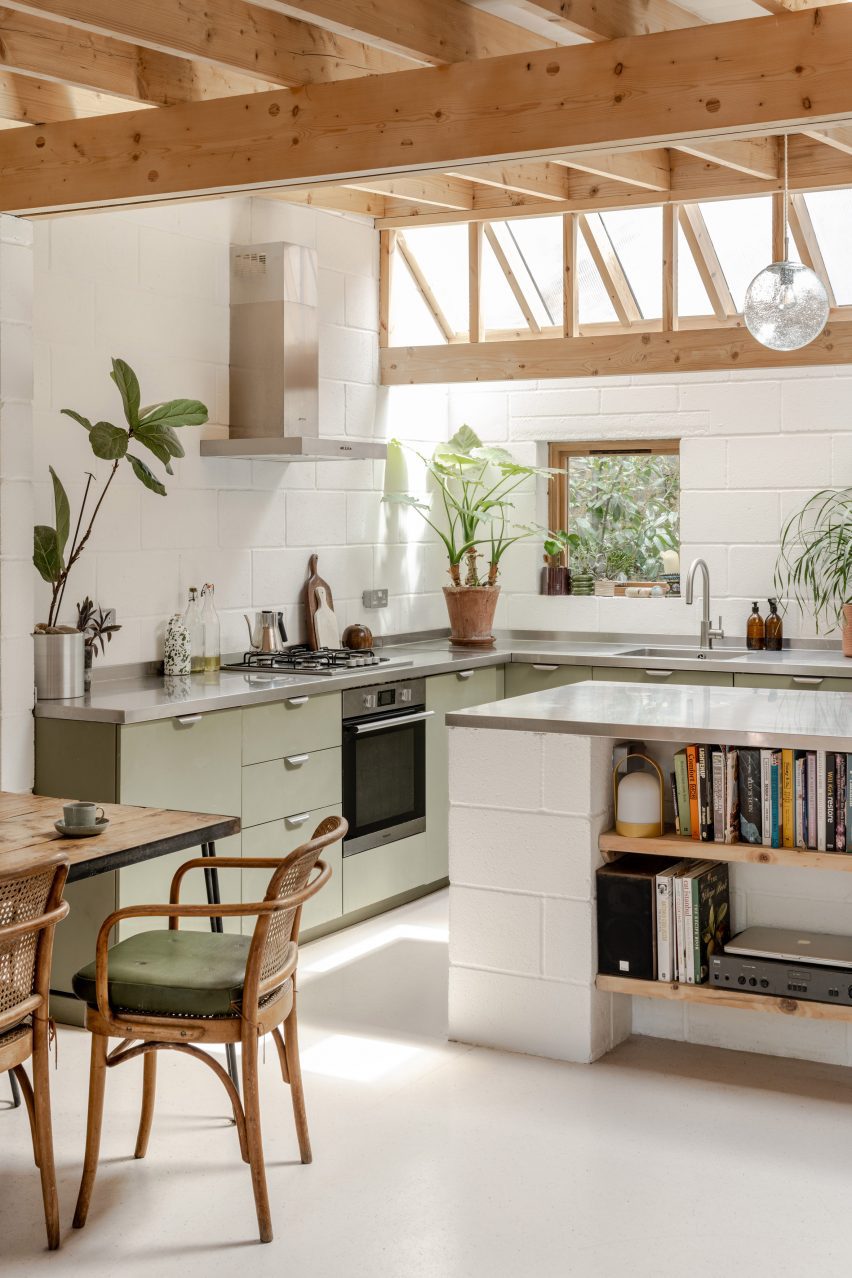 The extension combines painted blockwork walls with an exposed timber roof structure
“With a small Victorian house, there is often the issue of a reduced ceiling under the first-floor outrigger, limiting how spacious a wraparound extension can feel,” said David Eland, who co-founded the studio alongside Tessa Baird.
“We felt this lower section of ceiling would have had too much of an impact on any open-plan space, like a weight pressing down on it,” Eland told Dezeen.
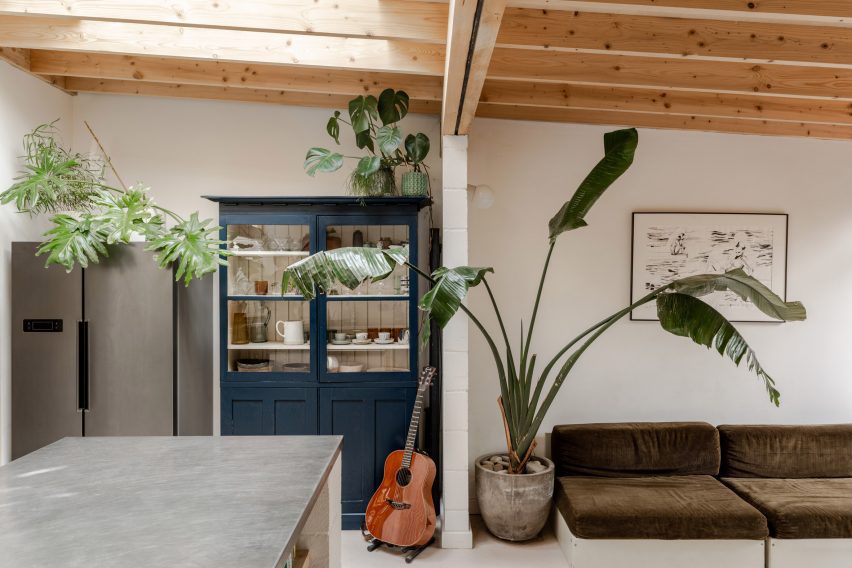 The extension is wider than the rest of the house
Although the house was relatively small, it had a long garden. This meant there was enough space to stretch the extension further back, rather than wrapping it around the side of the house.
“Moving the extension beyond the outrigger meant it could be taller and lighter, with a much simpler structure,” explained Eland.
 The glazed rear facade is an off-the-shelf system
A tight budget led the architects to design a modest structure that could be constructed as an unfinished shell, allowing the owners to finish it themselves.
The walls are painted concrete blocks, while an exposed timber-frame roof incorporates a row of clerestory windows and a skylight.
Pinzauer transforms historic Hampstead home with concrete-framed pavilion
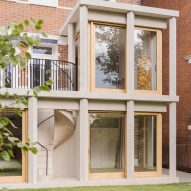
The glazed rear facade is an off-the-shelf system, while the patio was paved using leftover tiles salvaged from a nearby building project.
Eland describes it as “a weathertight blank canvas for the clients to inhabit at their own pace”.
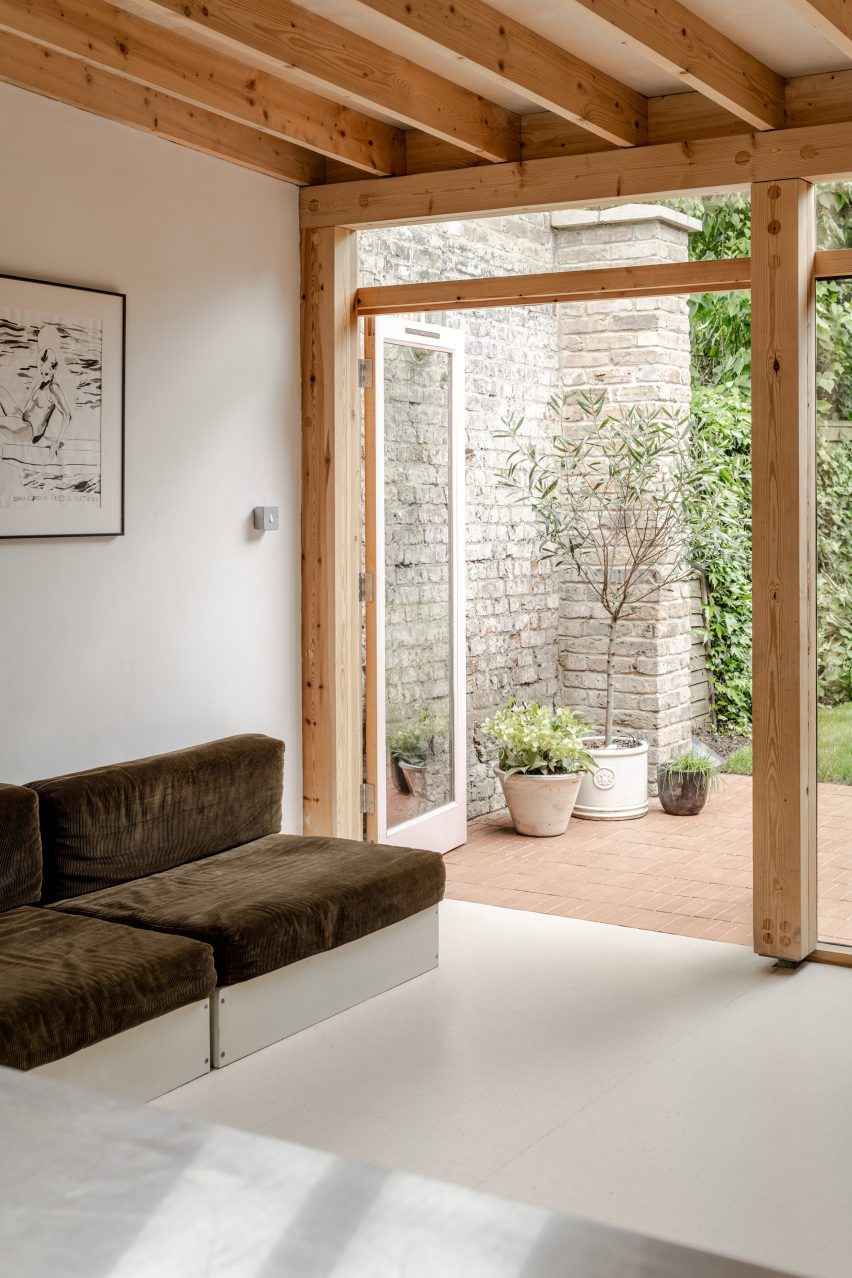 Lino provides the interior floor, while the exterior was paved with salvaged tiles
“The finishes were intentionally kept pared-back to allow the clients to slowly complete themselves when their time allows, as part of an ongoing self-build process,” said Eland.
“Painted blockwork walls, a warm lino floor and an exposed timber ceiling provide a robust environment for the controlled chaos of family life.”
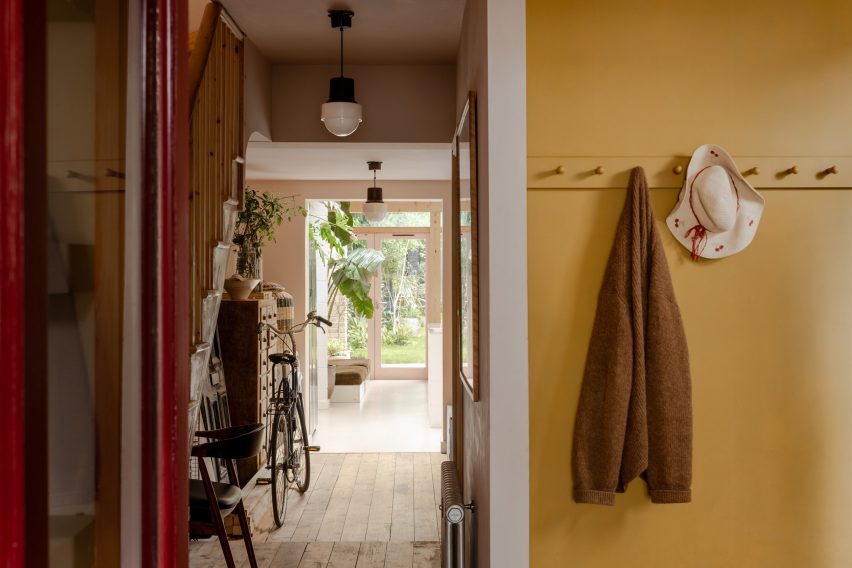 The bathroom was relocated to the middle of the house, while the staircase was reoriented
The extension enabled a reorganisation of the rest of the house. The bathroom was relocated from the rear to the centre of the floor plan, while the staircase was reoriented to run lengthways rather than across the building.
Unlike before, none of the house’s rooms double as corridors in the new configuration. In particular, the children’s rooms are now fully separated rather than interconnected.
The architects hope the design will make it easy for the family to adapt their home as the children grow up.
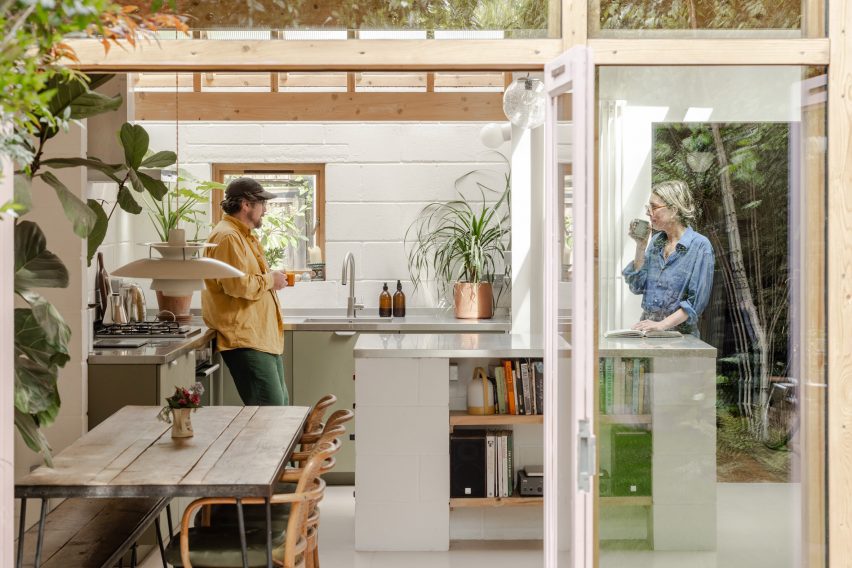 The building was delivered as an unfinished shell, allowing the owners to finish it themselves
“A space where the children can charge around and make a mess is useful while they are still small, which suits the warehouse feel of the open-plan living space and long gallery hallway connecting back to the entrance,” said Eland.
“As they grow up, I can see the functions of these open-plan areas becoming more defined and built-in.”
A Simple Addition is the latest in a series of inventive extension projects designed by OEB Architects, which has studios in both London and Brighton.
Others include Lewisham Loggias, a colourful loft extension that takes cues from Italian palazzos and paintings, and Summerhill Road, which made the Don’t Move, Improve! shortlist in 2021.
The photography is by French + Tye.
Project credits:
Architect: OEB Architects
Structural engineer: Baker Chatterton
Approved inspector: Stroma
Main contractor: TBS Tutka