
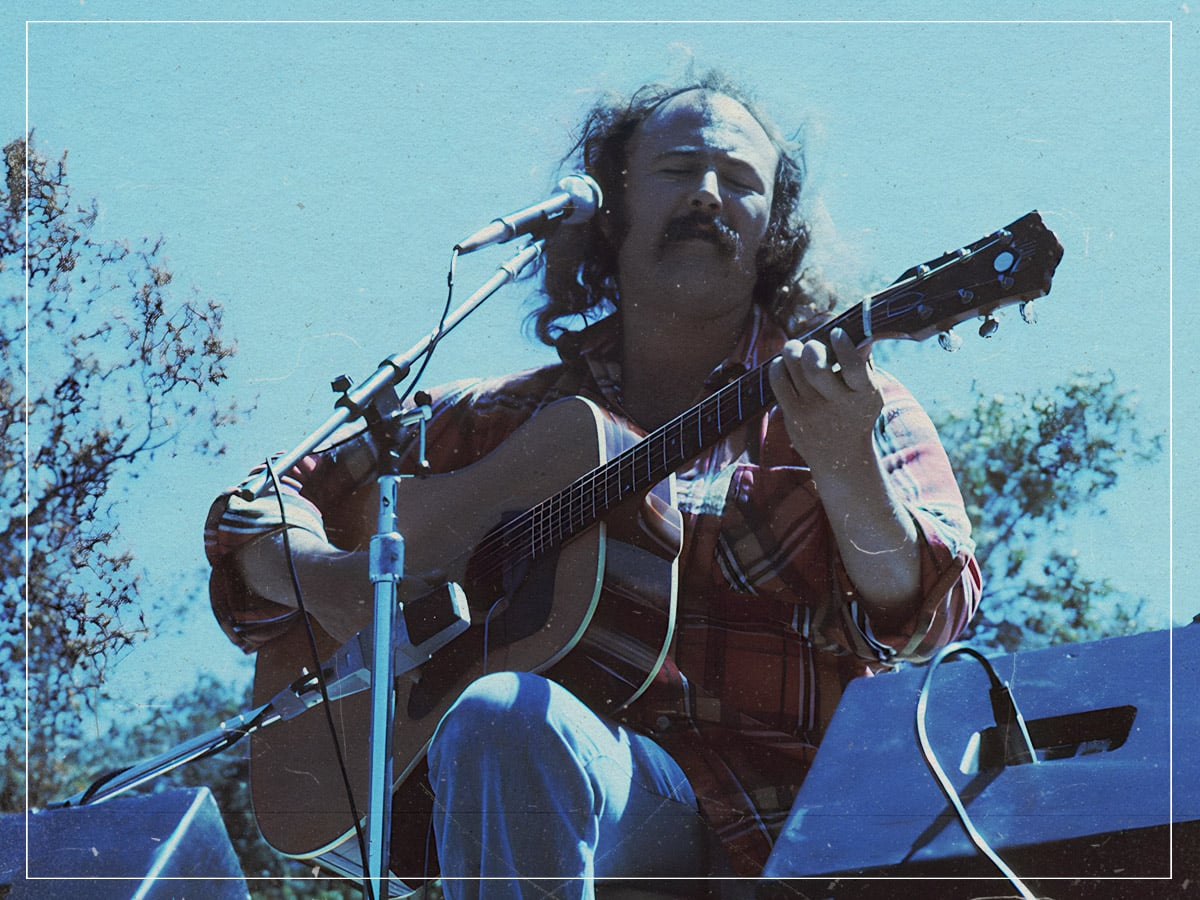
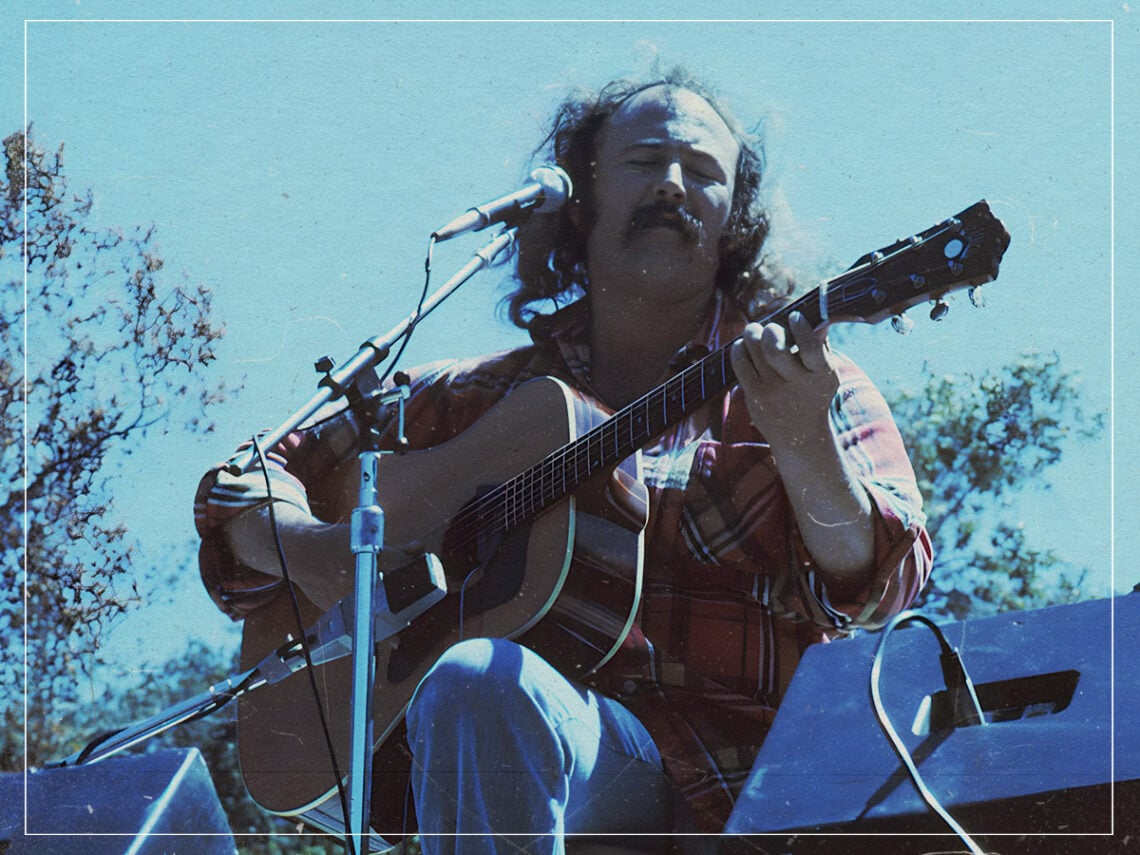
(Credits: Far Out / David Gans)
Wed 10 December 2025 15:11, UK
The Rolling Stones aren’t for everyone. Some may find that a difficult pill to swallow, but it’s true: whether due to their moral or political views or the actual sound of their music, some people just don’t enjoy the Stones. Unfortunately, this was a view that plagued David Crosby so much that he felt the 1960s were worse off for it.
Should Crosby be considered the arbiter of taste? No. The man was a notably loudmouth on the scene and was, generally, quite happy to badmouth a whole range of incredible performers. But, there can also be no doubt that, with The Byrds and immersed in the California scene, Corsy did see perhaps the darkest side of The Rolling Stones.
As someone whose career skyrocketed alongside bands like The Beatles and The Stones, Crosby’s contributions to The Byrds did well to popularise the folk-rock genre by blending traditional folk music with rock and roll. When he joined forces with Stephen Stills and Graham Nash, the timeless classics came thick and fast, and before they knew it, they had set a new standard for harmonising in rock music.
His work in both of these groups, alongside his achievements as a soloist, means that his talent and musical intuition cannot be understated, and his unwavering genius continues to infiltrate many aspects of contemporary music, whether directly or indirectly. As a central figure in the Laurel Canyon music scene of the late 1960s and early 1970s, Crosby also influenced a handful of other industry-defining names, like Joni Mitchell, Jackson Browne, and members of the Eagles.
Perhaps Crosby’s reputation as a musical aficionado warrants his being so open and honest about others, especially when his opinion appears immensely critical and often offensive to the subject at hand. Sometimes, however, he articulates such positions with a comical aura, suggesting that he may appear standoffish, but at the crux of it, it doesn’t go too deep into his soul.
 Altamont free concert poster.
For instance, when explaining the friction with Neil Young, he said: “Neil has got a genuine beef. I did say something bad about his girlfriend [Daryl Hannah]. I said I thought she was a predator. OK, he can be mad at me. That’s all right.” While this seemed entirely personal, some groups entered his bad books for other, more justified reasons, like the case of the Stones.
When it comes to the notorious Mick Jagger and Keith Richards-led group, Crosby doesn’t have anything positive to say, mostly because their morals severely opposed his own. While Crosby represented peace and love at Laurel Canyon, the Stones represented the opposite, pushing the punk nature of 1960s rock ‘n’ roll to a pivotal point that only benefited them.
After the harrowing events at Altamont, where the Stones hired the Hells Angels as their security, resulting in a catastrophic turn of events, Crosby wasted no time sharing his opinion. “I think the major mistake was taking what was essentially a party and turning it into an ego game and a star trip of The Rolling Stones, who… qualify in my book as snobs,” he said. “I think they’re on a grotesque, negative ego trip, essentially, especially the two leaders.”
For Crosby, it was the band’s poor decisions which would lead to the tragedies at Altamont, and, in his mind, therefore start the negative vibes that would bring a close to the era. The decade had been seemingly full of love and a loss of the self in favour of the collective, to Crosby, that was the antithesis of The Rolling Stones.
Crosby didn’t appreciate what they did for music, either, later saying that their range was significantly limited compared to their counterparts, namely The Beatles, and that the band couldn’t harmonise for “squat”. Clearly, this was a band that Crosby vehemently disagreed with, and not just because they prioritised irresponsibility and brutality over understanding and consideration.
Related Topics