
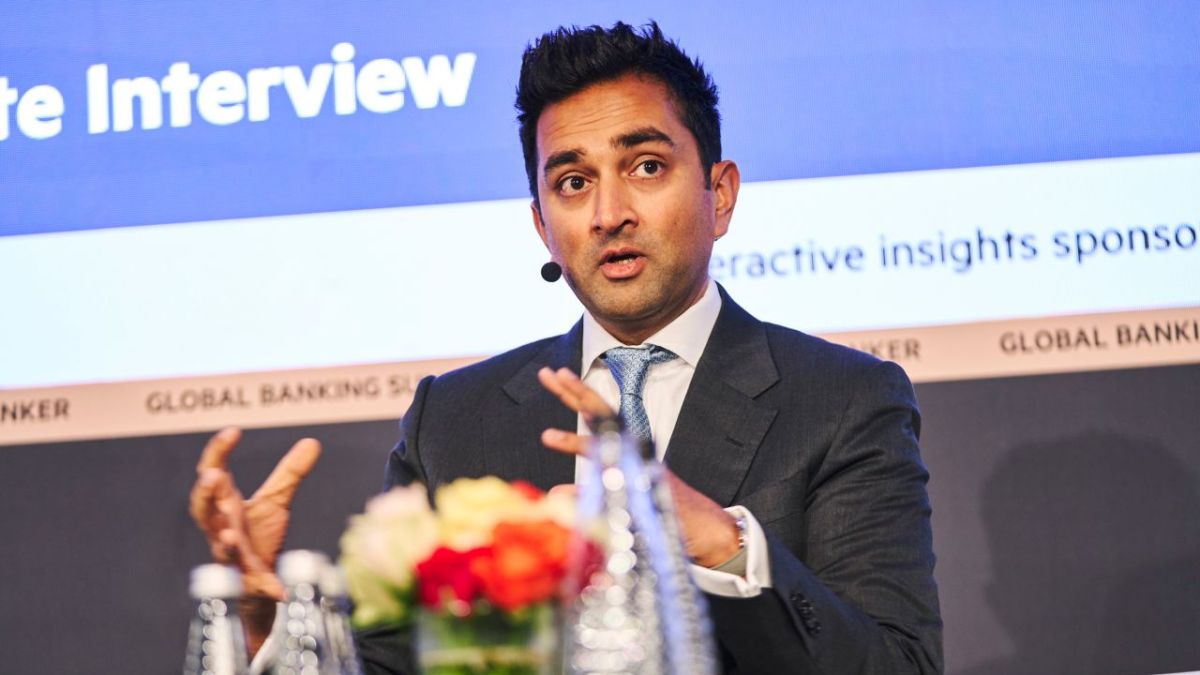
The co-head of Goldman Sachs International has said the ongoing uncertainty over the government’s plans for tax and regulation has created an “overhang” that is holding back small companies.
London-based Kunal Shah cited higher taxes and new employment regulations as among the factors making businesses hesitate before investing and hiring.
Shah, 43, was speaking to The Times before a House of Commons reception on Tuesday evening to mark 15 years of supporting British companies through its 10,000 small businesses management training initiative.
“One of the things that comes back often from these companies is the tax burden in the UK,” he said. “The budget last month was a focal point for everyone to see again how tough the fiscal maths is now in the UK. It introduces challenges for any entrepreneurs and the business environment here.”
Shah, who replaced Richard Gnodde as co-head of Goldman’s international arm this year, alongside his fellow co-chief executive Anthony Gutman, said Labour’s manifesto pledge to enhance employment rights was among the factors making business owners think carefully about the cost of their expansion plans.
“These entrepreneurs are largely optimistic around their own businesses, around things they can control. But it is all the uncertainty you have over the manifesto pledges that can hamper investment confidence. That continues to be an overhang,” Shah added.
The government last month abandoned its pledge for day-one rights for unfair dismissal after securing approval from the unions for a compromise position of rights after six months, down from the current two-year period.
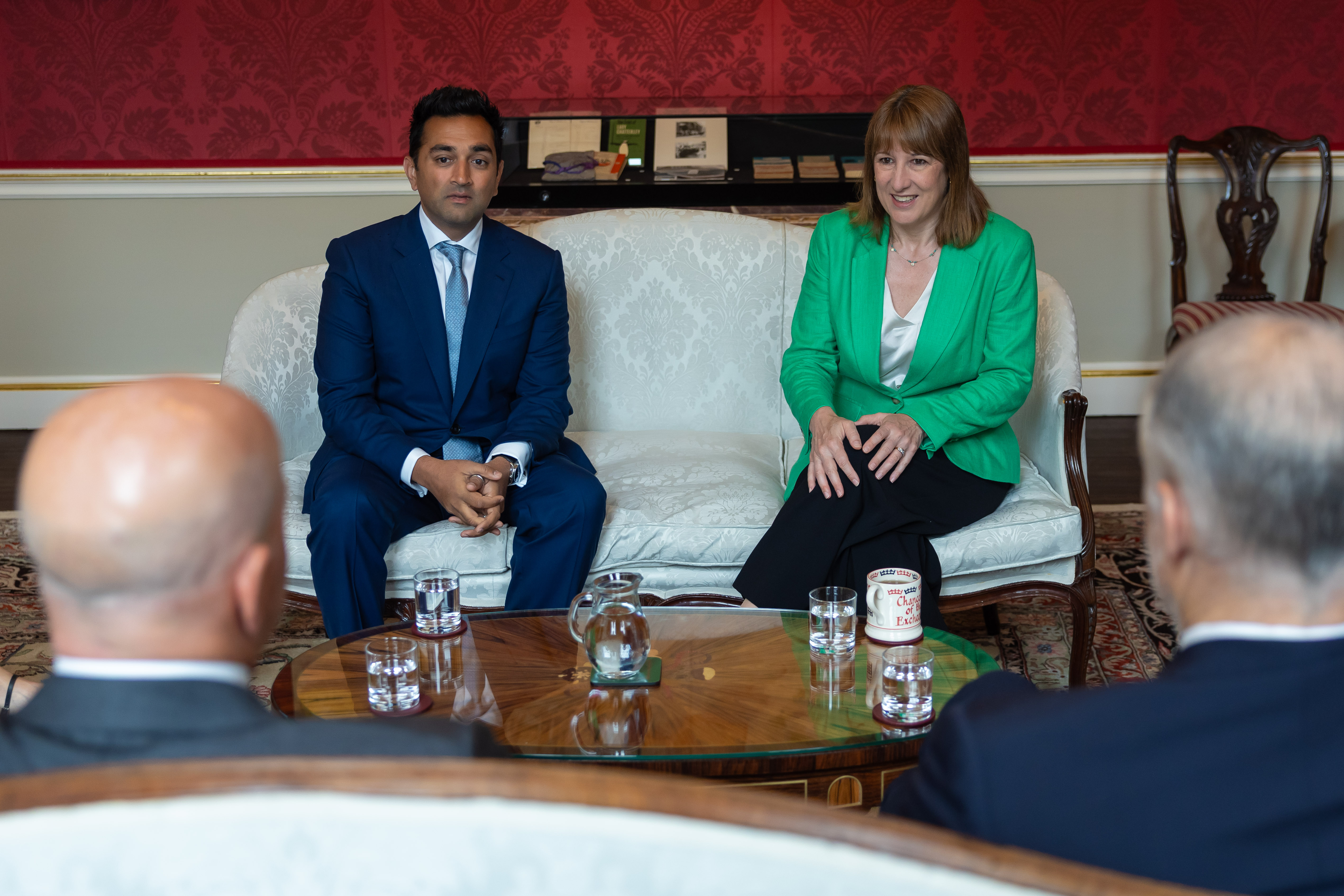
The chancellor met the chief executives of Goldman Sachs and its international arm in July
SIMON WALKER/HM TREASURY
Shah joined Goldman Sachs in 2004 after studying mathematics at Cambridge University, became a partner in 2014 and previously held the role of global head of emerging markets.
He said that businesses had clarity now on taxation for the next 12 months and that some tailwinds for the UK economy existed, including favourable trade deals with countries such as the United States and India. However, he added the country’s “relatively sluggish growth” was undermining confidence.
“There is a broader, longer-running productivity problem and combine that with persistent sticky inflation, interest rates that remain more at the restrictive end and that feeds through to the finances at these companies. I think there are still challenges.”
Some 2,509 companies with more than £250,000 in annual revenue and staff of between 5 and 50 people have enrolled in Goldman’s training scheme, which gives them 100 hours of free training delivered by business schools as well as access to a valuable network of peers.
A study by Professor Mark Hart, deputy director of the Enterprise Research Centre, of the companies found that after three years the participants grew their revenues 43 per cent, representing on average £665,000 in additional revenues. Companies were 14 per cent more productive after ten years than they would have been had they not taken part.
The government provides a similar subsidised training scheme for small company bosses, called Help to Grow. It has funding until 2029 and since 2021 has enrolled 10,000 business leaders.
Shah welcomed the government’s efforts to engage with the banking industry. He met the chancellor, with Gutman and David Solomon, chief executive of Goldman Sachs, in July. “They have definitely been open to engaging with companies like ours. The questions we hear from them are how can they support the growth agenda and competitiveness? We are always willing to chip in with ideas on that.”
One area of focus was “reinvigorating capital markets” in Britain and Shah praised the introduction of a “stamp duty holiday” on share trading in newly listed companies in the budget as a positive step. “That is a good sign of having a pragmatic approach and how they can stimulate listing,” he said.
“These are signs of clear intent on how they want to support the broader growth agenda. It’s a balancing act in terms of any measure that is taken and the fiscal implications but broadly markets were reassured.”
He said Goldman Sachs looked set to continue generating bumper fees going into next year. The Financial Times reported last month that Goldman was on track for its best year in mergers and acquisitions advice for 24 years, citing data from the London Stock Exchange.
Shah said he planned further growth in Europe going into next year, adding: “Our advisory business continues to be right at the top of the league table in terms of announced M&A. On a global basis it is something like $1.5 trillion that we have been involved in, which is quite staggering, and we see that momentum continue into next year.”
“The backlog on that front has been healthy and that will continue to drive that side of the business”. Goldman is not advising on the blockbuster takeover battle between Netflix and Paramount for Warner Bros, but is advising Comcast, which has made an unsuccessful bid for Warner.
On capital markets, Goldman advised the bank Shawbrook on its £1.9 billion flotation in London. “That was the biggest listing for years. And there are various other good prospects that will continue into next year,” said Shah.