
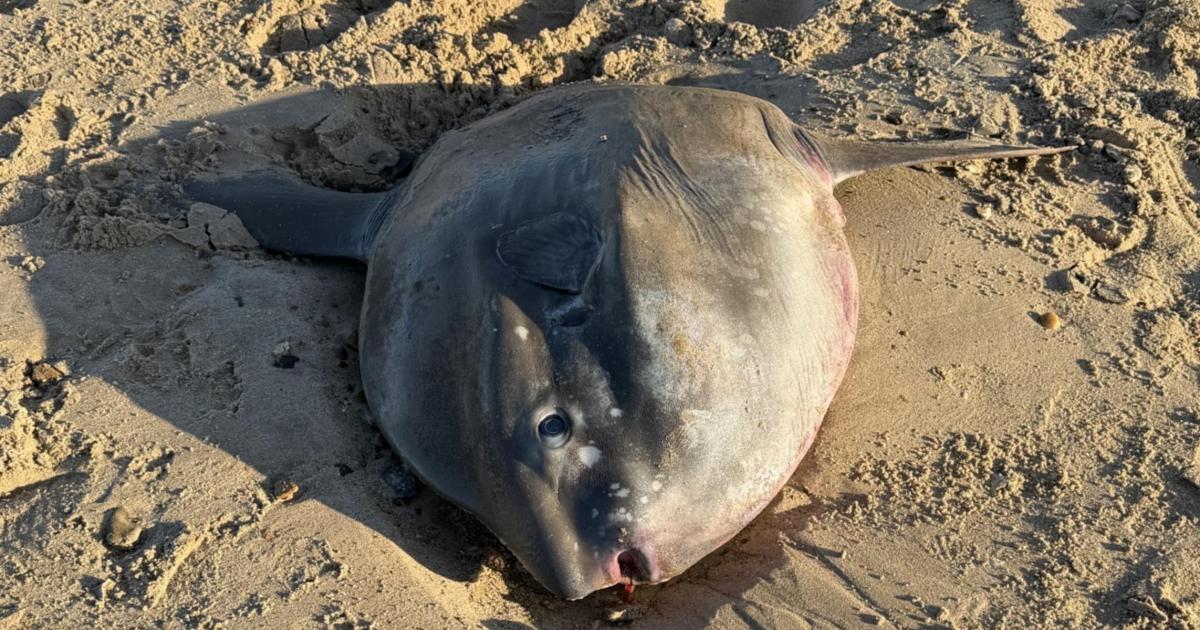
The sunfish (mola mola) was discovered on the sand at Holme-next-the-Sea by Emma Cockburn.
The fish – the second largest bony fish in the world – is found around the globe but in UK waters is more common off the south west coast.
It is listed as vulnerable on the International Union for Conservation of Nature’s (IUCN) Red List, because it is often a bycatch of the fishing industry.
And now the Norfolk Wildlife Trust (NWT) has explained why the fish ended up in Norfolk.
‘Sunfish are such a unique species to see here in Norfolk,” a spokeswoman said. “It’s unusual for them to be found on our coastline, as they tend to thrive in much warmer waters.
“Despite this, sunfish have been found along the Norfolk coast in recent years, including at NWT Holme Dunes.
“The fish are likely to have been following jellyfish – their preferred food source – and found themselves in difficulties in the much colder waters of the North Sea.
“Seeing unusual species in Norfolk appears to be becoming more common, and could be linked to climate change and warming seas.”
Sunfish can reach 1,000kg – the weight of a small car – and more than three metres in length.
Those that reach the UK tend to be much smaller, but they are still round and remarkably narrow.