
The annual CBI–Addleshaw Goddard Scottish Productivity Index, which is published annually, found that investment as a share of Scottish GDP had surpassed 10%, expanding by 0.8 points to 10.2% in 2023. For the UK as a whole, there was a 0.3 point decline to 9.5%.
The report added: “For the first year since 2005, Scotland now exceeds its long-term trend (1998-2023) of 9.8%. Conversely, the UK overall is 0.6-pp below its long-term trend of 10.1%.”
READ MORE: Robbie Mochrie: Productive investment beats speculating
Scottish exports as a share of GDP declined by two points, from 22.1% in 2022 to 20.1% in 2023. “Interestingly, this is exactly equal to the long-term trend (1998-2023),” the report noted.
Elsewhere, Scotland was found to have the “highest percentage of the working-age population with higher education certificates or above at 53.7%, surpassing the UK average of 47.1%”.
The report goes on: “There has been a significant increase in higher education attainment in Scotland, rising from 30.2% in 2004 to 53.7% in 2024, indicating a strong long-term upward trend.
“However, between 2023 and 2024, there was a slight dip in the percentage of the high skilled working age population of 1.4% from 55.1% in 2023 to 53.7% in 2024.
“In comparison, England’s higher education attainment stands at 47.1%, Northern Ireland at 42.2%, and Wales at 44%, with all showing increases but still trailing Scotland in 2024. The only region of the UK with a higher level of educational attainment is London with 61.7% of the working age population holding a Higher Certificate or above.”
Professor Mairi Spowage, director of the Fraser of Allander Institute, said productivity growth was key (Image: Colin Mearns)
However, there were skills shortages reported. The CBI–Addleshaw Goddard index found that 7% of Scottish employers had at least one vacancy in 2024 due to a skills shortage, a rise of four points from 2011’s 3%. Since 2022, the rate has dropped three points from 10%.
The report also shows that 34.3% of the economically inactive people in Scotland in 2024 were off work due to long-term illness, an increase of 2.7 points on 2023 and above the UK average of 28.6%.
Meanwhile, the share of Scotland’s “working age” population – people age 16-64 – fell 0.11 points to 63.3%, which is 1.44 points below the 2004-2024 average.
“Despite this, Scotland continues to have a marginally higher proportion of working-age people than the UK overall,” the report adds.
In a foreword, Mairi Spowage, the director of the Fraser of Allander Institute, said: “The labour market remains resilient but uneven. Scotland retains one of the most highly qualified workforces in the UK, with more than half of working-age adults holding higher-education credentials. However, a rising share of economic inactivity due to long-term ill health underscores the need to integrate health and wellbeing more centrally into the productivity agenda.
READ MORE: ‘A lot of anger’: Fury as top Scottish university to axe 76 jobs
“Likewise, while the proportion of employers reporting skills shortages has fallen, under-utilisation of existing staff remains elevated, suggesting that better deployment of Scotland’s existing talent base is as important as attracting new skills.”
She added: “Productivity growth remains the single most important driver of sustainable prosperity. By focusing on the practical enablers – investment, innovation, and inclusion – Scotland can convert its strong foundations into a more dynamic, competitive, and equitable economy over the decade ahead.”
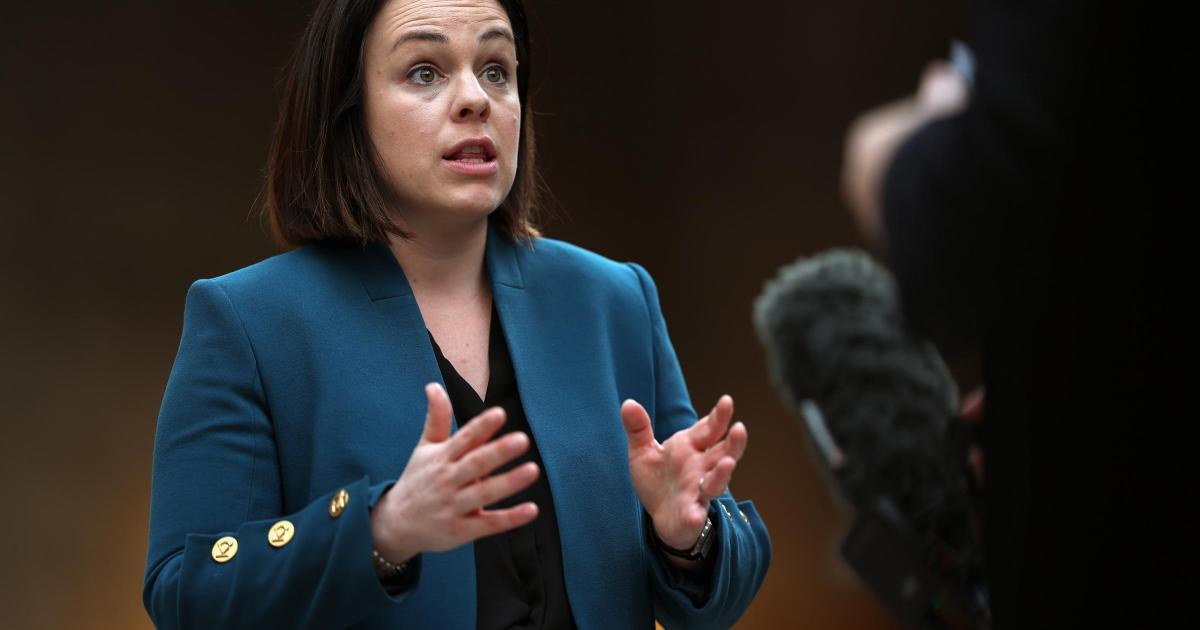
Deputy First Minister Kate Forbes said the report “shows the strength of Scotland’s economy, and that real progress is being made in areas in which the Scottish Government holds full powers, including educational attainment and business investment”.
She went on: “While our economy is held back by a low-growth UK Government model and damaging decisions on matters like employers National Insurance increases, we will always be working with one hand tied behind our back.
“But I am encouraged to see these figures reveal business investment reaching its highest level in 20 years, showing that industry recognises Scotland’s real strengths as highlighted in the index – one of the UK’s most highly educated workforces, globally significant energy assets, and improving digital and green infrastructure.
“The report highlights there is still work to be done on productivity – which is the foundation of higher wages, sustainable growth, and strong public services. If we want rising living standards and resilient public finances, it must be central to our economic decisions so our focus will continue to be on turning our strengths into higher productivity.
“Scotland has huge economic strengths. From being at the forefront of the energy transition to rapidly emerging cutting-edge technologies, we have an enormous opportunity, and will continue to work as hard as we can to bring investment to Scotland, resulting in more high quality jobs across the country.”