
Gareth Rubin, bestselling author and new official ‘Sherlock Holmes’ novelist, has an interesting case for why pensions are utterly boring
In our Pension Diaries series, we speak to people of all ages in the UK to find out how much or how little they have saved for retirement and the realities of putting money aside for your future.
Today, we speak to ‘The Sunday Times’ Top 10 bestselling author and new official ‘Sherlock Holmes’ writer Gareth Rubin.
Gareth, 49, who lives in Greenwich, London, reveals that as a novelist, his pay cheques arrive in unpredictable bursts and says advances can be rapidly spent.
He describes how he spent most of his life ignoring pensions as he has always found the topic completely boring and the last thing on his mind with his unstable income. He believes there are other ways that people can prepare for their future.
New FeatureIn ShortQuick Stories. Same trusted journalism.
What careers have you had and when did you first contribute to a pension?
I first began working at the age of 16 and started doing part-time jobs selling double glazing over the telephone. This fuelled me through university. After university, I trained as a journalist and spent a few years working as a journalist before going to drama school to train as an actor.
I then worked as an actor for a few years. As an actor, you are essentially living on a pittance. There is no way I could have contributed to a pension back then as I was concentrating on surviving and being able to pay the rent.
After a few years, I went back to journalism and around the age of 25, I set up a small personal pension and I made one single contribution to it of £6,746.85. Then I never contributed to it again. I just didn’t find pensions very exciting. Who does apart from actuaries and accountants?
What made you make that one pension contribution?
At that time, I was working as a freelance journalist and I had this sudden rush of blood to the head and thought to myself: “I have an unstable career, I don’t have a proper job. I better start thinking about a pension.”
 Gareth made a one-off contribution into a private pension when he was 25
Back then, people of my generation were starting to talk about how poor state pensions were going to be and how they might disappear entirely because the country couldn’t afford them. These are all the same conversations we are still having today – and let’s face it things have got a lot worse.
At this time, I had a bit of money in the bank and nothing else to do with it really, so I thought I better start thinking about the future and I stuck it all into a pension. It is the one bit of forward planning I’ve ever done.
The following year, I presumably had a bad year and didn’t have any spare cash so I never made another contribution again.
How many pension pots do you have and what is their combined value?
Apart from making that single contribution to a personal pension, I didn’t give pensions another thought. But for 20 years, I worked part-time for The Observer newspaper writing a column and I was auto-enrolled into their workplace pension on the minimum contribution.
I didn’t even look at this pot and had no idea what was in it until I left The Observer last year. I found that over the years, my employer had contributed £20,000 to it.
I moved The Observer pension over to my SIPP and with the almost £7,000 I had in of my own contribution, and capital growth, it all comes to £50,100. So I just have this one pension pot.
Looking at the predictions, it says it will be worth about £4,800 a year if I take out an annuity. Which isn’t bad, but it’s not going to pay for my lifestyle.
What is your plan for a pension?
I bought a two-bedroom flat in London 20 years ago thanks to substantial help from my mother who I will be eternally grateful to.
With it having two bedrooms, I let the other room out the whole time I was living there. I was living there until seven years ago when I got engaged and moved in with my now-wife into a house.
I continued to let out that flat in the interim and it is let to my then-flatmate, now lodger, who lives there with his fiancée.
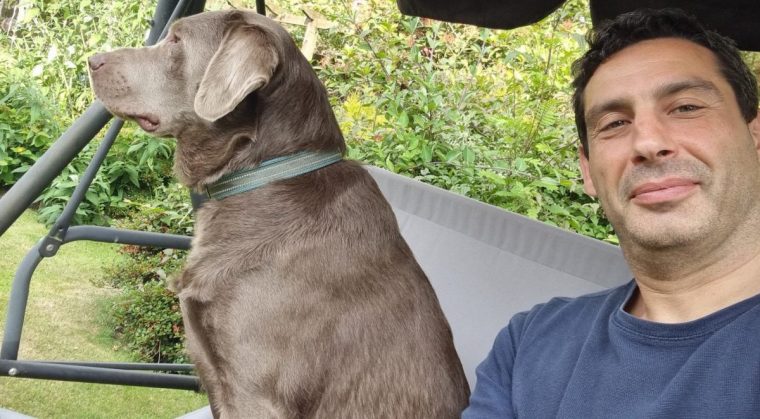 Being a novelist meant a highly unpredictable income for Gareth
That flat is the closest thing I have to a proper pension. I am an accidental landlord and I provide a decent home to my former flatmate who is a good friend of mine at a frankly substantially reduced market rate because he is an actor and cannot afford a huge amount of money.
The flat rental income is either going to be my pension, or I might decide to sell it at some point and invest its value in a pension or equities. I am considering this as the Government is making it very difficult to be a small landlord.
I bought the flat for £155,000 and it is probably worth about £390,000 now.
Why does being a novelist make it hard saving for a pension?
Being an author and novelist, my income rockets up and down and is completely unpredictable. One year, I could write a bestseller and the next, I could write a book that only sells 20 copies. I can’t predict sales any more than I can predict the Lottery numbers.
It is ironic that I am literally a mystery author and my income is the biggest mystery of all. Advances can disappear faster than a plot twist and royalties may or may not turn up at all.
I have had an advance for a single book of six figures and I have had an advance for a single book of £2,750. So one minute, I can be very wealthy in terms of income and the next, I can have no income at all.
The main advantage of pensions is that it is better for tax. But you have to commit massively to them. If I am thinking of putting money into a pension, although there are tax advantages, weirdly, it is actually quite high risk for me to lock money away because I might need it three years from now and not be able to access it.
I keep an emergency fund to save for the quieter times. If I locked what money I had into a pension and really needed that capital, that would be incredibly frustrating and a dire problem.
What is your biggest pension regret?
I still stand by that pensions bore me to death and I can’t see how anyone could find them exciting.
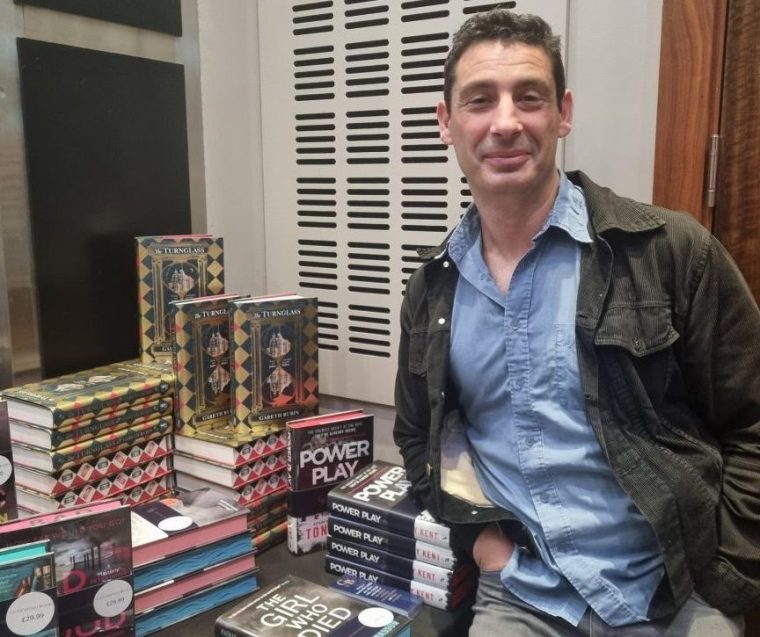 Gareth says locking money away in a pension would work out as high risk for him
However, I do wish when I was younger, I had known there were other options such as investing in the stock market. It is like playing a little game of informed roulette. You are still going to lose sometimes, but hopefully, you are going to gain a fair bit of money.
Just in the last couple of months, I have started putting a little bit of money into equities and investment trusts. Realistically, as long as these investments do averagely well, they will make me more money than I would probably get from a pension.
When would you like to retire?
Most writers say they absolutely love writing and will never stop doing it. I want to stop doing it as soon as I can! I don’t enjoy writing books. I enjoy it once they are written and seeing them on shelves, but I don’t enjoy the writing process. I can’t stand sitting at my computer all day typing words. It’s really quite dull.
My latest book Murder At Christmas: You Solve the Crime is where the reader is the sleuth and gets to make all the decisions and turn to the page they choose. It is essentially a grown up Choose Your Own Adventure murder mystery. We all enjoy a bit of bloody, gory murder alongside the mince pies.
I will keep working for as long as I have to. If I get enough money to live on out of equities or a pension, I’ll stop working then and travel as much as I can.
‘Murder at Christmas: You Solve the Crime’ by GB Rubin is published by Simon & Schuster and out now
Would you like to be featured in Pension Diaries? E-mail: Aasma.day@theipaper.com