
People are being encouraged to consider wearing a face mask as NHS battles ‘unprecedented flu wave’
19:07, 10 Dec 2025Updated 05:39, 11 Dec 2025
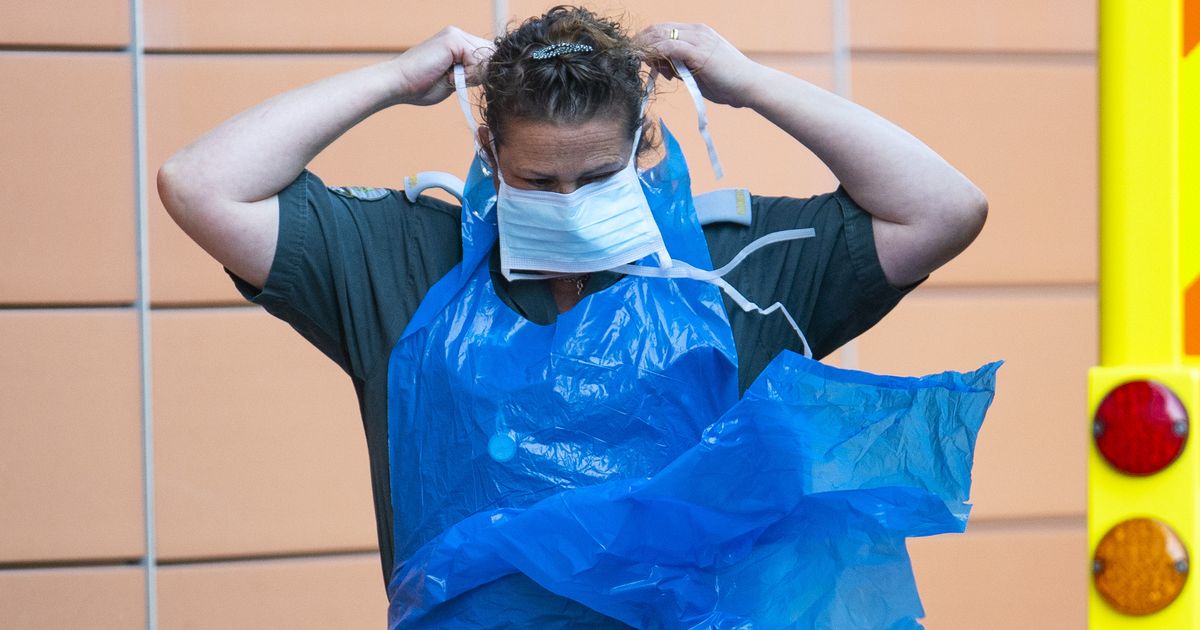
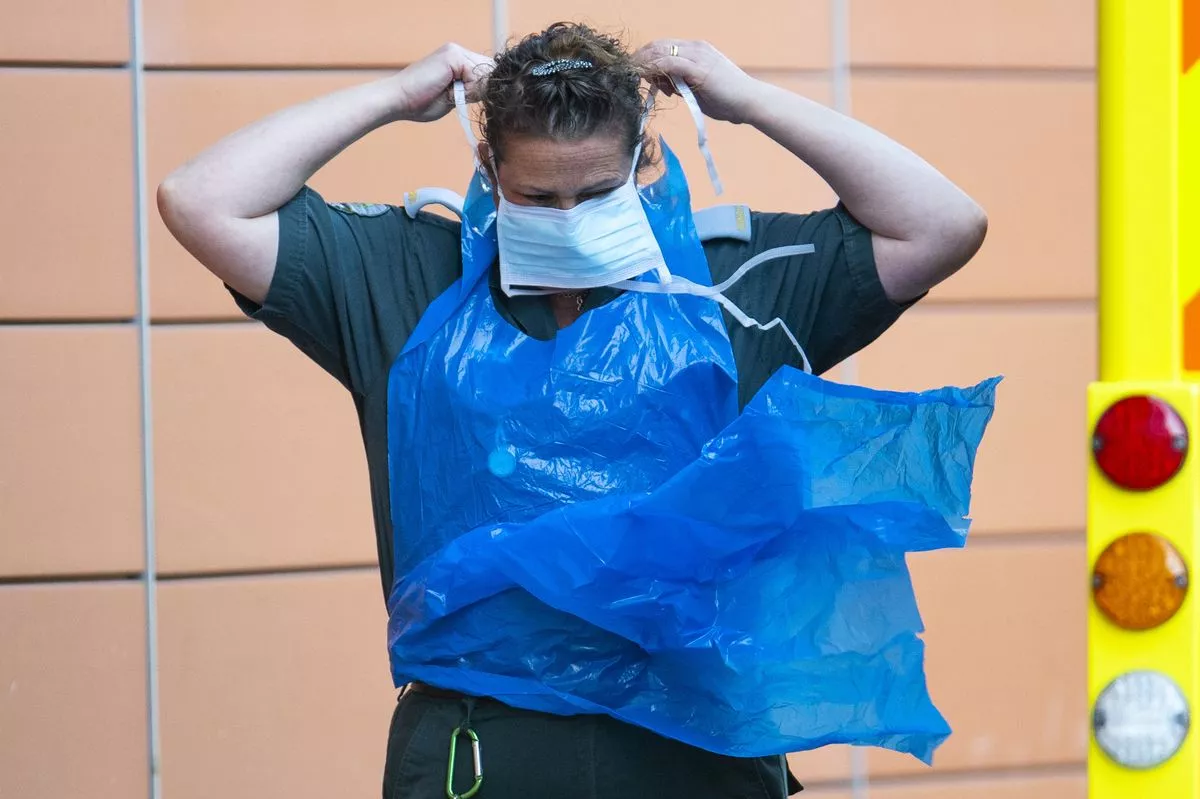 A paramedic in a protective mask(Image: Getty Images)
More than 70 patients are currently being treated for flu at Stoke-on-Trent’s main hospital. The Royal Stoke University Hospital was forced to declare a 48-hour critical incident earlier this week due to mounting pressure on its A&E department.
It came as a dominant strain of flu, H3N2, continues to spread rapidly throughout Stoke-on-Trent and the country. The NHS has described the surge in cases as ‘unprecedented’ and a ‘crisis’ due to the high number of hospital admissions at this time of year.
Now the Royal Stoke has confirmed that there were 73 in-patients with flu as of Tuesday (December 9), including two in critical care. But Simon Constable, University Hospitals of North Midlands chief executive, told the board that flu was only part of the picture, with UHNM having the more general problem of too many patients ending up at A&E due to a lack of alternative provision.
As a result, UHNM bosses are ‘recommending’ Royal Stoke A&E to wear the face masks. The measure has also been introduced in the oncology and renal departments.
Royal Stoke chief nurse Ann-Marie Riley said: “Due to the high incidence of flu cases, staff in our emergency portals such as A&E, children’s assessment unit, ambulatory emergency care and acute medical unit as well as our oncology and renal departments are recommended to wear fluid repellent surgical masks routinely. Patients, visitors and staff in other areas are not required to wear a face mask.
“However, patients and visitors may be asked to wear a mask in areas where we are treating patients with a respiratory infection and/or clinically vulnerable patients. We recognise some people will feel more comfortable wearing a mask and therefore any member of staff, patients and the public are able to wear a mask if they wish.”
NHS leaders have been calling on people across the UK to consider wearing face masks to help stop the spread of flu. Back in 2020, face masks became mandatory as health officials and ministers like Matt Hancock implemented strategies to reduce the spread of Covid-19 during the pandemic. From July 24, 2020, during the first lockdown, Brits had to follow the rule, which covered public spaces such as shopping centres, banks, and post offices.
Most legal requirements to wear face coverings were lifted in July 2021 as England moved to ‘Step 4’ of its roadmap out of lockdown. By the end of January 2022, restrictions ended, and mask-wearing primarily became a matter of personal judgment.
Although the current flu season is nowhere near as severe as the coronavirus lockdown times, health authorities are encouraging people to follow steps to reduce the spread of the latest dominant flu strain, including considering face coverings.
The H3N2 ‘subclade K’ virus is a type of seasonal flu A virus. Not many people have come across it in the last few years. This means that there is not much immunity built up against it. The NHS has already issued a ‘flu jab SOS’ to those who are at risk.
Wearing face masks can help lower the spread and catching of the flu virus. They add another level of safety when used along with other ways to prevent it, such as getting vaccinated and practising good hygiene.
In an episode of BBC’s Newsnight on Tuesday (December 9), Dr Suzanna McDonald, the programme lead at the UK Health Security Agency (UKHSA), urged viewers to think about putting face masks on. “It’s really important to cover your coughs and sneezes, for example, with a tissue, and then afterwards pop that in the nearest bin and wash your hands frequently with warm,” she began.
“Soapy water, but if you do have to leave home, then you should try and stick to outdoor spaces as much as possible. And if you do have to go to an indoor space, then it’s important to try and keep that space as ventilated as possible.
“For example, by opening a window and as much as possible, keep your distance from other people. And if you consider wearing a face mask, that will also help to prevent the spread of diseases to others.”
Why is the H3N2 flu strain so dominant?
Currently, the most dominant strain in England is the H3N2 strain, according to the UK Health Security Agency (UKHSA). The A(H1N1) strain of influenza has become more prevalent lately, rather than the A(H3N2) strain that was more common previously. This might mean that not as many people have immunity to the virus right now, which could make them more likely to get ill.
Also appearing on Newsnight was virologist, Dr Chris Smith, who said that although every year is different, flu cases are high for this time of year. He said that the winter flu season usually arrives in the UK towards the end of December or the beginning of January. It reaches a rapid peak, then it begins to tail off. But some years, it does come early.
“This year has come particularly early,” he said. “We’re about two or three weeks ahead of where we would normally expect to be at this time of year.”
When asked if the high number of cases has been caused by the flu season arriving early, or by a more potent strain, the health expert said: “There is a combination of factors at play here. One, is that this year we’ve got a form of the flu which didn’t circulate very much last year, the effect of that is that people have lost their immunity to this form of the flu that they would have built-in previous years.
“So more people are more susceptible… The virus has also changed a bit, since it left the Southern Hemisphere in their winter and has come here for our winter. And that changed virus is also sidestepping our immunity.”
What is the significance of it being called H3N2?
“Flu is a bird virus,” Dr Chris Smith said. “About 2,000 years ago once there were enough of us on earth, and we started domesticating birds, it jumped the species barrier and became a human infection as well. There are several forms of human flu that circulate – flu AH3N2, flu AH1N1, which we have as swine flu, and one called flu B.
“They all circulate, every year, and they cause outbreaks or epidemics. H3N2 is just one form of flu and last year it was very, very low in terms of numbers. It was mainly all H1N1. This year it’s H3N2, and those are just the outer markers on the virus we use to designate what kind of flu it is.”
Why are there so many people in hospital with the flu this year?
At the end of November 2025, there were 1,717 patients in hospital beds, according to the latest NHS England figures. At the end of November 2024, there were 1,098, resulting in a 56% increase from last year to this year.
Dr Chris Smith said: “As you can see, this is the number of people in hospital in a bed in November. Now, from the first graph, we looked at earlier, you saw that the season has started earlier so unsurprisingly, if we have an earlier season, we’re gonna have more people in hospital than we would expect to have at this time of year, so unsurprisingly, the numbers are a bit higher.
“But that means quite a few people are catching flu, and they’re ill enough to warrant being admitted to hospital, that isn’t in and of itself, that unusual, because flu is a nasty infection. In the UK, in a bad year, we might lose 20,000 people in winter to flu in an average year between 5,000 and 10,000, so it it does claim lives.
“It is to be taken seriously, and that’s why we do take steps to try and stop it with things like vaccines.” On the vaccine, the government is saying the best response to this flu is to take the vaccine.
Get daily headlines and breaking news emailed to you – it’s FREE