
Throughout its seven-year stint in British politics, it’s fair to say that Nigel Farage’s Reform UK party hasn’t been the biggest fan of, among other things, cycling and active travel infrastructure.
In fact, back in 2020, when the former Brexit Party had just rebranded as Reform, Farage announced that the party would target councils that promote cycling and walking in the following year’s local elections, before more recently deriding local authorities “on the verge of bankruptcy” for wasting “tens of millions” of pounds on “cycle lanes that no one uses”.
So, it may come as a surprise that one Reform-controlled council has recently proved vocal in celebrating the completion of a new cycle lane project, which the party’s local politicians say has resulted in “enthused usage” and will lead to a “safer and greener environment for everyone”.
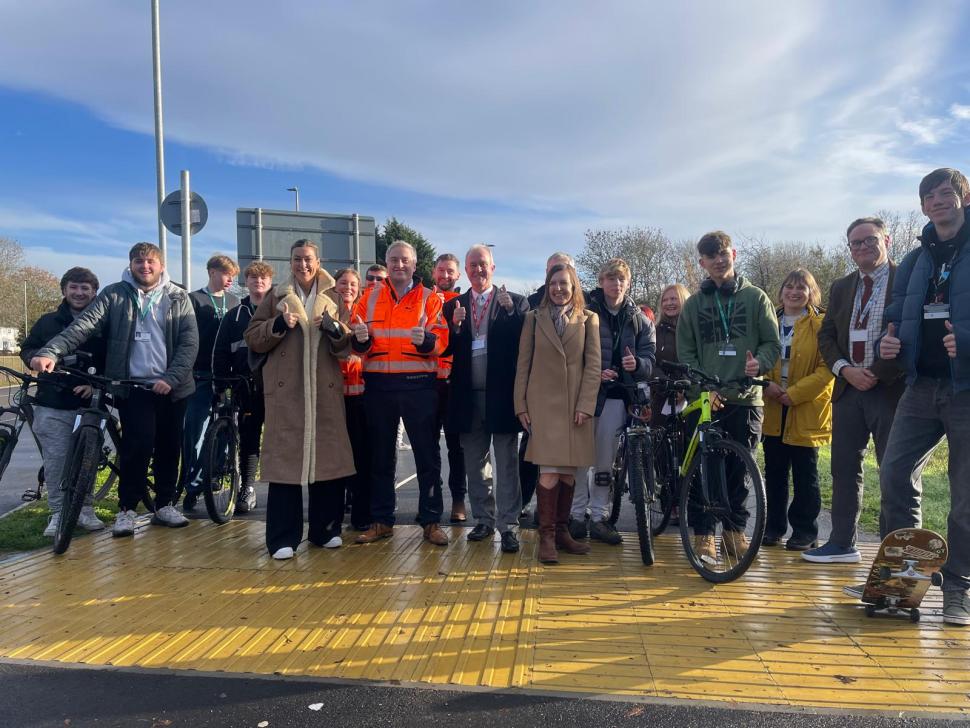
Last week, representatives from North Northamptonshire Council, which Reform wrested control from the Conservatives at this year’s local elections, attended the official opening of a new 1.5km cycle route in Corby, connecting the railway station to the town centre.
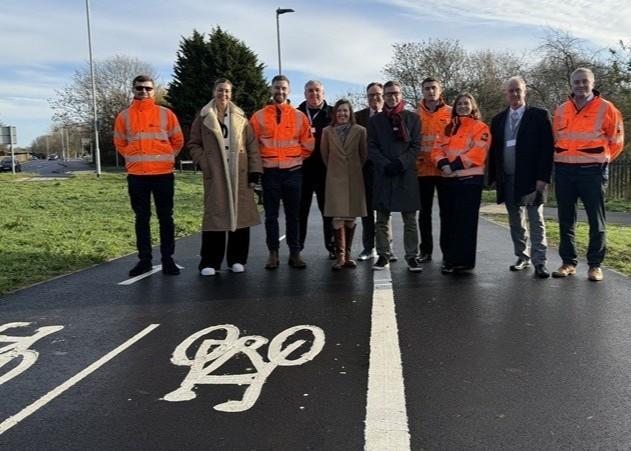 Reform-led council opens new Station Link cycle route in Corby (credit: North Northamptonshire Council)
The council says the protected bike lane, work on which began in July 2024, will provide a safe, well-lit route for commuters and students cycling to nearby Tresham College.
The project features new and improved crossings, segregated cycleways and footways facilities where possible, resurfacing works, and improvements to drainage and lighting. CCTV cameras will also be installed along the route in early 2026.
The works were financed through the previous Conservative government’s Towns Fund, which awarded Corby £19.9m for four large-scale projects, including the cycle route, a new sixth form college, monitors to measure air quality and traffic flow, and an as-yet unfinished community hub. The final cost for cycle lane was estimated to be £8.3m, £600,000 under the original £8.9m budget.
However, that still hasn’t prevented the path from attracting criticism from some angry locals, who have complained to the council about the impact of the 17-month-long works on congestion in the town. Meanwhile, the cost of the scheme was also criticised on local Facebook groups this week, and some residents claimed that they “very rarely see anyone use” the new bike route.
 Reform-led council opens new Station Link cycle route in Corby (credit: North Northamptonshire Council)
Nevertheless, the cycle path has received universal praise from North Northamptonshire’s Reform contingent, who have branded the route “excellent” and key to “helping to foster healthier lifestyle choices in more accessible pathways for walking and cycling” in Corby, while noting that it has already upped the number of people cycling in the area.
“It was great to come together with partners and stakeholders to celebrate this excellent project,” Jan O’Hara, the council’s Executive Member for Planning and Economic Growth, said in a statement.
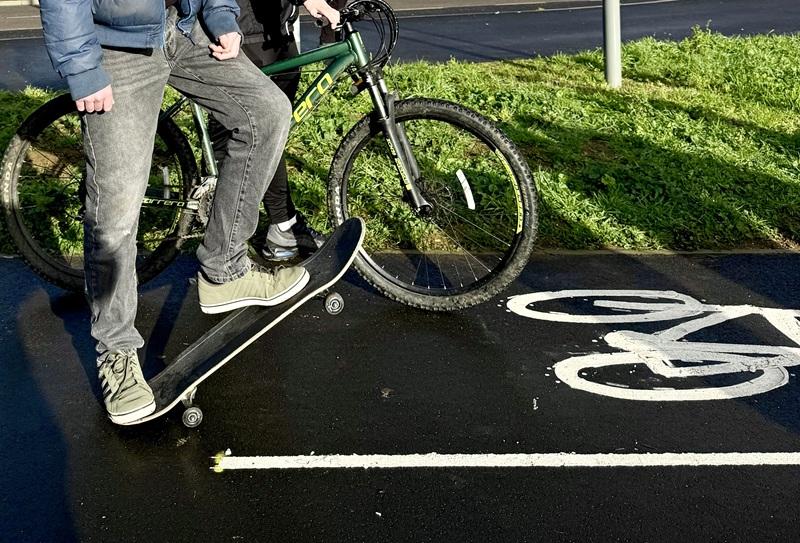
“Whilst engaging with students at Tresham College, it is gratifying to see enthused usage and indeed the new paths are proving beneficial, with pupils using the cycle route to travel to and from the College.
“Projects like this bring enormous benefits to the local area and away from the main cycle path, the wider scheme has also seen roads resurfaced, an underpass filled into to reduce anti-social behaviour and provide safer routes, together with the addition of new benches, bins and shelters, the area is helping to foster healthier lifestyle choices in more accessible pathways for walking and cycling.
“We’d like to take this opportunity to thank residents and road users for their patience whilst works have been undertaken and encourage residents to continue to use the new route.”
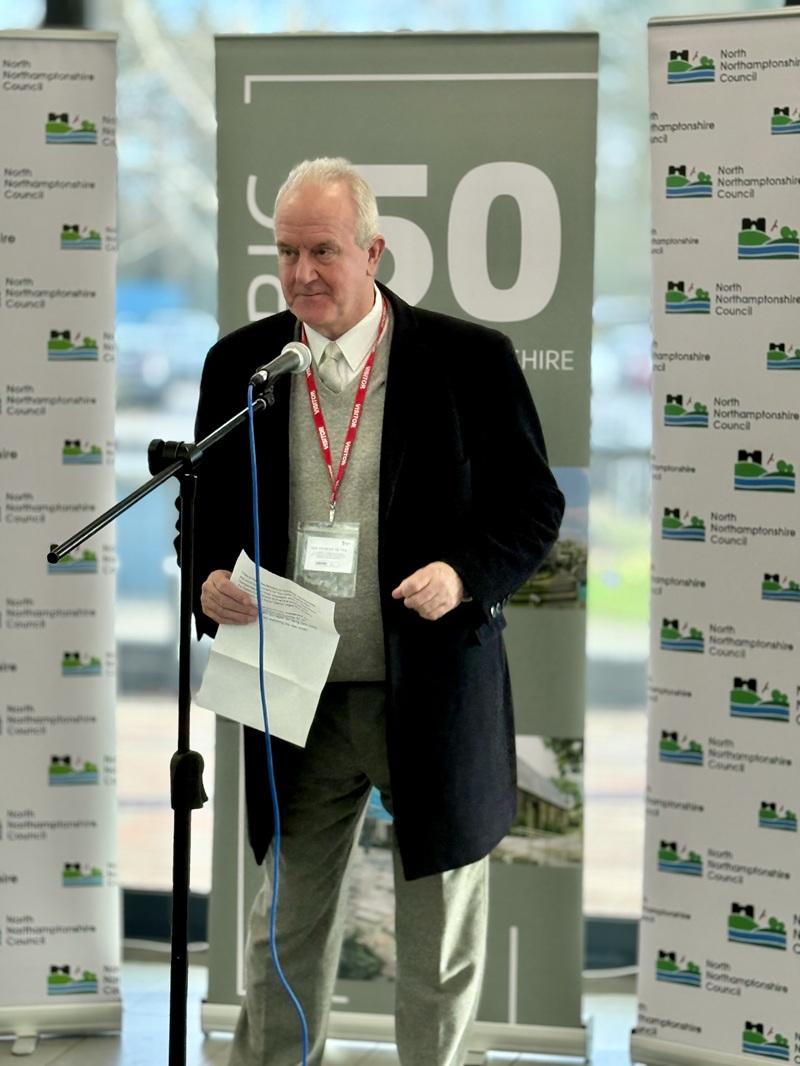 Martin Griffiths, Reform UK (credit: North Northamptonshire Council)
Meanwhile, council leader Martin Griffiths – who back in May claimed that new zero was not a matter for local councils but was instead a “global matter” that was “making everyone poorer” – said the new cycle lane would usher in a “greener environment” in Corby.
“This is a vital link for residents and visitors alike, including students from Tresham College. It’s great to see people already using the route, and we hope that usage continues to grow,” Griffiths said.
“But this project is about more than just a cycle path. We’ve made significant improvements to the local area, and by early 2026 we’ll be adding the finishing touches, including new CCTV cameras and the planting of 275 trees across Corby, creating a safer and greener environment for everyone.”
But what do other Reform politicians think about cycling?
As noted above, the universal praise for Corby’s new cycle lane among Reform’s councillors is a far cry from the party’s usual position on bike-related infrastructure in other parts of the country.
In September, we reported that progress on a long-awaited cycle route between Kenilworth and Leamington Spa was in danger of being halted after the Reform-run Warwickshire County Council announced that it is conducting a county-wide review into whether cycle lanes are “actually worth it.”
Despite widespread public support for the proposed three-mile route, Reform council leader George Finch suggested the scheme could be subject to review.
“We will have to look at whether the review of the cycle lanes start there, whether we finish that project because the money is there or do reviews elsewhere – maybe in Weddington or other places across Warwickshire – to see whether cycle lanes are actually being used,” he told a press conference.
Finch also said the council would not be “crazily putting down cycle lanes” as it did not believe this was “best for the residents.” He claimed cycling schemes were unlikely to solve either congestion or climate change, which he described as a “crisis they seem to fathom up”.
“As an administration, we believe the addiction to cycle lanes doesn’t solve the crisis that they seem to fathom up, the climate change crisis,” Finch said. “What we do see is when it comes to congestion on roads, cycle lanes are not the most sensible option, which is why you have seen a change in the political sphere here.”
And in September, a Reform party councillor in Derbyshire branded cycling and walking routes in the Peak District “tinkering around with pleasantries” and urged the county’s council to instead prioritise railway infrastructure and journeys.
“As a country that is really struggling at the moment, we need to get back to manufacturing,” Reform member David Harvey argued. “This year is the 200th anniversary of the Stockton to Darlington railway, designed by George Stephenson, who is buried in Chesterfield.
“He was one of the great British engineers and we need to make Britain great once again. We need to be at the forefront of developing, engineering, manufacturing, technology, that is what we are really good at and we must bring this back.
“It is all very well having cycling and walking paths through the Peak District – it is very nice, I have done it myself, but we must have a focus on growing the economy.”
> What to expect for cycling if Reform UK get into power
In April, ahead of what turned out to be a very successful local election campaign, the party’s leader Nigel Farage appeared on BBC Breakfast to argue that councils were prioritising projects such as bike lanes and climate departments over essential services, accusing them of mismanaging public funds.
“You look at where they spend the money — tens of millions being spent on cycle lanes that no one uses, huge departments of people dealing with climate change, but all people really want are proper, well-run local services,” the former UKIP leader said.
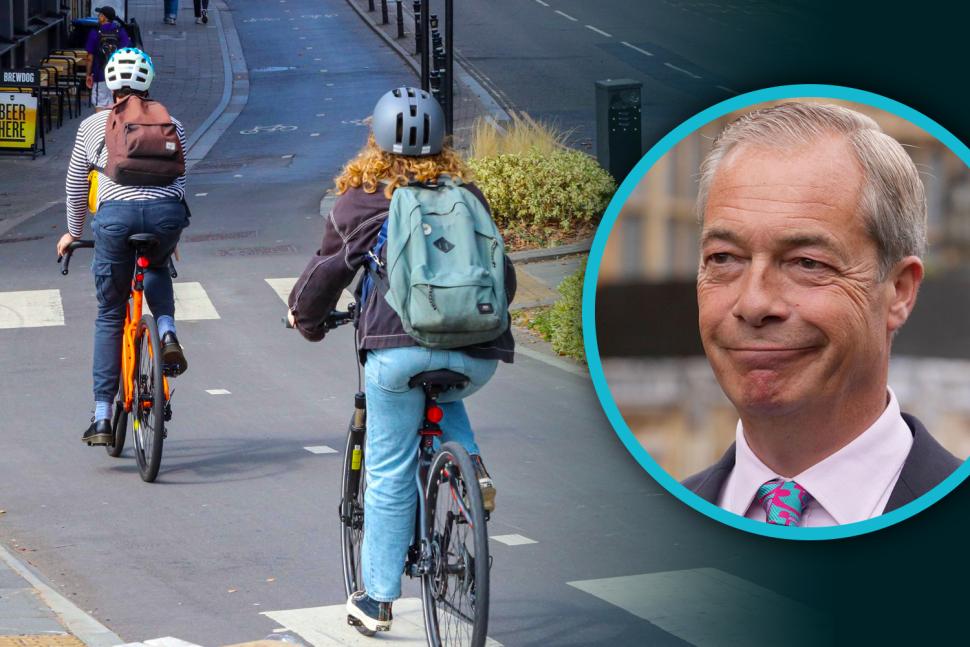 Commuters and Nigel Farage (credit: Various)
Following the party’s big electoral gains, former chair Zia Yusuf pledged to remove all low traffic neighbourhoods (LTNs) from the areas it now controls – only for the local authorities in question to confirm that they do not, in fact, currently have any of the traffic-calming schemes in place, a gaffe that prompted opponents to brand Reform “utterly clueless about how to run a council”.
However, despite Reform’s often hostile anti-cycling rhetoric and ability to target active travel initiatives as one of their many wedge issues, Active Travel England chief Chris Boardman has said that he remains hopeful that cycling and walking will remain high on the list of priorities for local authorities and regional mayors.
“I think the rise of Reform has certainly got people nervous because it’s getting the headlines,” Boardman told road.cc earlier this year.
“Reform are looking to make pretty much anything into a wedge issue, even if it’s to the detriment of our own communities, and I think the way to counter that is to stop talking about cycling and walking, and talk about the outcome of cycling and walking.
“So if you say to local communities, ‘I want your children to have transport independence and the right and the freedom to be able to stay at after school clubs because they can come and go as they please’.
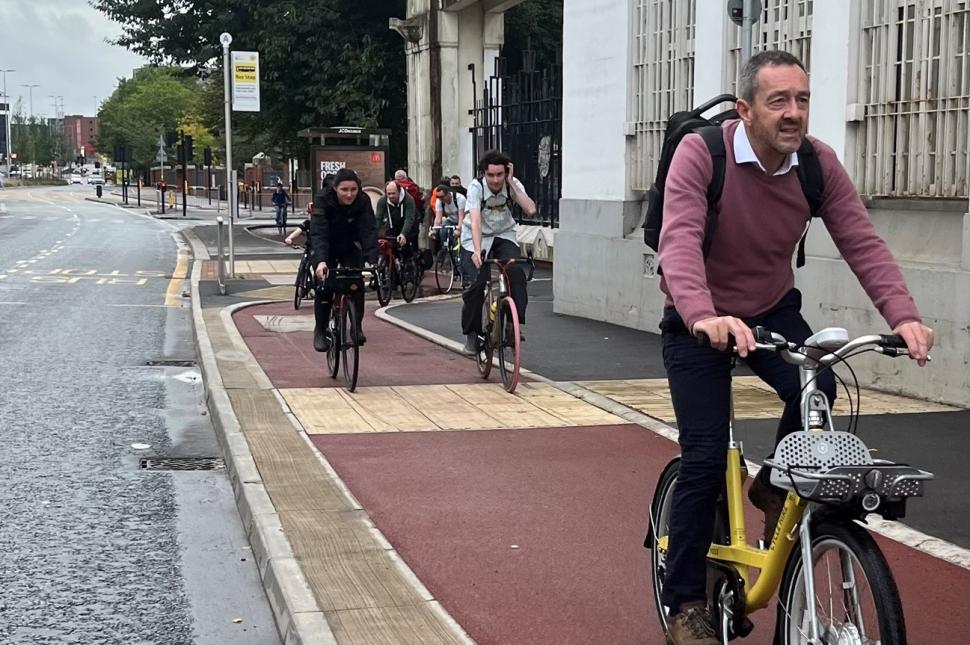 Chris Boardman (credit: Active Travel England)
“If you ask parents or voters that question, then they get it and that’s something that matters to me. ‘I want to make sure every pavement in our region is usable by a parent with a double buggy or somebody in a wheelchair, who’s with me?’ Ask that question rather than, do you want to ban payment parking, because you’ll get a wholly different response.
“And this is something we’re really immature at is how we message. It’s not spin. It’s telling a data-driven story in a way that more people understand it and we have to get a lot better at that.
“I don’t want people to not be angry. I want the anger pointed in the right direction. 200 miles from Westminster, 73 per cent of kids have the freedom to get around under their own steam every day and we are being denied that. So, if you frame it like that, I think you’ll find you’ve got awful lot of people on your side and the anger is appropriately directed.”