
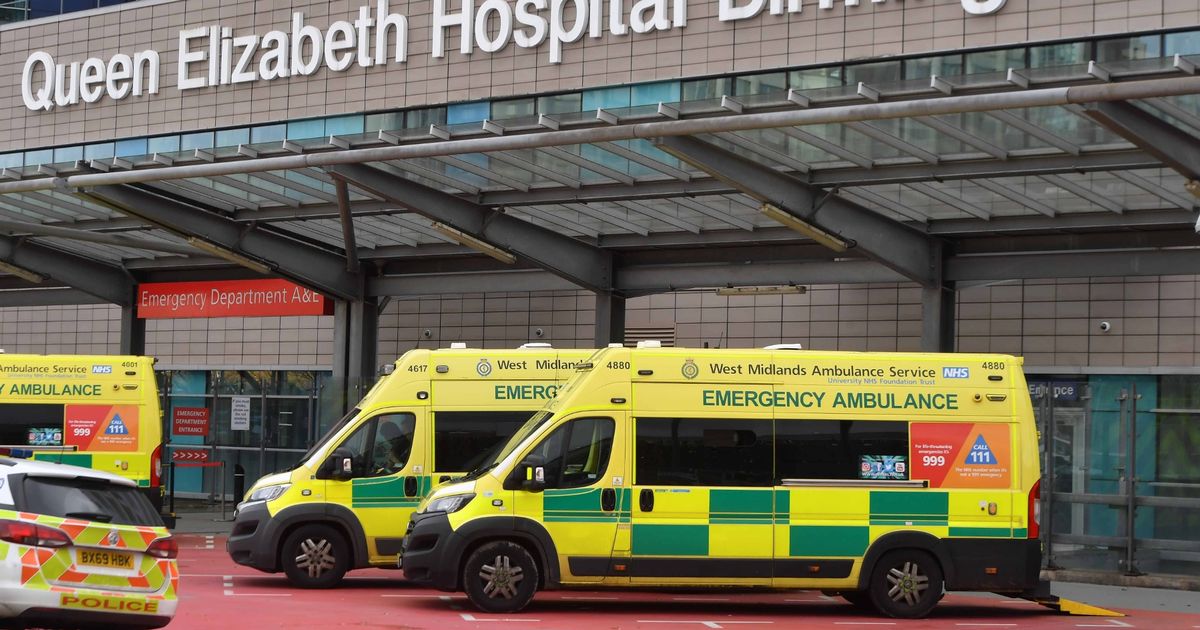
The Queen Elizabeth, Good Hope, Heartlands and Solihull hospitals each had critical incidents in place on Monday, December 8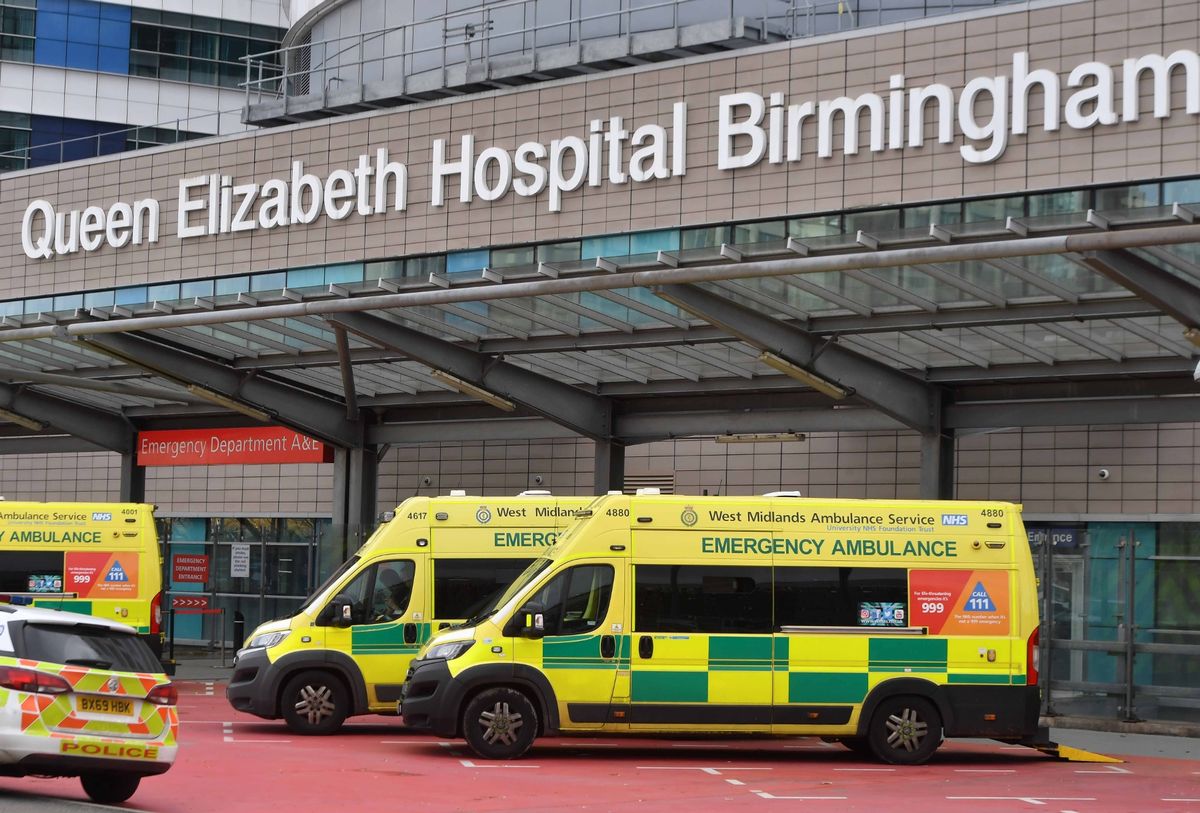 Ambulances outside the A&E department at the Queen Elizabeth Hospital(Image: Darren Quinton/Birmingham Live)
Four Birmingham hospitals which declared a critical incident after a huge rise of ‘superflu’ cases have stood down the alert.
University Hospitals Birmingham (UHB) NHS Foundation Trust, which runs the Queen Elizabeth, Good Hope, Heartlands and Solihull hospitals, each had critical incidents in place on Monday, December 8.
Each of its overcrowded A&E departments had faced huge demand due to extreme winter pressures amid the high amount of flu patients. But UHB withdrew the critical incident declaration last night, Thursday, December 11.
READ MORE: Cash-strapped Birmingham city council nets £2.3m after quickfire Christmas property sales
READ MORE: Sick Birmingham rapist preyed on teenage girls
READ MORE: Moment yob uses fire extinguisher in ‘dangerous’ police chase in Birmingham
UGB confirmed to BirminghamLive around 240 inpatients with flu remained across its hospital network today, Friday, December 12.
More than a dozen were in critical care.
Figures yesterday 275 patients were in its emergency departments and 89 people had been waiting for an inpatient bed.
Some hospitals were seeing A&E wait times of up to eight hours at the height of the alert earlier this week.
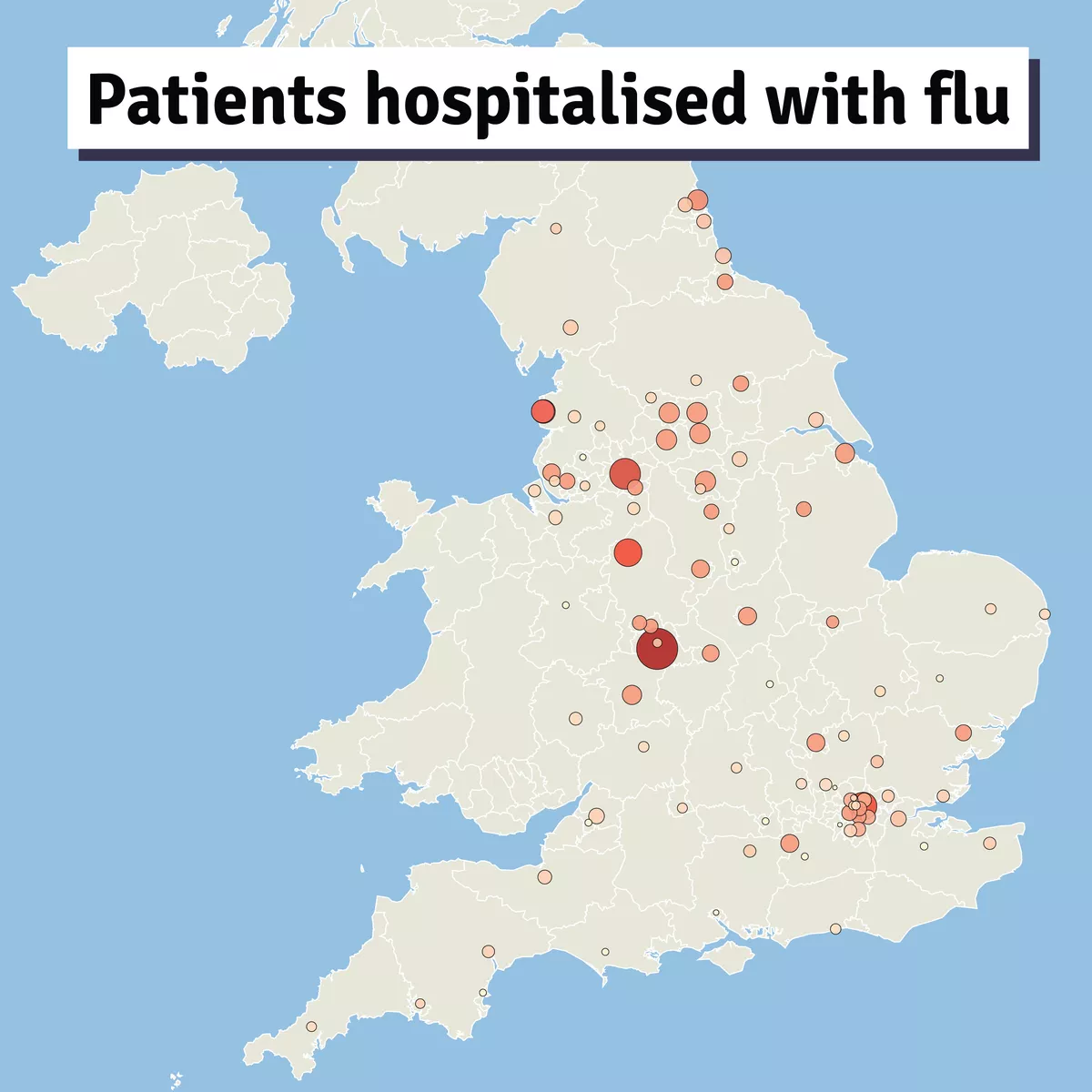 A map shows the areas where the most patients have been hospitalised with flu
Birmingham was found to be the worst affected’ area for the so-called superflu, according to a new update from the NHS. Latest figures showed more than 200 hospital beds a day (217) were being occupied by flu patients at hospitals in Birmingham last week.
University Hospitals of North Midlands NHS Trust, which runs Royal Stoke University Hospital and County Hospital, Stafford, removed its critical incident on Wednesday, December 10.
Get breaking news on BirminghamLive WhatsApp, click the link to join
Dr Grace Shorthouse, a consultant geriatrician at the Midland Metropolitan Hospital in Smethwick said it felt busier than usual for staff.
She told the BBC: “It feels like we’re working a lot harder, particularly related to flu cases at this time of year. But we are coping, we are managing and patients are remaining safe.”