
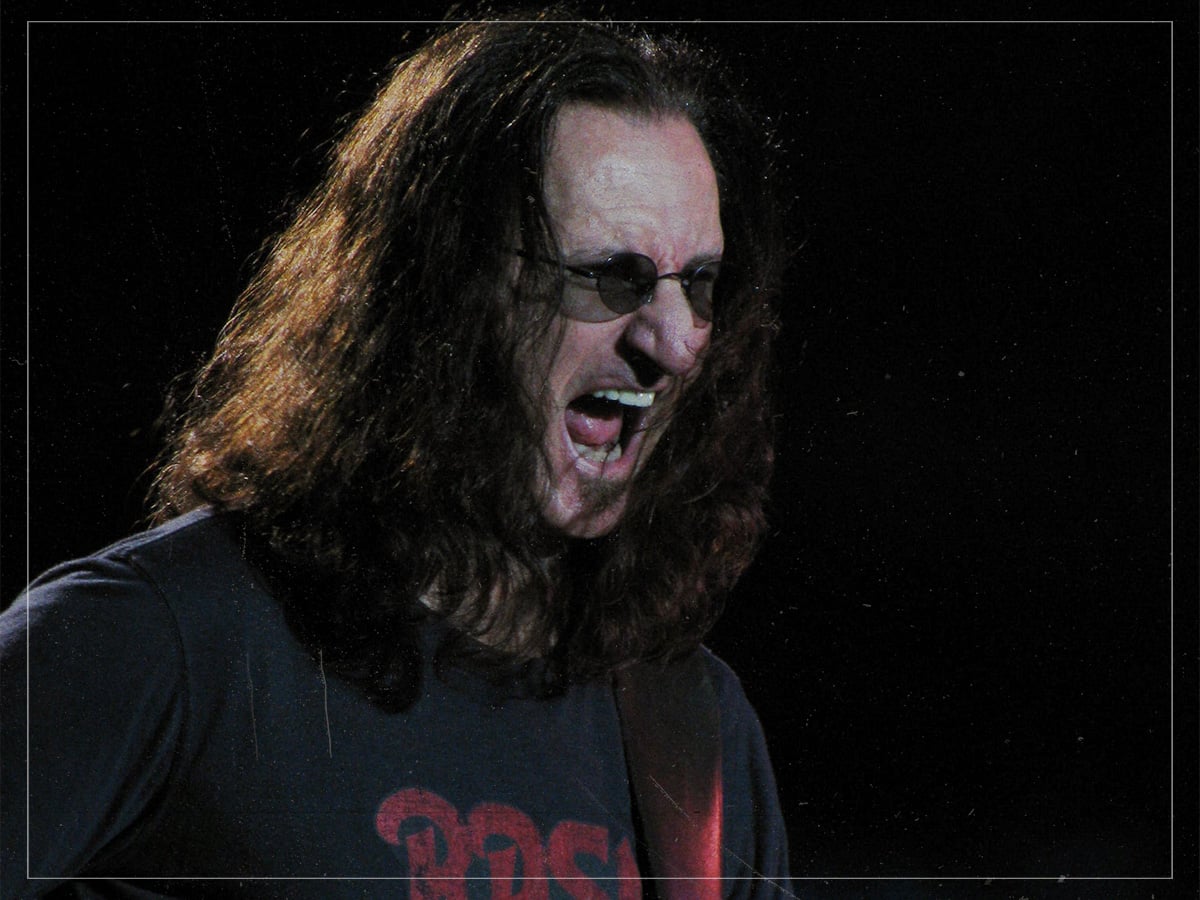
(Credits: Far Out / ceedub13)
Sat 13 December 2025 11:53, UK
Throughout music history, the definition of rock and roll has changed more than a few times. After being known as the kind of music that blared out over parties in the 1950s, the genre ballooned into one of the greatest musical forces of the 20th century. Although Geddy Lee was more inclined to follow the giants of progressive rock, he thought that one rockstar was the epitome of what it should be.
Before Lee had even started putting together his first melodies, he was already a fan of the sounds of hard rock. Becoming enamoured with everyone from The Rolling Stones to Led Zeppelin, he would eventually pick up a bass before being asked to sit in with school buddy Alex Lifeson at a concert.
Despite making a name for themselves with original drummer John Rutsey, it wasn’t until Neil Peart entered the fold that Rush truly had a sound of their own. Cribbing from giants like Yes and Genesis, the Canadian power trio had begun creating songs that could tell a story that stretched beyond the conventional pop single like ‘2112’ or ‘La Villa Strangiato’.
Before progressive rock had gotten its feet wet, artists were already making creative leaps to move music forward. While acts like The Beatles may have been celebrated for making spellbinding leaps whenever they entered the studio in the late 1960s, Pete Townshend was already laying the groundwork of what rock could do with The Who.
Throughout their career, The Who seemed to operate as their rock and roll democracy. Although there was a clear role for every member of the band, no one seemed to outshine any of the others, with Keith Moon providing the steady pulse, John Entwistle as the erratic low-end master, and Roger Daltrey bringing as much heart as possible into every vocal performance. Then again, there isn’t anyone who sings a song quite like the songwriter, and Pete Townshend has always been the heart behind everything.
After graduating from the Mod club circuit, Townshend expanded his horizons on albums like Tommy, creating one of the first rock operas centred around the story of a deaf, dumb, and blind boy. Even when Townshend couldn’t finalise his ideas on albums like Lifehouse, he would turn in the greatest rock music ever laid to tape on tracks like ‘Baba O’Riley’ and ‘Won’t Get Fooled Again’.
When discussing The Who, Lee would consider Townshend’s body of work essential to his career, telling The Quietus, “Many of these records happened to be during the period when I was just beginning to find my way. Not just as a musician but beginning to discover what music was all about. Pete Townsend, for me, is arguably the ultimate rock musician. He can expand on a very simple idea and take it somewhere else. Just by the power of his playing, and it loses none of the initial excitement.”
While Rush and The Who may have distinct sounds across their discography, it’s easy to see where Lee got most of his ideas. Outside of the ferocious bass tone courtesy of Who bassist John Entwistle, many of Rush’s greatest compositions involved Lee singing songs with grander concepts than the traditional rockers, singing about faraway lands or how humankind relates to one another.
Just like Townshend, though, Lee never forgot how to make a song jump in the way from the minute it starts. It may be difficult trying to express the values one feels through the lyrics, but Lee has mastered the art of taking those visions and turning them into musical exorcisms whenever he straps on his four-string.
Related Topics