
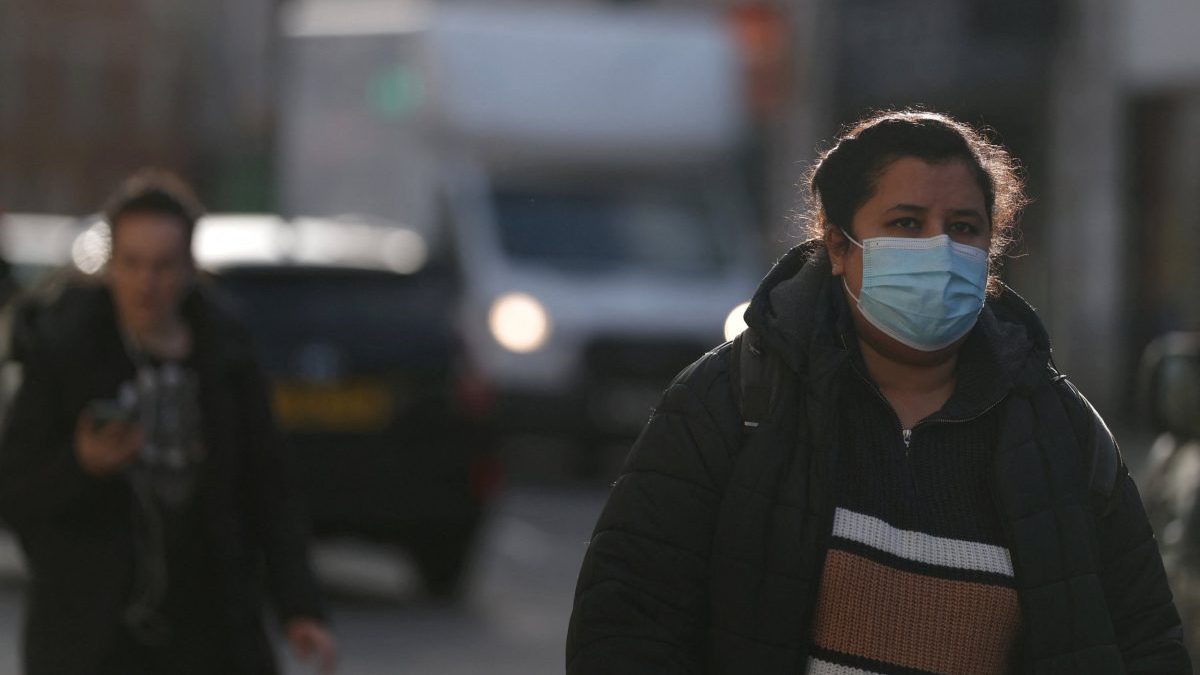
Wes Streeting has claimed the NHS is in a ‘terrifying position’ because resident doctors are due to strike next week – while some pharmacists have warned of flu jab supply issues
Existing health inequalities and lower levels of vaccination uptake have made some areas of England more vulnerable to “super flu” this Christmas – with cases unlikely to peak until mid-January.
Experts say that flu rates could still spike in different parts of the country, with Liverpool and the wider North West particularly exposed due to low uptake of the flu vaccine among pregnant women and those with underlying health conditions.
At present, the North East and Yorkshire has the highest number of people in hospital with flu, according to the latest figures. NHS bosses warn they are facing a “worst case scenario” this Christmas.
At least 645 people required a hospital bed because of flu each day in the region between 1 to 7 December, the NHS data shows.
By comparison, 136 people were in beds with flu in the South West.
The Midlands (611) and the North West (388) are also experiencing the highest levels of hospital demand from the mutant strain of the virus – H3N2, also known as subclade K – which has been driving an earlier than usual surge in cases.
Health Secretary Wes Streeting has claimed the NHS is in a “terrifying position” because resident doctors are due to go on strike next week – though the medical director for the NHS in London, Chris Streather, said the flu situation was “well within the boundaries” of what the NHS could cope with.
An average of 2,660 flu patients were in hospital each day last week in England, up from 1,717 the previous week. There were a total of 254 patients in hospital in Wales with flu last week – with 12 of those needing critical care.
In Northern Ireland, 1,184 new cases were recorded in the first week of December – a 24 per cent increase on the previous week.
An average of 662 flu patients were in hospital in Scotland each day last week, up from 446 the previous week, but health experts said the statistics suggest the vaccine is working to prevent severe illness.
Which hospitals have been hit hardest by the mutant flu?
University Hospitals Birmingham NHS Foundation Trust had 211 patients in beds being treated for flu on average last week – the most of anywhere in the country.
The trust serves four hospitals in the West Midlands and is one of the largest in England, treating 2.2 million patients annually.
Manchester University NHS Foundation Trust – which covers seven sites in the region – also has high numbers of flu patients with 102 in general beds.
Around seven patients have needed to be treated in critical care beds for flu, the data shows.
Other hospital trusts in England to be hit hard include Barts in London, the North Midlands and Sheffield.
Dr Simon Clarke, a professor of microbiology at the University of Reading, told The i Paper: “We learned in Covid that these things bubble up in certain areas and it will be a confluence of circumstances.
“Somebody will have come from somewhere where they’ve come into contact with the virus, that might have been this country or it might have been overseas, and they end up in a situation which allows it to spread.
“It might just be a matter of time before other places overtake the North East.
“I would say we’ve got at least another month before we know what the peak of this is going to be.”
Flu vaccine uptake by region
NHS bosses are urging people to get vaccinated against flu ahead of Christmas, as well as follow other sensible measures such as regular hand-washing, ventilating rooms and staying home when ill.
NHS England insists that enough stocks of flu jabs will be available but pharmacists have flagged that private supplies have been affected in some areas.
Olivier Picard, chair of the National Pharmacy Association said that some primary care providers had temporarily run out of stock, but NPA pharmacies had “good availability and are able to vaccinate patients promptly”.
Vaccine uptake is much lower in some parts of the country than others, a pattern which emerged following the Covid-19 pandemic.
Dr Clarke said these places are much more likely to be harder hit by flu in the coming weeks.
“That [low vaccine uptake] will clearly have an impact as well – the people who need the vaccine are the ones who are most likely to end up in hospital because of flu,” he added.
“Last week’s figures were quite shocking for people aged under 65 with clinical conditions that require a vaccine and pregnant women, the uptake was just over a third. Most people are not taking the vaccines, who frankly need it.
“Even 65 and over was over 70 per cent. Low vaccine uptake will influence hospitalisations.”
North West is ‘vulnerable’
Liverpool and the wider North West is an outlier with vaccine uptake particularly low in pregnant women and those with underlying health conditions.
Matt Ashton, Director of Public Health at Liverpool City Council, told The i Paper: “It’s not that flu is any different here, or that flu is particularly a hotspot here – it’s the vulnerability bit.
“From a vaccine [uptake] perspective, it seems to be bit lower – I see the pattern across the whole of Cheshire and Merseyside. Vaccination is a choice, but I think sometimes people aren’t aware of the risks.
“Flu is a nasty virus, 7,000 people die a year from flu. It’s nasty if you get it and pass it on to someone who might be vulnerable.
“The difference from Covid is this is entirely predictable – just like Christmas flu comes every year and we have a vaccine that is well-known, well-proven to work, very very safe.”
Ashton said Liverpool’s main hospital has had almost 700 people present to A&E with flu since October, and that around 40 people are currently in a hospital bed with flu.
Although those numbers aren’t beyond the capacity of the hospital, it comes at a time when the NHS is already busy dealing with other winter pressures.
“It’s not all about flu but this is an additional pressure,” he said. “We’ve got to keep the health system for those who really need it.”
Streeting has said the resident doctors’ strike is due to go ahead in what will be the “most painful” time for the NHS.
Some hospitals have been urging staff, patients and visitors to wear face masks when attending in recent days.
However, Ashton said he does not believe localised restrictions are likely to be introduced, as happened during the pandemic.
“In particular healthcare settings they might introduce particular measures if they have an outbreak or if they are feeling particularly strained,” he added.
“That could be a local decision from a hospital trust or GP surgery – we wouldn’t be saying ‘the North West needs to do this rather than the rest of the country’.
“Vaccination rates are lower in the North West, and they have been for a long time and part of our job is to make sure people understand why vaccination is important.
“We used to have very high rates for vaccinations – it’s in recent years it’s dropped. It’s really important that the general public are with us, with health on this.”