
Refresh
2025-12-15T14:00:19.562Z
Geminids peak

A Geminids meteor streaking across the sky above the Garze Tibetan Autonomous Prefecture in China. (Image credit: Fu Yujianglin/VCG via Getty Images)
Did you catch any meteors this weekend? The Geminid meteor shower peaked on Saturday night and Sunday morning in a near-moonless sky, making it perfect conditions for capturing the spectacle on camera.
The Geminids represent the most prolific meteor shower of the year. While the shower has been ongoing since Dec. 4, the best time to see its meteors was supposed to be overnight on Saturday through Sunday.
I didn’t see any because I was busy and unwilling to brave the cold. If like me you missed them too, we’ve still got a few more days to brave the elements — the Geminids will remain active until Dec. 20. I’ll also pull together a little gallery of some of the best images from the Geminids’ peak to mark the event.
If you want to learn more about the Geminids, check out our 2025 Geminids meteor shower guide by skywatching expert Jamie Carter.
2025-12-15T12:55:50.754Z
Live Science weekend news roundup
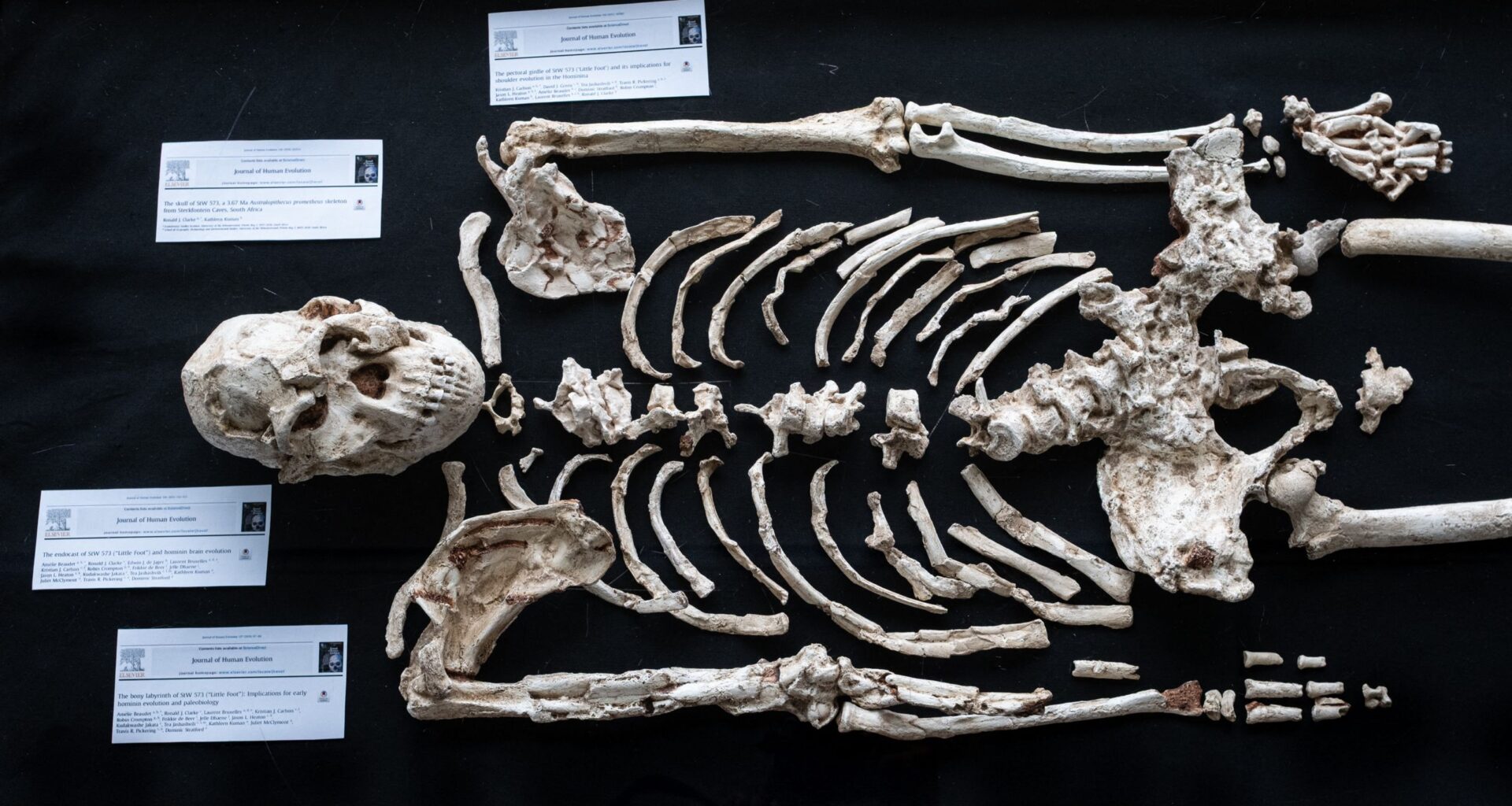
Little Foot is a near-complete Australopithecus skeleton — the most complete ever discovered — from South Africa. Researchers first unveiled the small ancient human in 2017, but precisely where it sits on our family tree has been the subject of scientific debate.

A reproduction of Little Foot is on display at the Sterkfontein caves’ exhibit, located within the Cradle of Humankind UNESCO World Heritage Site in South Africa. (Image credit: EMMANUEL CROSET/AFP via Getty Images)
Some have proposed that Little Foot is a previously unknown species and should be given the name Australopithecus prometheus. However, A. prometheus is a recycled name that was initially meant for another South African fossil discovered in 1948, but fell out of favour after researchers decided that the fossil was likely from the known species Australopithecus africanus. Another possibility was that Little Foot was also A. africanus.
The new claims derive from a study published last month in the American Journal of Biological Anthropology. Here, the research team argues that neither A. prometheus nor A. africanus is an appropriate classification for Little Foot.
The classification of human fossils is often contested, so I’m keen to see how other anthropologists react to the new study and will follow up with more information as it emerges.

Patrick Pester
Trending News Writer