
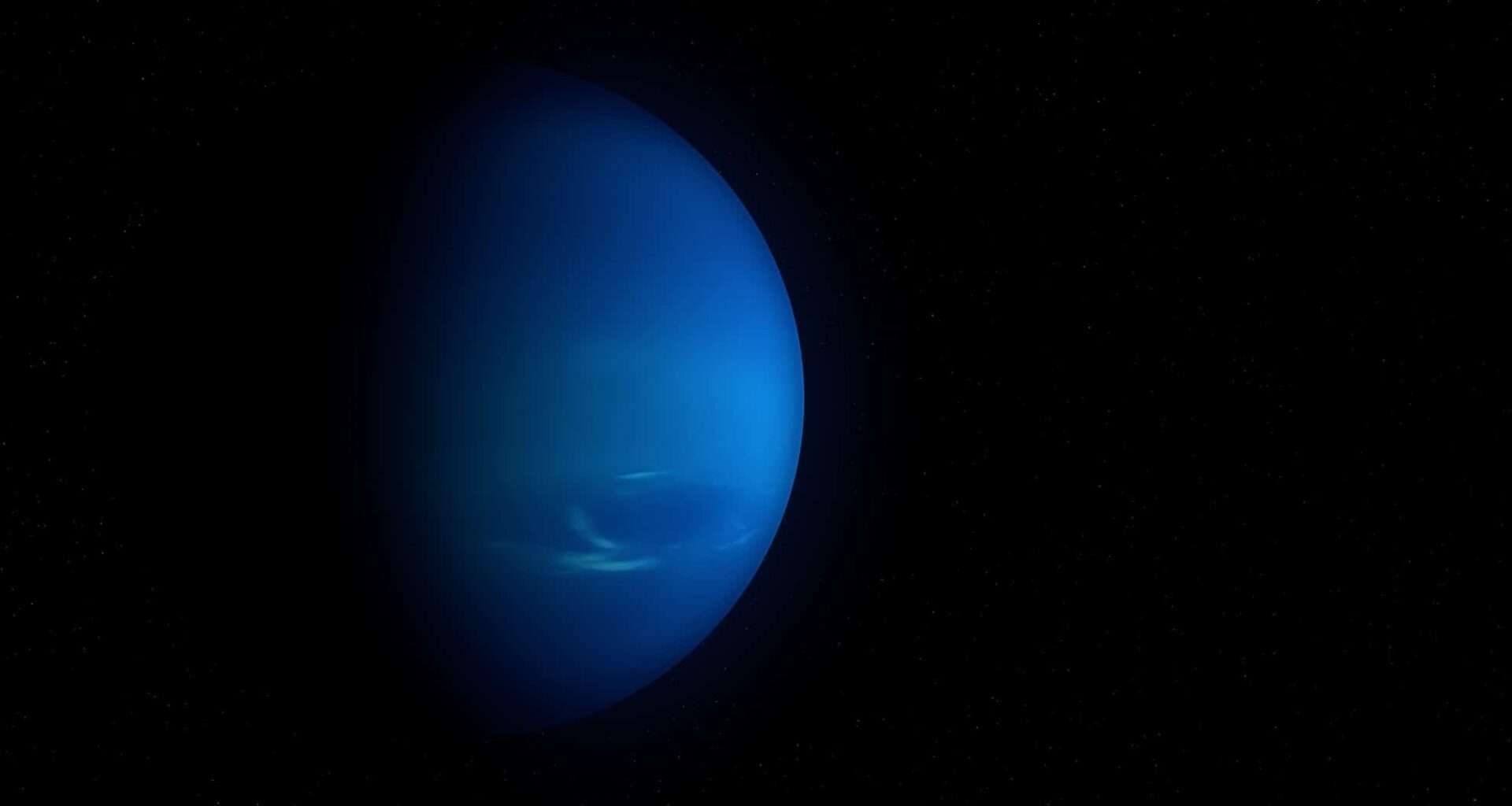
For decades, scientists have grouped Uranus and Neptune with other ice giants like Saturn and Jupiter, assuming that their interiors were primarily made up of water, methane, and ammonia. The traditional view was that these planets had a rocky core surrounded by a thick icy layer.
However, the new models, led by doctoral student Luca Morf, present a more flexible approach, allowing for a range of rock-to-water ratios.
A Break from Traditional Models
The shift away from the traditional “ice giant“ model comes from new simulations that are less constrained by prior assumptions. While earlier studies relied on models that imposed fixed density, temperature, and composition profiles, Morf’s team used an innovative framework that allowed for a wider range of compositions.
By randomly generating density profiles for the planets’ interiors, the researchers created models that could incorporate varying amounts of rock, water, hydrogen, helium, and iron. According to Morf, the new approach provides a more accurate view of the planets’ internal structures, one that doesn’t rely on a singular, rigid model.
These new findings published in Astronomy and Astrophysics, suggest that Uranus could have a rock-to-water ratio between 0.04 and 3.92, and Neptune’s range spans from 0.20 to 1.78. This could mean that both planets may have rocky interiors buried beneath icy exteriors. The research challenges the longstanding notion that these planets are dominated by icy materials, and it opens up the possibility that their formation might be more complex than previously thought, reports Earth.com.
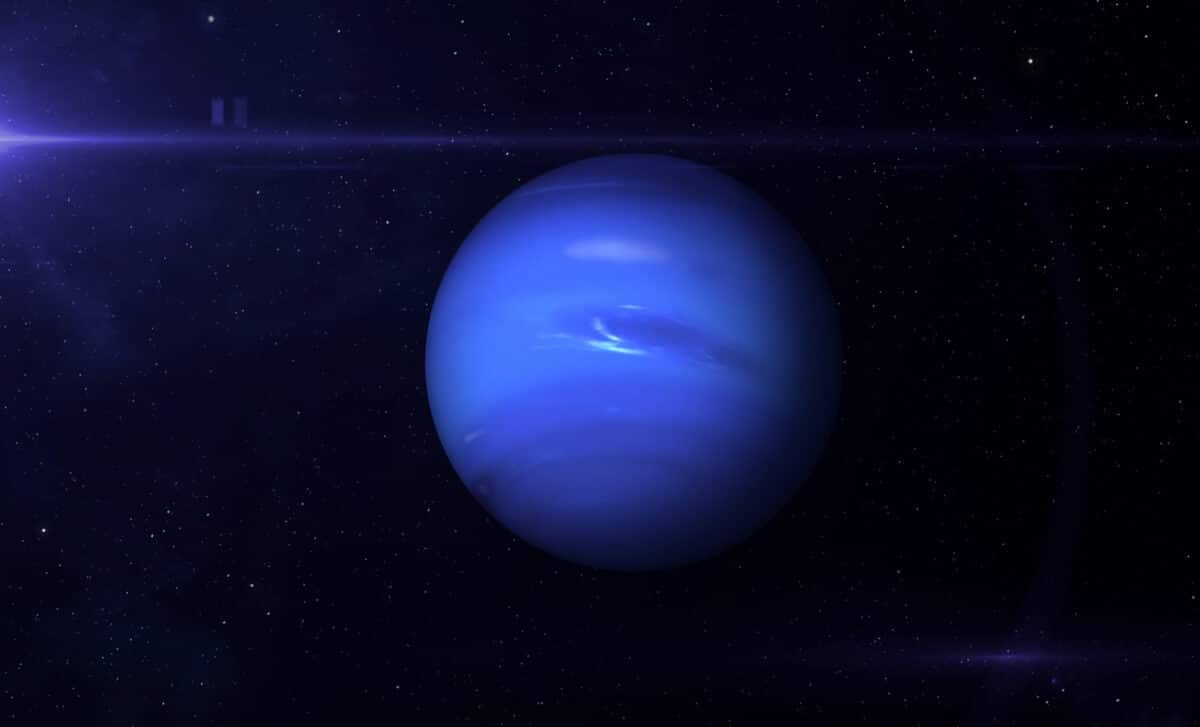 View of the planet Neptune from space – © Shutterstock
Understanding Magnetic Fields
One of the intriguing aspects of Uranus and Neptune is their unusual magnetic fields. Unlike Earth, which has a simple dipolar magnetic field, both Uranus and Neptune possess multipolar magnetic fields that are lopsided and difficult to explain. The new models suggest that these odd magnetic fields could be due to the presence of ionic water layers deep within the planets. Ionic water, which forms under extreme pressure, is a conductive material that could generate magnetic fields as it moves.
According to Ravit Helled, the study’s principal investigator, these ionic water layers could explain the non-dipolar magnetic fields observed by Voyager 2 during its flybys of the planets. Previous research had already linked high-pressure, superionic water to the magnetic anomalies of Uranus and Neptune.
The new models support this theory, showing that these conducting layers could be situated at depths that match the observed magnetic field patterns. This connection provides further evidence that the composition of these planets is more complex than originally thought.
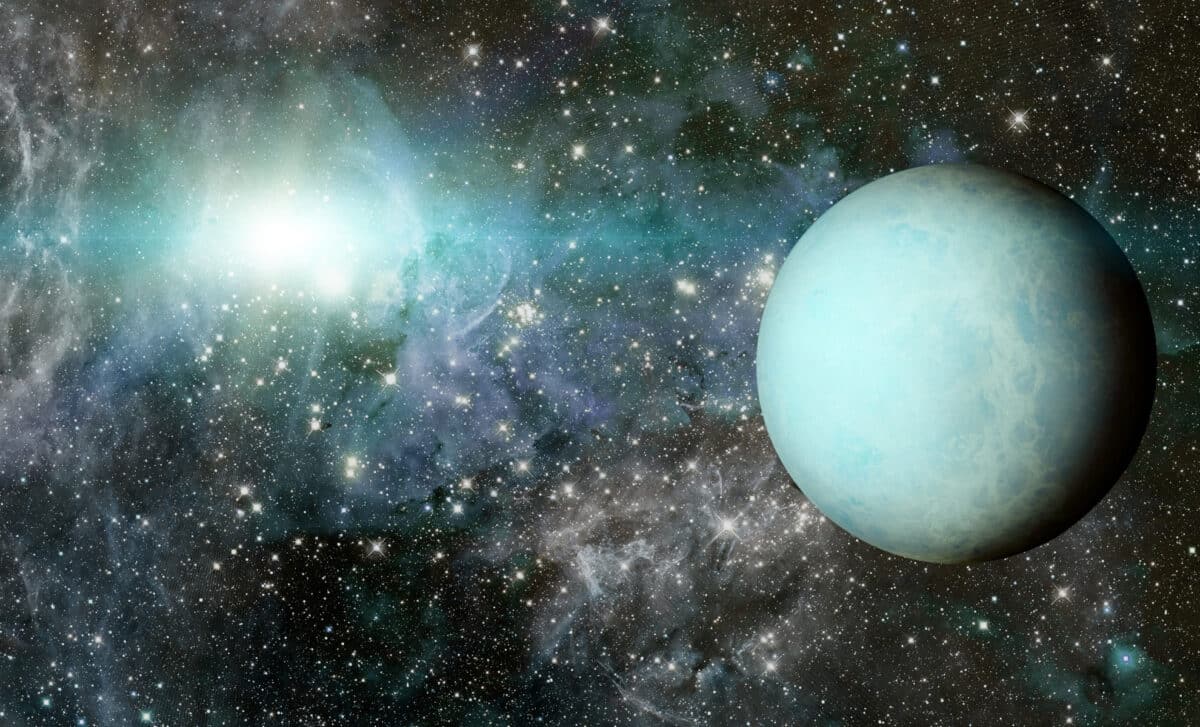 View of the planet Uranus. Elements of this image provided by NASA – © Shutterstock
The Need for Future Exploration
Despite the promising new models, scientists still face significant challenges in understanding the true nature of Uranus and Neptune’s interiors. The current models are based on limited data, primarily from the Voyager 2 flybys, which provide only a snapshot of the planets’ gravity fields.
As Morf and his colleagues point out, small uncertainties in the equations of state that describe the behavior of materials under extreme pressure can lead to different interpretations of the planets’ internal compositions. Because many possible interior structures could produce similar mass, radius, and gravity profiles, no single model can definitively explain the planets’ interiors.
To gain a clearer picture, scientists will need better data, which could come from future missions. One possible avenue for further exploration is sending orbiters to map the gravity and magnetic fields of these planets in more detail. Atmospheric probes could also be used to sample the composition, winds, and heat flow at deeper levels, helping to refine our understanding of their interiors. According to Helled, future missions to Uranus and Neptune are essential to settle the debate over whether these planets are rock giants or ice giants.