
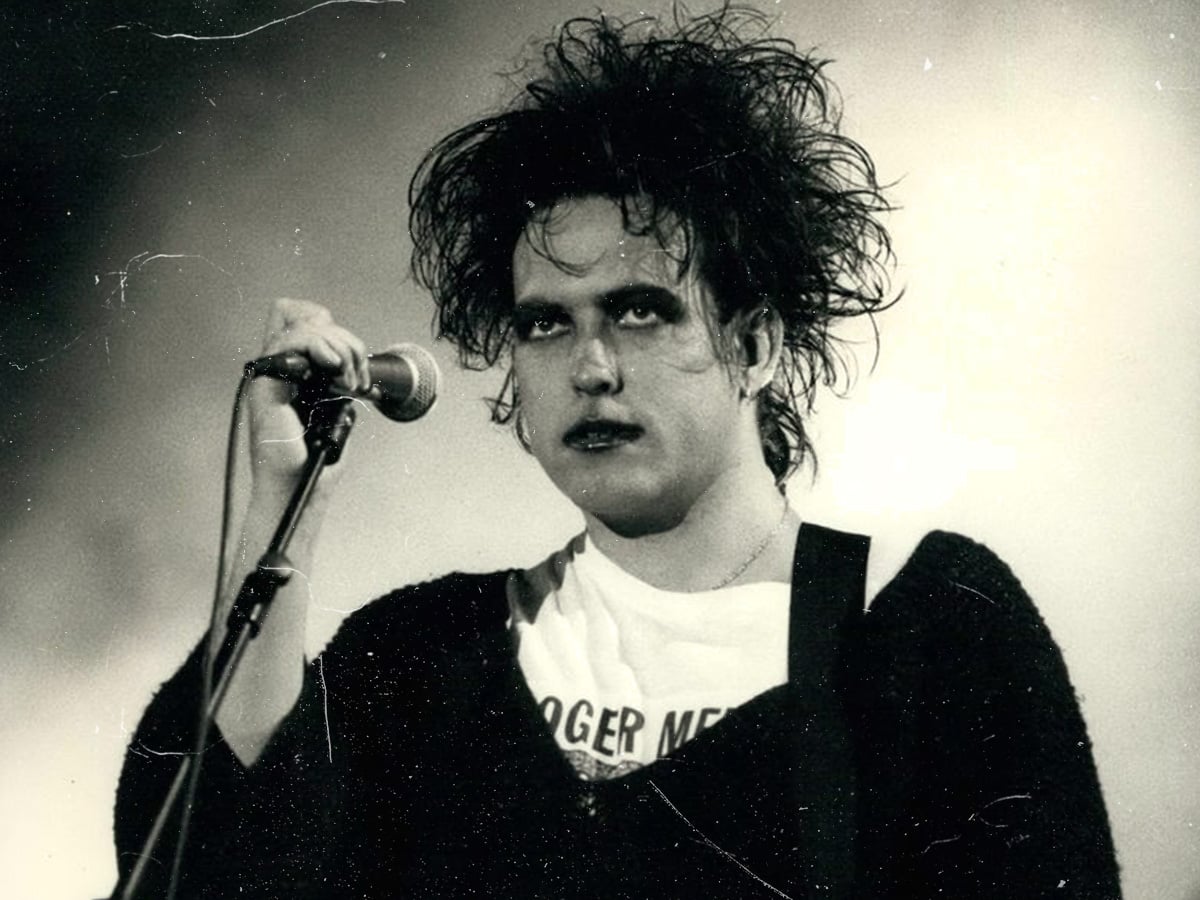
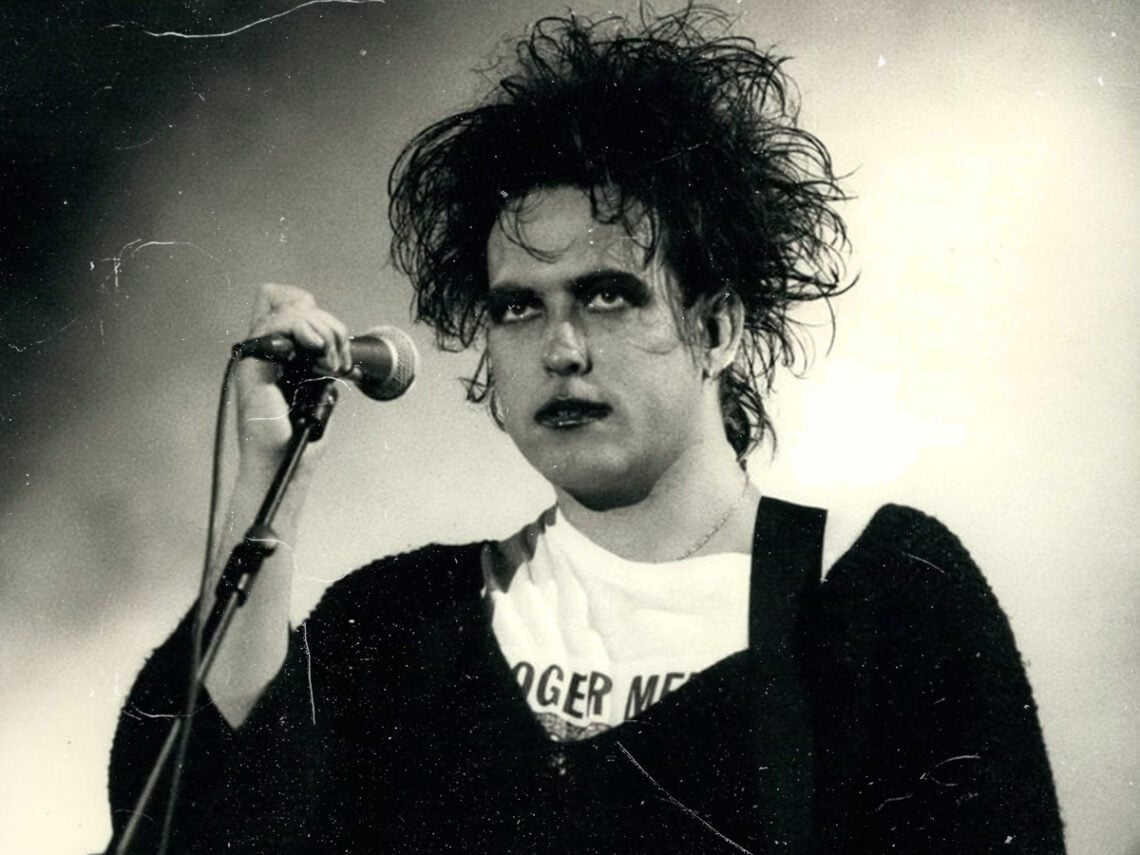
(Credits: Far Out / Alamy)
Mon 15 December 2025 21:00, UK
Robert Smith once explained that one of the reasons why he loses himself in his music is that explaining how he feels is exhausting.
When The Cure first arrived, Smith wasn’t just another heavily-rotated MTV face that became a physical association with gothic new wave; he was a musical force that put things into words that people felt and experienced in their everyday lives. Most of what made it stuck was how it balanced hope with despair, playing on themes of the macabre to navigate the more ambiguous threads of human existence.
Before he became a major name himself, Smith looked for the same quality in other artists. For him, it was always about the emotional response to music, as well as those who had a natural ability to be risk-takers and push boundaries where it counts. Many of his favourite names, including David Bowie, Kate Bush, Joy Division, Prince, Cocteau Twins, and Depeche Mode, all had an artistic expression that hinged on slightly dark, edgier themes, the ones that, in Smith’s words, embodied the “idea of being an outsider and creating characters”.
Most of these influences are ones that Smith carried with him throughout The Cure’s most celebrated moments, with some of them becoming Smith’s own favourite songs, especially the ones that were more inspired by his own personal experiences but brought to life in a way that honoured everything he loved and cherished about music as an art form.
As he once explained, the reason why he loves songs like ‘Faith’, ‘Just Like Heaven’ and ‘Boys Don’t Cry’ is because they reveal a lot about his character and provide glimpses of specific moments in time. “I don’t think I’ll ever write a song that’ll ever move me as much as ‘Faith’, that’ll change my life as much as that song did, or encapsulate a period of my life as well as that one does,” he said.
 Robert Smith performing live with The Cure. (Credits: Far Out / Alamy)
For Smith, there’s nothing better than a song that sticks with you for life. Most of his all-time favourites are ones he discovered young and never let go, whether because of the musical excellence and innovation, the themes and messages, or a mixture of both. This was the case with Nick Drake’s ‘Time Has Told Me’.
“I first heard Nick Drake’s ‘Time Has Told Me’ on an Island sampler called Nice Enough To Eat,” Smith told Uncut. “That song stuck with me all my life. His voice, the way he plays, the simplicity of what he does – yet it’s incredibly difficult, impossible to replicate it.”
He also said how Jimi Hendrix “informs everything I’ve ever done”, mainly because, like many of Smith’s influences, he discovered him young and didn’t know a thing about him at first – he just knew that there was something about his music that drew him in. It was the same with Janis Ian’s ‘Tea & Sympathy’, a mood he’s tried to imitate in his own music, and Joan Armatrading’s ‘Love And Affection’. These are all influences he calls his “lost world”, ones he found early, which “matter so much more than they should then”.
Many of The Cure’s songs achieve the same effect, mainly because, by the time it came to channelling his own worlds into music, Smith was already well-versed in the art of bringing it all to life. And, as he once said, the reason why he got so lost in his music to begin with was that explaining things to people became exhausting, and putting it into fully-fledged, gothic worlds often said much more than he ever could with simple vernacular.
More than that, his songs also have the same inexplicable allure as the many visionaries that he discovered before he became a name in his own right, pulling you in without even having to do much to keep you there – it does because it’s easy to fall into something that feels simple yet convoluted all at once, a true reflection of everything that makes us who we are.
Related Topics