
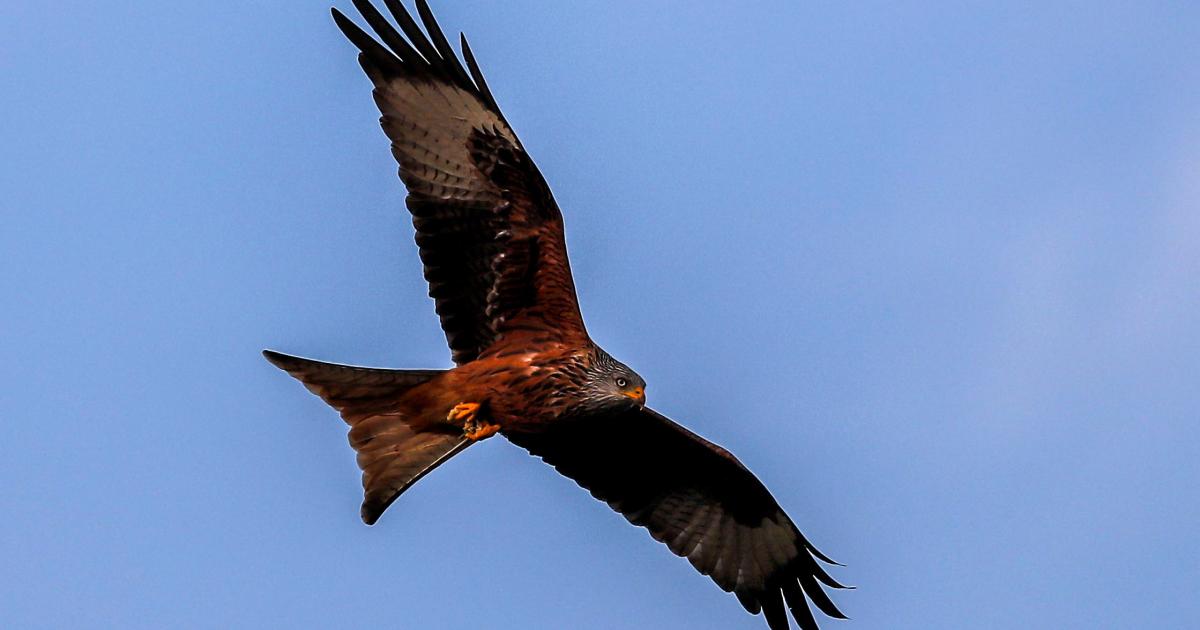
This is despite the species being regarded as a conservation success following near extinction in the mid-20th century.
Research by Wildlife Poisoning Research UK (WPRUK) suggests that these birds are at significant risk due to governmental decisions on environmental policies.
By nature, red kites act as indicators of toxic levels in the environment because of their scavenger lifestyle.
Second-generation anticoagulant rodenticides (SGARs), commonly used as rat poisons, are lethal to these birds when they ingest contaminated rodents.
A risk assessment by the Health and Safety Executive had concluded that outdoor use of these poisons should be banned to protect wildlife.
However, the Government chose to disregard this advice and continued their use, causing concern among conservationists.
Instead of a ban, an agreement was put in place with the pest control industry to reduce wildlife exposure to these toxins.
This agreement led to the creation of the Rodenticide Stewardship Scheme (RSS), aimed at significantly reducing the exposure of wildlife to these substances.
Despite this, the WPRUK’s review of red kite poisoning incidents, under the Government’s own Wildlife Incident Investigation Scheme in both Wales and England, found no decrease in the exposure.
On the contrary, they noted a significant rise in toxin levels, particularly in the highly toxic poison Brodifacoum.
Between 2019 and 2023, years after the policy started, a staggering 62.9 per cent of red kites tested in England and Wales exhibited potentially life-threatening levels of SGAR poisons.
The level of Brodifacoum, still widely available in shops and garden centres for anyone to buy with no questions asked, has surged by 355 per cent.
Dr Ed Blane from WPRUK openly criticised the failing policy, stating: “Evidently this Government policy has dramatically failed and the situation is getting worse.
“It is clearly time now for the UK Government, devolved Governments and their conservation agencies to review where these poisons are used and by whom.
“They appear to have been collectively ‘asleep at the wheel’ as this environmental crisis has developed.”
The Health and Safety Executive (HSE) justified the use of these poisons, stating the lack of suitable alternatives for effective rodent control.
A spokesperson said: “Due to the danger and economic costs of rodents spreading diseases, and the lack of suitable alternative control measures, anticoagulant rodenticides play a critical role in rodent control.
“There are strict controls in place to minimise the risks associated with using anticoagulant rodenticides.
“These strict controls include an industry stewardship scheme which is currently being strengthened following a review.”
The HSE acknowledged that SGARs pose significant environmental risks, but defended their use as a necessary measure due to a lack of viable alternatives.
The stewardship rules are legally binding, ensuring that rodenticides are used responsibly by trained professionals who must prove their competence to access these products.
The Government Oversight Group (GOG) supervises this scheme and is working with the Campaign for Responsible Rodenticide Use (CRRU UK) to finalise recommendations for strengthening the stewardship scheme for the future.
Complete reports on the impact of these poisons on red kites and other species can be accessed on the WPRUK website.