
The head of the National Trust has accused the Government of ‘scapegoating’ nature ahead of an expected weakening of biodiversity protections in the planning system
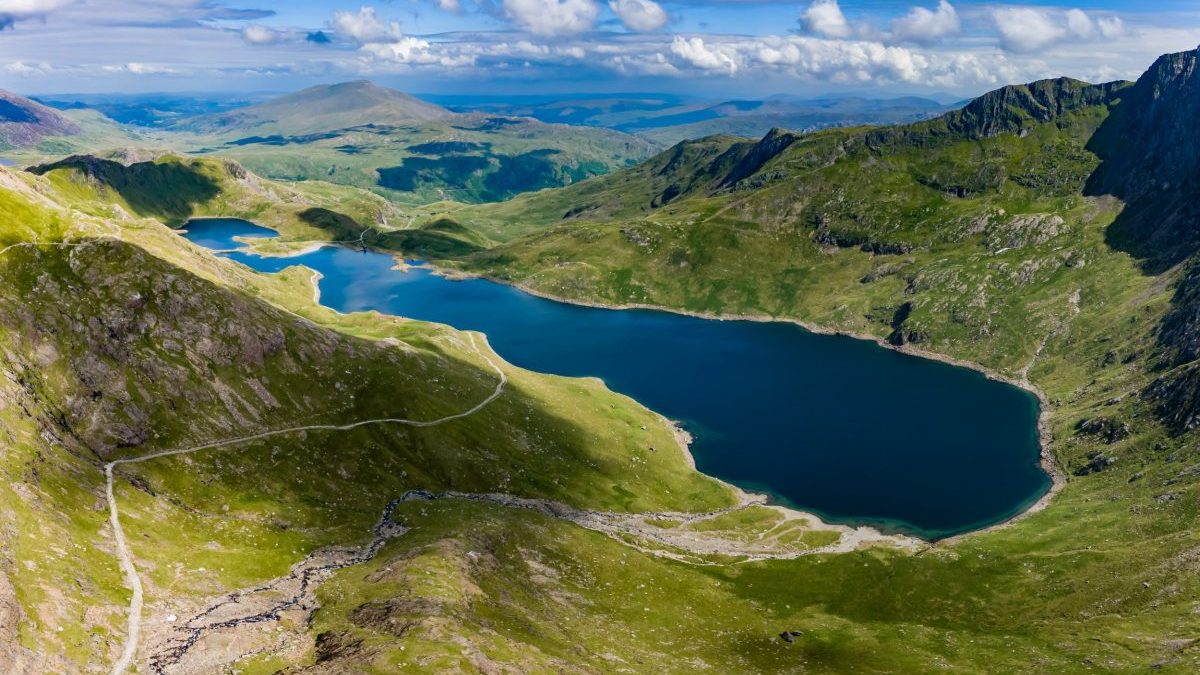
Britain could lose green spaces equivalent to the size of Snowdonia (Eryri National Park) over the next decade under planning reforms expected from the Government this week.
Developers could be allowed to build on landscapes but without any requirement to compensate for the destruction of nature as part of the project.
Nature charities are sounding the alarm over the proposed rollback of rules that require developers to improve biodiversity.
In a bid to boost housebuilding, ministers are expected to announce changes that will relax nature requirements for “small sites” of less than one hectare, which is typically fewer than 49 homes.
New FeatureIn ShortQuick Stories. Same trusted journalism.
Hilary McGrady, the Director General of the National Trust, said the changes mean “landscapes will miss out on hundreds of millions of pounds to bring wildlife back, green jobs will be thwarted, and urban communities will be further deprived of nature”.
Writing in The i Paper, she warned that the changes are “clearly part of a bigger Government strategy to use nature as scapegoat for the UK’s poor record on building”.
It comes as 140 business leaders from industries including environment, finance and development wrote a letter to the Government urging them to avoid rolling back nature protection rules.
Since coming into power, Labour has introduced a series of planning reforms to boost housebuilding, but environmental groups have warned that they risk destroying nature.
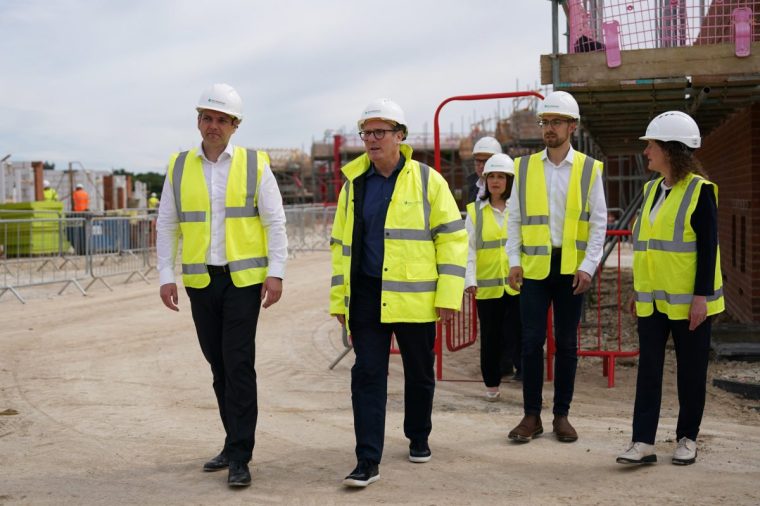 The Government has introduced a series of changes to the planning rules as part of its target to build 1.5 million homes (Photo: Ian Forsyth/Getty)
Tree planting and wild meadows at risk
The latest reforms concern the Biodiversity Net Gain rules, which were introduced by the previous Conservative Government and came into force in 2024.
The rules were introduced as part of efforts to halt the decline of nature in the UK and ensure that developments lead to a 10 per cent boost in biodiversity to get planning approval.
This can be done via the creation of habitats on site, such as by planting trees or wild meadows. If this is not possible, developers can purchase “biodiversity units” from companies who use the money to fund larger nature restoration projects elsewhere.
If small sites are exempted from these rules, it could mean 97 per cent of planning applications in England would no longer be forced to improve nature, according to an analysis published by the environmental economics consultancy, Eftec. Planning is a devolved matter and different rules are in place in other parts of the UK.
The analysis calculated that an area the size of Snowdonia could be built on over the next decade without developers being required to compensate for any nature loss.
‘Worst environmental regression seen in decades’
Craig Bennett, the chief executive of The Wildlife Trusts, described the proposed changes as “the worst environmental regression seen in decades” and accused the Government of “abandoning the nature promises that it was elected on”.
Alongside the changes to Biodiversity Net Gain, the Government recently passed its Planning and Infrastructure Bill despite strong opposition from nature groups.
The law will relax pressures on developers to protect nature on site if they contribute to a Nature Restoration Fund that can be used to restore landscapes elsewhere.
However, environmental groups have argued that paying for nature restoration efforts elsewhere does not compensate for the destruction of rare habibtats that cannot be replicated in other locations.
Earlier this year the Chancellor Rachel Reeves said developers “can stop worrying about the bats and the newts” under Labour, which has set a target of building 1.5 million homes.
The UK is often referred to as one of the most nature-depleted countries in the world, with about half its biodiversity left compared to a global average of 75 per cent.
Your next read

Biodiversity in the UK had declined significantly since the 1970s thanks to a range of factors including urbanisation and intensive agriculture.
The UK has signed up to an international pledge to protect at least 30 per cent of its land and sea for nature by 2030, but is currently expected to miss this target.
Earlier this year, the Environmental Audit Committee published a report that found the Biodiversity Net Gain scheme was crucial if the Government was going to counteract the impact of housebuilding and stay on track to meet its biodiversity pledge.
A Government spokesperson said: “This Government is fully committed to Biodiversity Net Gain and through our recent consultation, we are exploring how to make it easier, quicker, and cheaper to deliver gains for smaller developers while protecting nature and nature markets. We will publish the response in due course.”
Ministers using nature as scapegoat for poor housing record
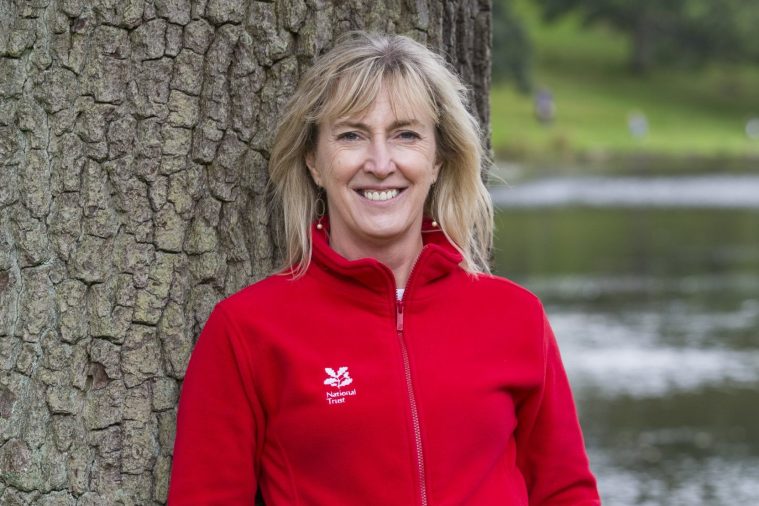 Hilary McGrady said 40 per cent of species have declined over the 1970s (Photo: James Dobson)
by Hilary McGrady, Director General of National Trust
Wildlife has been in for a tough time lately. One minute it’s bats and newts being painted as pantomime villains, and the next it’s snails, spiders, and most recently, fish taking the cop for things not being built. Who knows which cherished British species will be next in line. Red squirrels? Dormice? Oak trees?
So it came as something of a consolation when the Government’s recent Budget was delivered without even a hint of nature-bashing. No “blockers” talk. No “holding the country to ransom”. A refreshing change – or so I thought.
Because just as the nature-loving British public might have been about to take a collective sigh of relief, it emerges that the next danger may already be hurtling down the track. The reprieve for our wonderful wildlife kingdom, it seems, might have been short-lived.
This week the Government is due to announce its plans to reform Biodiversity Net Gain (BNG), an initiative that makes sure nature isn’t just replaced when houses are built, it is measurably improved. That’s important because just as we desperately need more homes in this country, we also desperately need more nature. Since the 1970s, over 40 per cent of all species have declined and one in six is threatened with extinction.
So, it’s good news for ministers then that BNG has been largely welcomed. New markets are emerging, private investors are enthused, and farmers have been preparing for alternative forms of income amid the slow roll-out of other agricultural funding schemes.
But rumours are circling that Government is set to backtrack on BNG this month by removing small sites from the policy and introducing wide ranging exemptions for others. We’re not talking about a few houses here and there – in a worst-case scenario, 97 per cent of all planning applications could be exempt from BNG.
If this change goes ahead, experts believe that land equivalent to three times the size of Birmingham would be built on by developers without having to achieve any improvements – any “net gain” – for nature. Which is a major problem when BNG is one of the few means the Government currently has to even begin to reverse nature’s decline.
The decision would also reduce demand for private investment, essentially cutting off an exciting new market just as it’s emerging. Landscapes will miss out on hundreds of millions of pounds to bring wildlife back, green jobs will be thwarted, and urban communities will be further deprived of nature. This is hardly the Christmas present anyone wanted.
Time for ministers to change tack
And more worrying still is that this is clearly part of a bigger Government strategy to use nature as scapegoat for the UK’s poor record on building. Instead of focussing on the 1.4 million houses that already have planning permission and haven’t yet been built, or the major skills shortage in the construction industry, ministers pick on another unwitting species to blame. Look out otters, it could be you next.
There’s still time for ministers to change tack and the environment sector has proposed a reasonable compromise that would exempt the very smallest developments (under 0.1 hectares) from BNG. But when the UK is one of the most nature-deprived nations in the world, should we even be having this argument?
The irony is that earlier this month, the Government’s own Environmental Improvement Plan said that nature is “the foundation of our wellbeing, our economy and our communities”. If that’s the case, then Government should give BNG a chance to get going. No more exemptions, no more delays.
Instead, Keir Starmer should send a clear signal that private investment in nature is attractive, viable and essential. That a thriving natural world is critical for a sustainable economy. And that the public won’t stand for nature being trashed in pursuit of growth.
As the year draws to a close, a lot hangs in the balance – not least for our dormice, oak trees and beloved red squirrels. The proof will be in the pudding, and whatever the time of year, this nature-loving nation will be watching closely.