
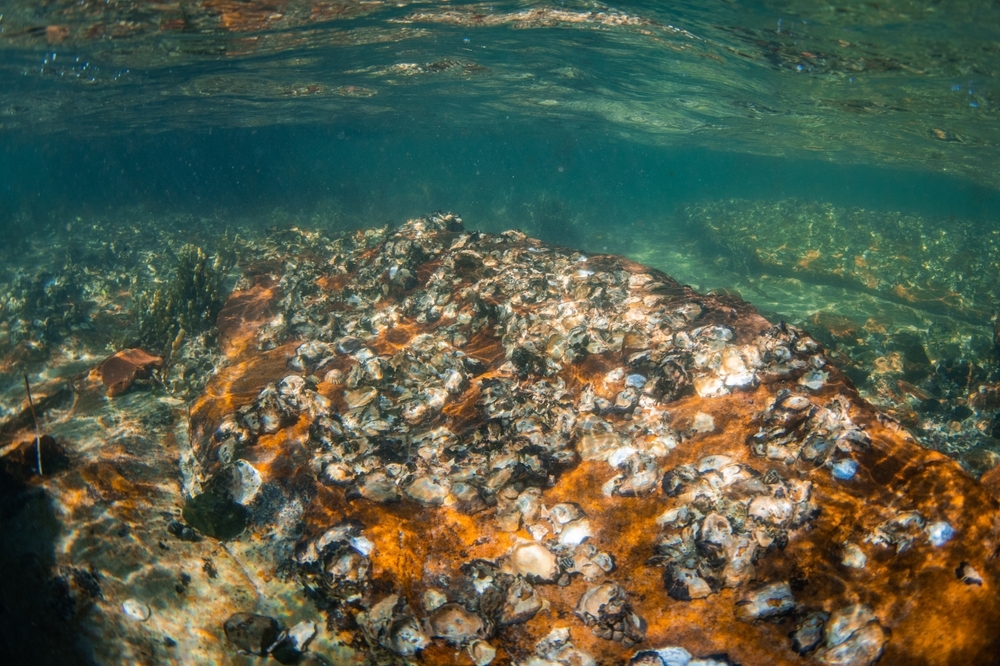
Did you know that the UK’s native oyster population has plummeted by 95 percent since the 1800s? While the molluscs once blanketed the British coast, numbers have dwindled thanks to overfishing, disease and pollution. But oyster reefs are a hugely important part of the underwater world and now there’s a major project underway that’ll boost the UK’s oyster population and bring a long lost marine ecosystem back to life.
As reported by Positive News, at least four million native oysters will return to the seabed off the coast of Norfolk by the end of 2026. Conservationists will install 40,000 clay structures known as ‘Mother Reefs’ on the sea bed just off Blakeney Point. They’re all planted with around 100 young oysters that will grow into adults, reproduce and create an interconnected, self-sustaining reef system.
The restoration project is being led by Oyster Heaven (which has previously succeeded in creating a reef off the coast of the Netherlands), with support from Norfolk Seaweed.
Oysters acts like ‘nature’s water filtration system’ and it’s hoped that bringing millions of them back to the area will help to improve water quality and restore marine ecosystems. Apparently, an individual adult oyster can filter up to 200 litres of water per day. Scientists also say that living reefs help create more resilient coastlines, locking away carbon and buffering coastal areas against storm surges.
The oysters aren’t there to be eaten or used in project, they’re being placed there purely for the environmental benefits.
George Birch, the founder of Oyster Heaven, told Positive News: ‘Building an oyster reef is fundamentally about scale: you need enough oysters to trigger population recovery and bring back the vibrant reef ecosystems, rich with life, that disappeared from the North Sea long ago.
‘Over time, the clay naturally degrades, but by then the oysters have established a self-sustaining, thriving reef that boosts biodiversity, improves water quality, and supports both climate resilience and coastal communities for generations to come.’
Did you see that A wild beaver has been spotted in this British county for the first time in 500 years?
Plus: Four rare animal species are being reintroduced to Scotland.
Stay in the loop: sign up to our free Time Out UK newsletter for the latest UK news and the best stuff happening across the country.