
Galya DimitrovaSouth of England
 Andy Coates

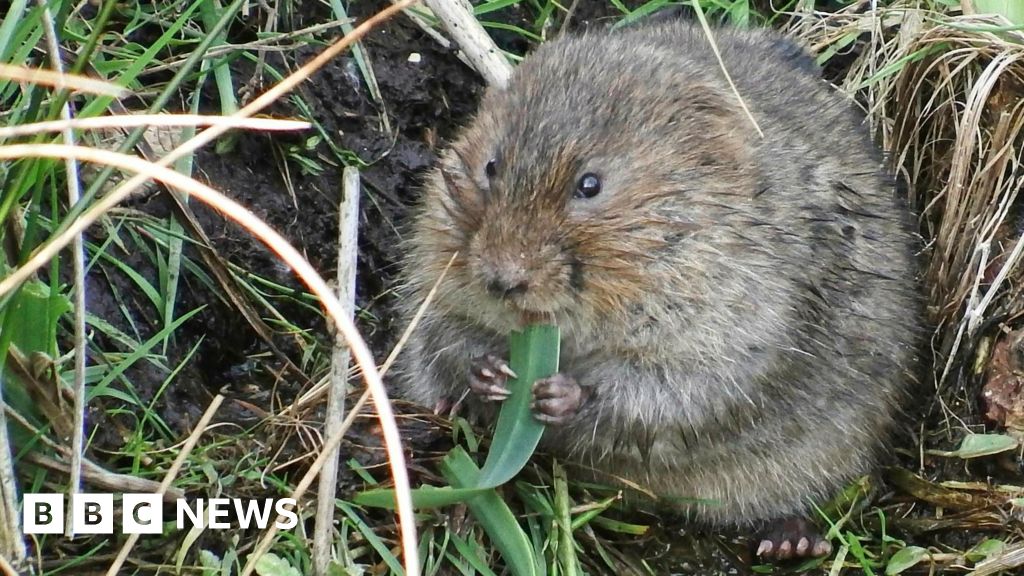
River Thame Conservation Trust volunteers said the new sightings brought “real hope that water voles are still clinging on”
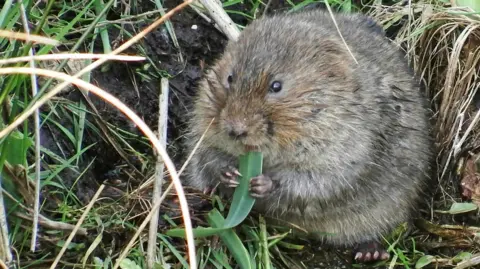
A conservation team has confirmed sightings of Britain’s fastest-declining mammal, the water vole, in a river’s catchment area for the first time in nearly 20 years.
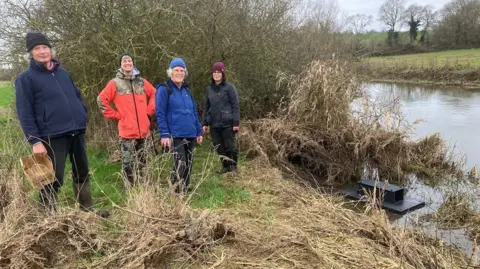
River Thame Conservation Trust (RTCT) volunteers captured video evidence of the species at two sites – on the River Thame near Chearsley, Buckinghamshire, and another on the Chalgrove Brook in Stadhampton, Oxfordshire.
The footage was gathered using motion-sensor wildlife cameras placed across the catchment area and is part of the trust’s long-running monitoring project to detect signs of water voles and other key river species.
RTCT said that was “sparking hope for the species’ recovery in the catchment”.
The trust said the first sighting had come in the form of a “dramatic” video clip at the Chearsley site.
It shows a heron on the riverbank catching and eating two water voles.
“While the footage was not nice to watch, it was also an exciting discovery, evidence of previously undetected water voles in the Thame catchment,” RTCT said.
It said herons presence alongside water voles signalled that the river “is once again able to support a healthy, functioning food web”.
 RTCT
RTCT
River Thame Conservation Trust volunteers captured video evidence of the water woles at two sites
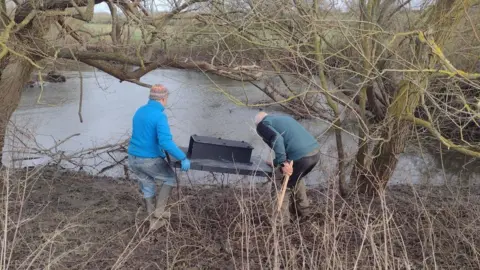
A different volunteer captured footage of a water vole swimming away from a mink monitoring raft deployed on the Chalgrove Brook, confirming that at least one animal there was alive and active.
Paul Jeffery, RTCT volunteer and Oxon Mammal Group treasurer, said regular “visitors” included a brown rat, wood mice and two otters.
“But one evening, a thousand clips later, I stopped – ‘what was that?’ The face was more blunt than a rat, the ears and eyes not quite right.
“Confirmed the next day, it was indeed a water vole, moving upstream at 01:00.”
Mr Jeffery said that brought “real hope that water voles are still clinging on and may one day repopulate the whole river system with our continued help”.
 RTCT
RTCT
Footage of the water vole at the Chalgrove Brook was captured by a trail camera by a mink raft
The species’ numbers have crashed by more than 90% since the 1990s.
Water voles were once a common sight along Britain’s rivers, streams and wetlands before vanishing from 94% of former sites.
RTCT’s Hilary Phillips said the recent findings were “a fantastic affirmation of all the hard work by volunteers and landowners that our combined efforts are making a difference”.
The trust said that in the River Thame catchment, the last confirmed records of surviving water voles dated back to the early 2000s, but populations were known to be dwindling at that time.
In an attempt to boost their numbers, a reintroduction effort was carried out near Cuddesdon and Chiselhampton in 2006.
RTCT said it was not known whether the recently discovered specimens were from the reintroduced voles or the remnants of native populations.
It encourages members of the public to report any sightings of water voles and signs of American mink to local conservation groups or through national invasive species platforms such as INNS Mapper.