
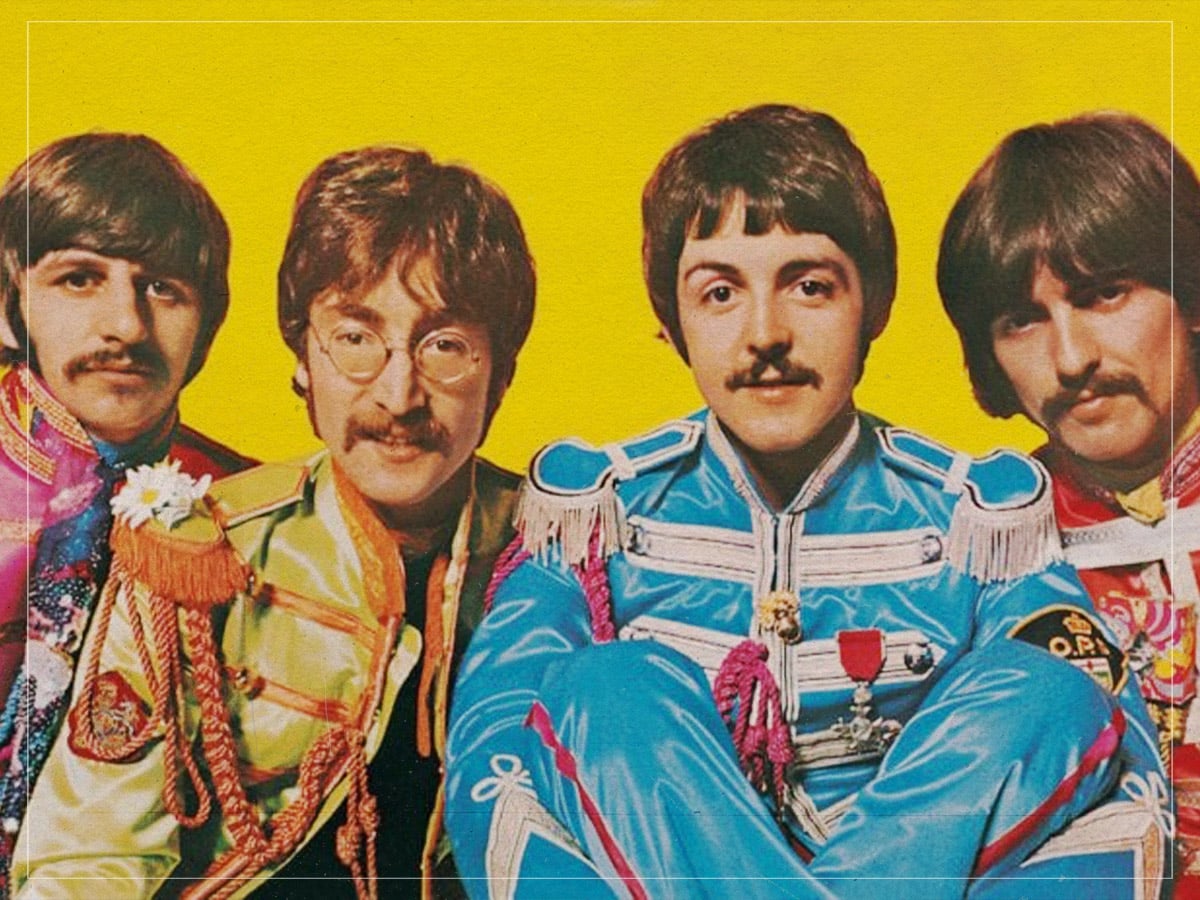
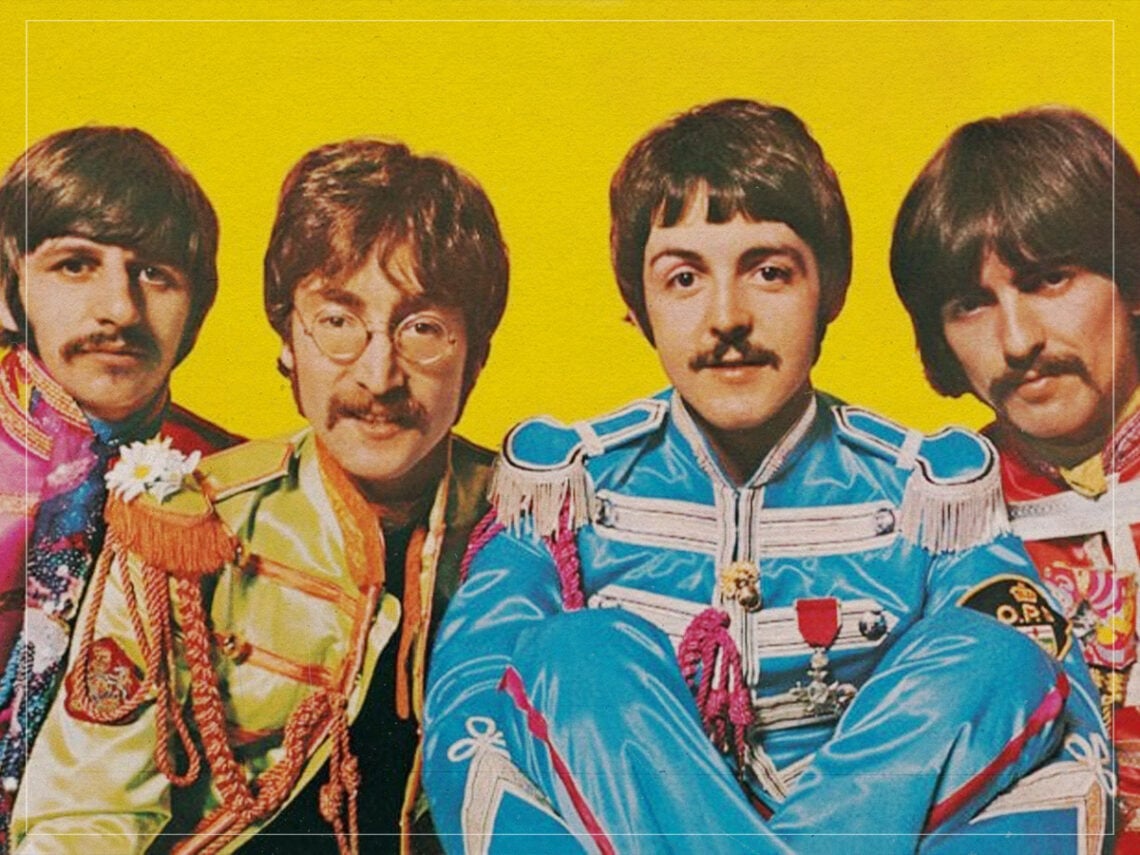
(Credits: Far Out / Apple Corps Ltd)
Tue 16 December 2025 18:45, UK
Two pertinent quotes spring to mind when defining the whirlwind era of the 1960s. The first comes from Hunter S Thompson.
“[It was] the kind of peak that never comes again,” he wrote. “Maybe it meant something. Maybe not, in the long run . . . but no explanation, no mix of words or music or memories can touch that sense of knowing that you were there and alive in that corner of time and the world. Whatever it meant.”
This was an atmosphere that John Lennon expanded on when he commented, “We were all on this ship in the sixties, our generation, a ship going to discover the New World. And the Beatles were in the crow’s nest of that ship.”
The confluence of those two sentiments – the ‘60s representing a seismic peak, and The Beatles being the pinnacle of that protrusion – perfectly indicates the unmatchable impact that the Fab Four had on culture. If there is any justifiable pop culture obsession, then Beatlemania is it. The movement that they spearheaded is the most meaningful in art since the Renaissance.
But the band knew that they were standing on the shoulders of giants, evidencing this on the hero-clad cover of Sgt Pepper’s. In fact, they pretty much embodied the phrase that great artists steal. Bob Dylan’s poetry gave them greater depth. Pet Sounds fed into their expansive studio experimentation. The Who and The Stones gave them a heavy edge. Jimi Hendrix got them thinking about greater musicianship. And so on.
It is often said that the Fab Four were greater than the sum of their parts, but that goes beyond the complementing constitution of the actual band and encapsulates the notion that they were a derivative alloy, containing the alchemical conflux of an entire welter of emerging art. So, it comes as little surprise that when it comes to the song that defined the era, the band look beyond themselves.
 The Beatles looking beyond themselves. (Credits: Far Out / Associated Press)
“I figure no one is educated musically ’til they’ve heard Pet Sounds,” Paul McCartney once decreed.
He added, “I love the orchestra, the arrangements – it may be going overboard to say it’s the classic of the century – but to me, it certainly is a total, classic record that is unbeatable in many ways. I’ve often played Pet Sounds and cried.”
That ability to emotionally move and technically inspire was something that they always wanted to be at the core of their own output. So, as George Martin, the fifth Beatle and their trusty producer, put it, they similarly tried to use the studio as an instrument to see what emotive heights such a move could unlock.
“Without Pet Sounds, Sgt. Pepper wouldn’t have happened,” he said. “Pepper was an attempt to equal Pet Sounds.”
He even went a step further, and after working more closely with The Beatles than anyone, he boldly stated, ”If there is one person that I have to select as a living genius of pop music, I would choose Brian Wilson.” Pet Sounds was at the crux of that comment.
Lennon equally admired the masterpiece, with the late Brian Wilson explaining that the bespectacled Beatle rang him shortly after its release to say ‘it was the greatest album ever made’. He was moved by the magic of Wilson’s innovative approach.
 Brian Wilson and The Beach Boys in 1971. (Credits: Far Out / Public Domain)
And he was just as effusive publicly. “It’s the greatest record I’ve heard for weeks,” Lennon said of ‘The Little Girl I Once Knew’. “It’s fantastic. I hope it will be a hit. It’s all Brian Wilson. He just uses the voices as instruments. You keep waiting for the fabulous breaks. Great arrangement.” And invariably they were hits, because just like The Beatles, Wilson had the canny knack of ensuring his avant-gardism had commercial appeal.
With that outlook, both groups progressed society at large. They offered the mainstream a genuine feeling of hope and revolution that was hitherto unknown and remains unmatched. But every band that followed carried the torch that they set ablaze. As John Paul Jones of Led Zeppelin explains, “Album-oriented artists hardly even existed five years before we made our first record.”
He continued, “There was the Beatles and the Beach Boys, and Dylan of course. I wasn’t even listening to much pop or rock music, at the time. I had one Beatles album, Revolver, and Pet Sounds by the Beach Boys.” You barely need any more than that, and the latter remains the high-water mark for the album movement.
There’s music before Pet Sounds, and then there’s music after Pet Sounds. The Beatles recognised this, and when the waters got choppy for Wilson and co, they simply continued to steer the ship in the right direction from their lofty crow’s nest, never veering too far from the compass of ”the classic of the century.”
Related Topics
The Far Out Beatles Newsletter
All the latest stories about The Beatles from the independent voice of culture.
Straight to your inbox.