
David CowanScotland home affairs correspondent
 PA Media

Police Scotland are attending 14,500 mental health incidents a month, according to the latest figures
Senior officers at Police Scotland say the force remains under unsustainable pressure from mental health incidents, despite a slight reduction in the impact on its frontline.
According to figures released by the force, response teams are attending 14,500 mental health incidents a month, a 6% reduction on two years ago.
It says it is still filling gaps left by other parts of the system and the demand on the service remains “way beyond where policing should be.”
The Scottish Police Federation (SPF) said in one recent case, officers spent four days looking after a teenager because they could not find local services to help her.
The Scottish government says it is working to bring forward further improvements.
In 2023, the force told BBC Scotland News it was facing a vast increase in calls about individuals giving cause for concern at a time when its frontline resources were increasingly over-stretched.
Assistant Chief Constable Catriona Paton said progress had been made in the past two years, but there was still a huge amount of work to be done.
“Policing in Scotland’s purpose hasn’t changed over the last two years and we will always respond to threat, harm and risk,” she said.
“But a person in mental health crisis, doesn’t need law and order, they need someone to listen, understand and help them make good choices.
“We will never step away until there’s an alternative, but we need our partners and our colleagues to recognise that it’s not good for the individual and it’s not good for policing to be filling a gap that should be filled by other services.”
She added: “There needs to be somewhere else where people can go to be safe, that isn’t custody, that isn’t accident and emergency.”
Healthcare link is ‘broken’
The force said a mental health pathway introduced in 2023 has resulted in 9,000 calls to the police being referred to NHS24’s mental health hub.
That has prevented officers from spending around 47,000 hours working on calls where they were not needed.
Another initiative involves police putting people in direct contact with clinicians who triage them over the phone, reducing trips to emergency departments.
Around 2,300 officers have been trained to use a service called distress brief intervention, which allows them to signpost people to the right support.
However the SPF, which represents officers up to the rank of chief inspector, said the pressure on the frontline remains relentless.
Chairman David Threadgold told BBC Scotland News how the connection between police and healthcare teams was “broken or non-existent”.
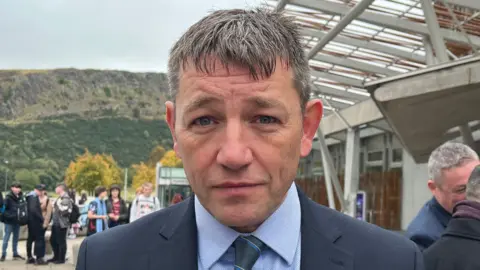
David Threadgold said frontline officers remained under pressure
He said it was “detrimental” to their ability to provide policing across the country.
“There are pockets where we do see progress,” he said.
“But fundamentally we are still losing around 80% or more of our capacity and capability to deliver policing, because we are picking up the health function across Scotland.
“I don’t want to be scaremongering about this because we will always attend to calls where the public need emergency help.”
He added: “In the last couple of weeks I’ve been told of an incident where we spent four days with an individual in Dunoon, and they were then driven 150 miles to another local authority because there was no facility in Scotland to help them.”
‘Mental health crisis’
Some new services are being provided on the ground through the charity Scottish Action for Mental Health (SAMH), which has opened a drop-in centre in Glasgow called the Nook.
“This is our solution to the current mental health crisis that Scotland faces,” said SAMH executive director Alex Cumming.
“Anybody aged 10 plus, young people, adults, families can come and start their mental health journey.”
Mr Cumming said over 900 people have been through its doors since it opened in October – including people referred there by the police.
“The police do a fantastic job, they’re really supportive and focus on people’s well-being,” he said.
“But they would say themselves that sometimes they’re not the best people to have those conversations.
“This is providing an opportunity for them to bring people here quicker, when they identify that other services are not required or relevant for them.”
Justice Secretary Angela Constance highlighted the reduction in mental health incidents recorded by the police and the results of the mental health pathway.
She said: “I recognise the impact of mental health-related incidents on policing, and I am grateful to officers for all they do to help those in distress.
“However, we know we must do more and we are working in partnership with Police Scotland, the Scottish Police Authority, health boards and local authorities to drive forward more improvements.”