
Refresh
2025-12-17T13:02:25.305Z
Comet 3I/ATLAS: An early Christmas gift for scientists
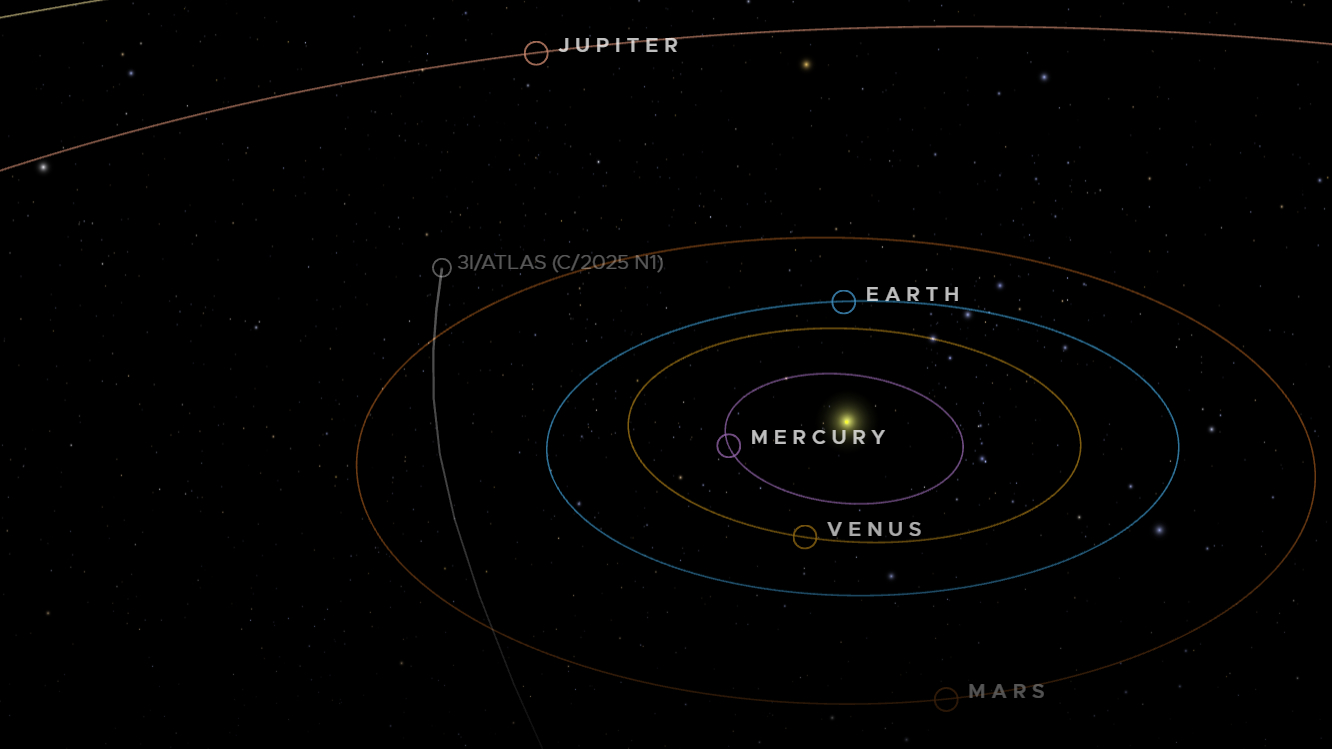
3I/ATLAS is currently racing away from the sun towards interstellar space. (Image credit: NASA Scientific Visualization Studio)
When 3I/ATLAS is closest to Earth on Dec. 19, all the features that we are looking for will be easier to detect with our telescopes and it has scientists as eager as kids on Christmas.
Comet 3I/ATLAS is the third large interstellar visitor (an asteroid or a comet) known to have passed through our solar system from beyond our solar system. By studying it closely, astronomers hope to learn more about other celestial objects through telescope observations.
“It has since been careening through the interstellar medium of the Milky Way galaxy for billions of years,” Darryl Z. Seligman, an assistant professor of physics and astronomy at Michigan State University, wrote in an op-ed. “And we get front-row seats to watch as it gets close to our sun, for what is almost surely the first time it has ever gotten close to a star”.
Read the full op-ed on the comet’s Earth flyby here.

Tariq Malik
Space.com Editor-in-Chief
2025-12-17T11:58:04.035Z
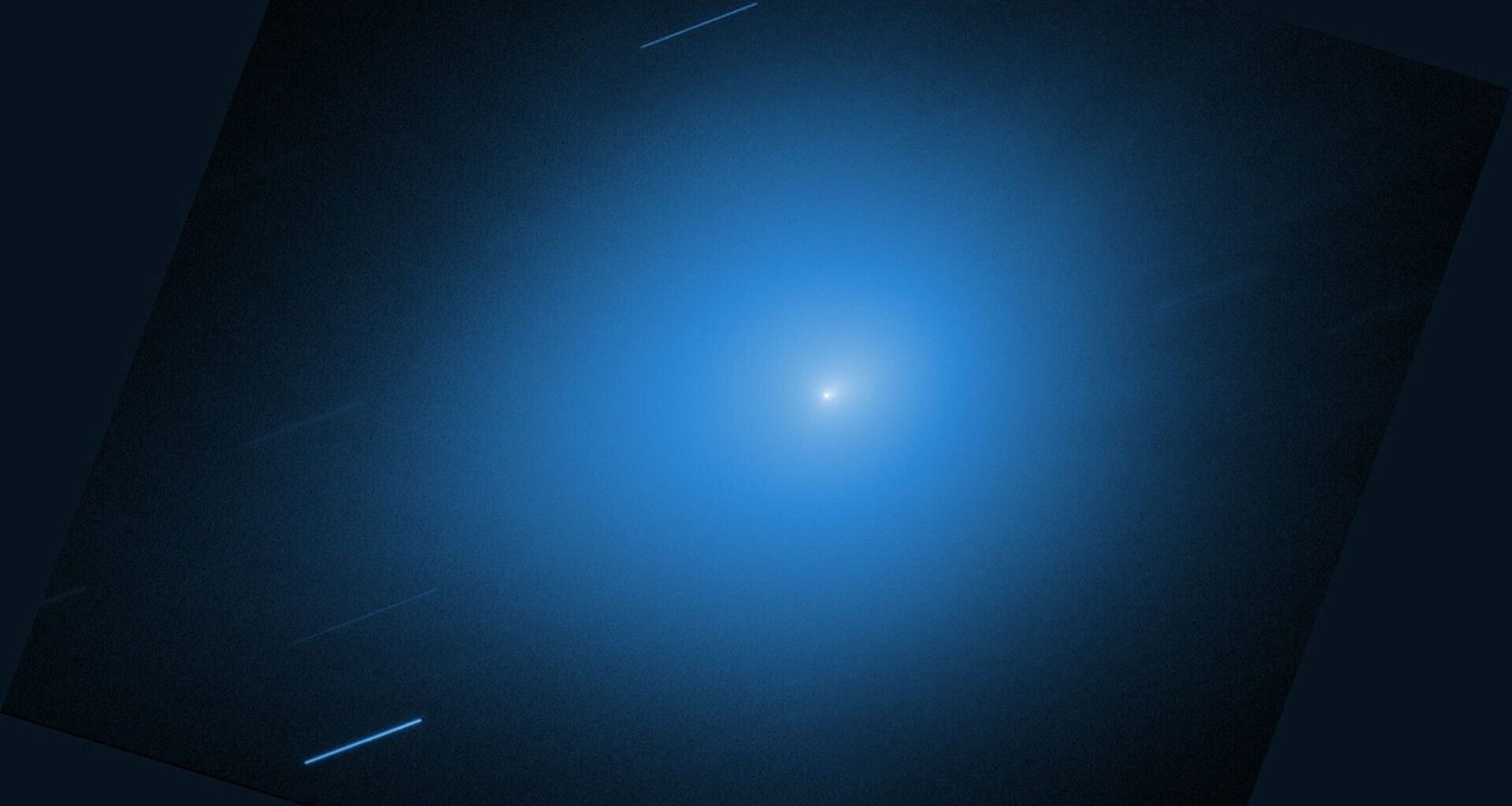
Comet 3I/ATLAS has last hurrah this week
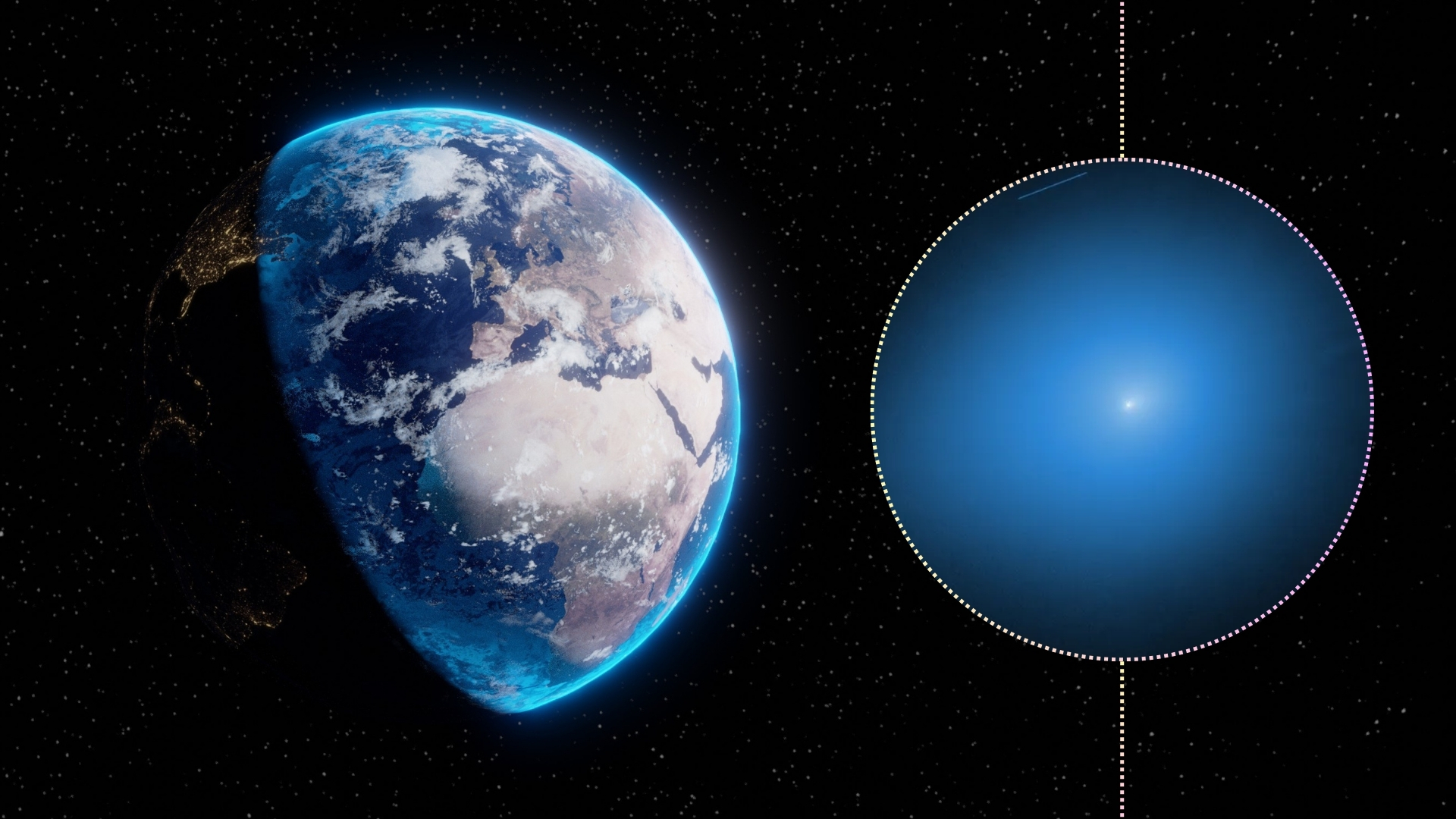
(Image credit: 3I/ATLAS inset (NASA, ESA, STScI, D. Jewitt (UCLA). Image Processing: J. DePasquale (STScI)). Graphic created in Canva Pro.)
Good morning, Space Fans! As of today, we are T-2 days until the interstellar comet 3I/ATLAS makes its closest approach to Earth and then we’ll have to say our goodbyes.
Whether or not you’re in Team Comet or Team “Could It Be A Spaceship?” 3I/ATLAS has dominated the comet conversation since its discovery on July 1 by the ATLAS telescope in Chile. On Friday, Dec. 19, 2025, the comet will be at its closest to Earth at a range of roughly 168 million miles (270 million kilometers) before heading out of our solar system for good.
Over the next two days, we’ll chronicle comet 3I/ATLAS’s Earth flyby, and revisit its passage through our solar system — and its legacy.
Read our full preview of the comet’s Earth flyby.
Tariq Malik
Space.com Editor-in-Chief
Please follow our community guidelines.”>
You must confirm your public display name before commenting
Please logout and then login again, you will then be prompted to enter your display name.
Logout