
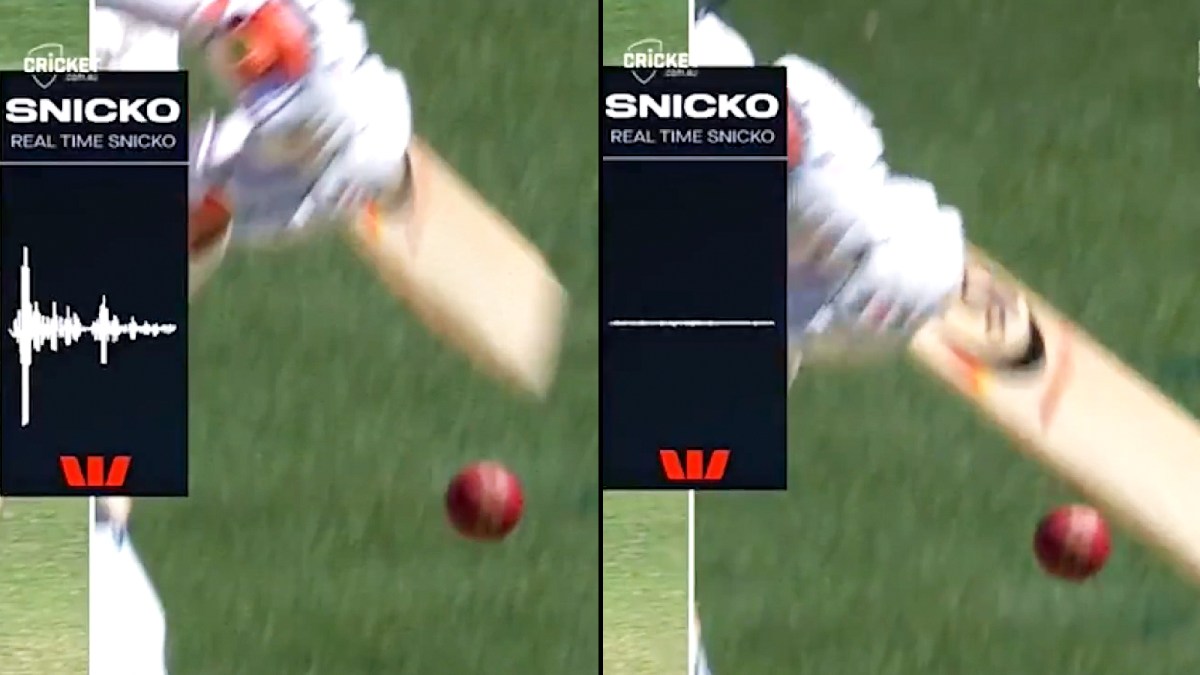
Alex Carey should have been given out on 72 on the opening day of the third Ashes Test but was reprieved due to an “operator error”, the company that runs the Snicko technology has admitted.
England felt that Carey had edged a delivery from Josh Tongue which went through to Jamie Smith behind the stumps. Although there was a spike on the graph — which usually signals contact between bat and ball — the sound waves did not sync with the pictures; the spike appeared instead before the ball passed the bat. It meant the third umpire, Chris Gaffaney, could not overturn the umpire Ahsan Raza’s on-field decision of not out.
Australia were 245 for six at the time, and closed day one in Adelaide on 326 for eight, with Carey going on to make 106. The wicketkeeper-batsman admitted afterwards that he felt he had hit the ball and England expressed their concerns about the technology being used. Now BBG Sports, the Melbourne-based company that owns the technology system used in Australia, has accepted responsibility.
“Given that Alex Carey admitted he had hit the ball in question, the only conclusion that can be drawn from this is that the Snicko operator at the time must have selected the incorrect stump mic for audio processing,” BBG told BBC Sport. “In light of this, BBG takes full responsibility for the error.”
Please enable cookies and other technologies to view this content. You can update your cookies preferences any time using privacy manager.
Enable cookiesAllow cookies once
It is understood that England were intending to speak informally to the match referee Jeff Crowe about the matter and would at least expect their lost review to be reinstated before play restarted.
Carey conceded afterwards: “I thought there was a bit of a feather, or some sort of noise when it passed the bat. It looked a bit funny on the replay, didn’t it, with the noise coming early? If I was given out, I think I would have reviewed it — probably not confidently though. It was a nice sound as it passed the bat, yeah.”
England’s fast bowling coach, David Saker, said: “The boys were pretty confident he hit it. I think the calibration of the snick is out quite a bit and that has probably been the case for the series. There’s been some things that don’t really measure up.
“It was a pretty important decision. Those things hurt, but you get through it. In this day and age you’d think the technology is good enough to pick things up like that.”
Carey added: “That’s just the way cricket goes sometimes, isn’t it? You have a bit of luck, and maybe it went my way today.” Asked if he was a walker, he replied: “Clearly not.”
Simon Taufel, the former ICC umpire, described it as another failure of “technology calibration”.
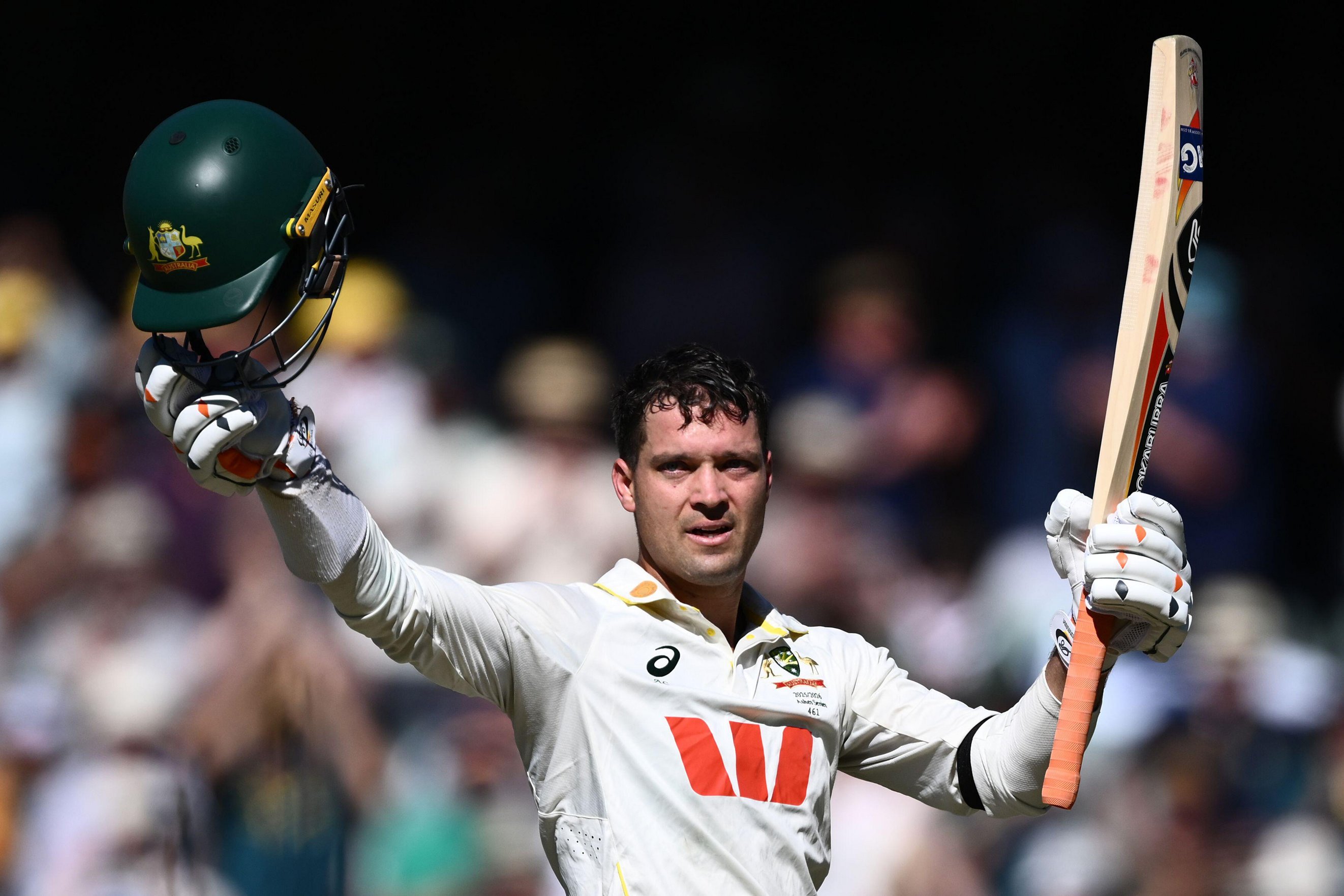
Carey went on to make his first Test hundred against England and helped Australia close on 326 for eight
JOEL CARRETT/ALAMY
There was a similar incident in England’s second innings of the first Test in Perth when Smith and Carey’s roles were reversed, with England again getting the rough end of things. Smith started walking off when, after being initially given not out, he saw a spike on Snicko before the ball passed his bat on an attempted pull shot. The television umpire Sharfuddoula spent time deliberating, with audio again not marrying up with the vision.
The incidents will only strengthen the push for specialist television umpires, which Taufel has helped institute in the UAE’s ILT20 competition.
“For the third umpire to overturn the not out decision, we need to see a clear deflection off the bat, or a spike next to the bat or up to one frame past the bat,” Taufel told Channel Seven after Carey’s reprieve.
“There’s absolutely nothing else out there, so my gut tells me from all of my experience that Carey has actually hit that ball and the technology calibration hasn’t been quite right.”
Carey remains an unpopular figure among England supporters — and possibly some England players — for his controversial act in stumping Jonny Bairstow during the Lord’s Test in the 2023 Ashes series when Bairstow strayed out of his crease after leaving a delivery.
The BBG technology used by FoxTel and Channel Seven, the host broadcasters in Australia, is not the same as the UltraEdge system used for matches broadcast in England by Sky Sports.
Mike Atherton day one report
Jonathan Agnew, the BBC Test Match Special commentator, said the match referee at the second Test in Brisbane had expressed worries about Snicko.
“We have had a number of incidents where the Snicko has not been good enough,” Agnew said. “I did talk to match referee Ranjan Madugalle in Brisbane and he said we are really concerned about Snicko in the series.
“The software isn’t working right. Carey should have been out caught behind.”

Tongue and his England team-mates were convinced he had dismissed Carey
BRENDON RATNAYAKE/REUTERS
Asked if England were contemplating making representations, Saker added: “I don’t think we’ve done anything about it so far but after today, maybe that might go a bit further. There have been concerns about it for the whole series. We shouldn’t be talking about this after a day’s play, it should just be better than that.”
In fact, there is little England can do. The third umpire did the only thing he could do. The technology is acquired by broadcasters who spend as little or as much as they want to, and are free to choose the providers. Cricket Australia would argue that it is out of their control once broadcast rights have been sold.
The best solution would be if the ICC chose whichever it thought was the best technology and helped commission it on behalf of each host country. If the best technology costs more than the existing systems, it could agree to pay the extra — to ensure that the best is used.
Q&A: The Snickometer
What is the Snickometer?
Real Time Snicko is used to determine whether the ball has hit the bat, thereby helping the off-field umpire decide on the correct decision should one of the teams review a catch or leg-before decision. It uses sensitive microphones located near the stumps to produce sound or audio waves run in real time alongside TV pictures. The audio waves must appear within one frame of the TV picture showing ball passing bat for contact to be confirmed. In the case of the Carey incident, BBG Sports, the company running the system, admitted that operator error meant it called on the wrong microphone to provide the audio. The earliest versions of Snicko were invented by Allan Plaskett and introduced by Channel 4 in 2000.
Who provides Snicko?
Technology aids are provided by specialist companies sourced by the host broadcasters. In this Ashes series there are two hosts, FoxTel and Channel Seven, and they use the Melbourne-based BBG, created in 1991 and originally specialists in tennis before branching out into other sports. In England, UltraEdge provides the technology for Sky Sports. The TV companies, rather than the national governing bodies around the world, pay for the technology and are free to choose who they like, although the overall broadcast package they offer might influence whether they are awarded the rights in the first place.
Who adjudicates on the information provided by Snicko?
The third umpire assesses the evidence when one of the teams calls for a review. That official is drawn from the pool of on-field umpires approved by the ICC; often a group of umpires will officiate during a big series such as the Ashes, spanning five matches, rotating on-field duties with off-field ones. In this instance Chris Gaffaney is the third umpire and it is his first involvement in the series. With the Carey incident, Gaffaney was limited by the existing guidelines in terms of what decision he could make, even if he thought it clear that Carey had hit the ball. There is a growing lobby in favour of forming a team of specialist third umpires to be employed in big matches who would have greater expertise in interpreting the audio/visual evidence, as well as a broader remit.
Are there any alternatives?
Hot Spot is an infrared imaging system requiring cameras on opposite sides of the ground to detect whether the ball has hit the bat. If it has, it will leave a white heat mark on the bat which the cameras then pick up. This system has become somewhat discredited by its inability to operate accurately in high temperatures, however.
What is the ICC’s role?
Cricket’s world governing body funds a panel of international umpires, but has declined to fund the costs of the technology that supports them, leaving host countries or broadcasters to find their own. Ideally, the ICC would select the best system and pay for it to be used everywhere.
by Simon Wilde