
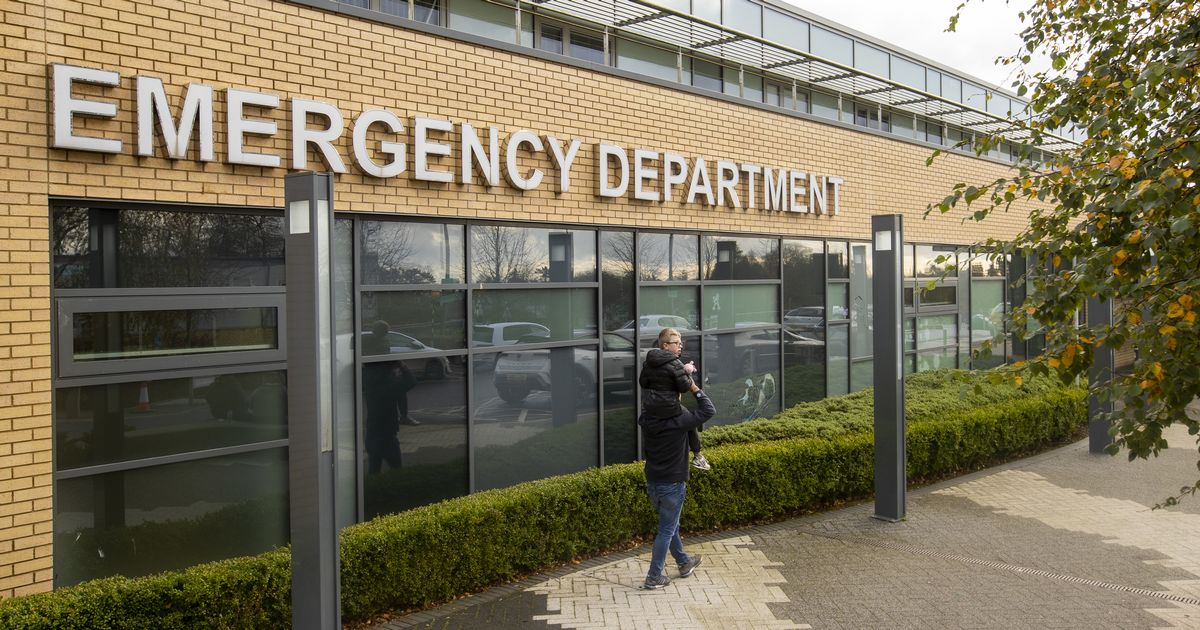
One patient had been waiting in the ED for 124 hours when the data was recorded – equivalent to more than 5 days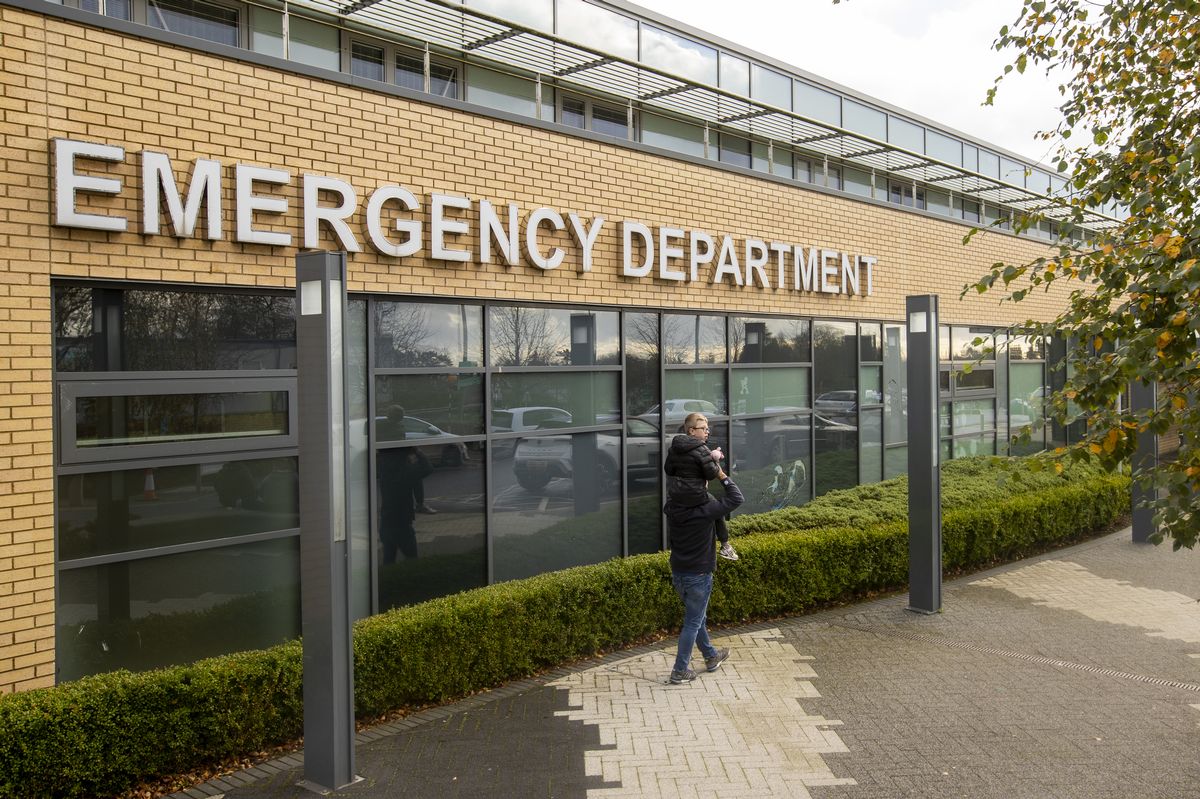 Emergency Department at the Antrim Area Hospital (Image: PA Archive/PA Images)
The reality facing staff and patients in Emergency Departments across Northern Ireland have been captured in a new survey, published today by the Royal College of Emergency Medicine.
Clinicians say morale is at an all-time low as they offer damning testimonies exposing the harrowing reality of our working in our EDs.
These include staff dreading coming to work; no resuscitation space; EDs over capacity with patients being cared for in non-clinical areas; patients enduring extreme long waits and being exposed to harm.
READ MORE: Latest Northern Ireland A&E wait times as flu cases soarREAD MORE: Pharmacist issues urgent warning to those using weight loss jabs as flu spreads
Lead consultants in all nine major EDs completed a ‘snapshot poll’ on Monday morning of last week (December 8 2025) to capture the situation in A&E, focusing on overcrowding, waiting times, corridor care, and the standard of care patients were receiving.
It found across all nine EDs, 401 people were waiting for inpatient beds and nearly half of these patients (49%) were receiving care in a non-designated space such as a corridor, the floor, or on a chair.
The RCEM says there’s just no more space in Northern Ireland’s EDs and patients are being forced to share ‘private’ assessment cubicles or are being treated in non-designated areas while they wait for a hospital bed.
ED cubicle occupancy of patients waiting for an inpatient bed was at 137%. One patient had been waiting in the ED for 124 hours when the data was recorded – equivalent to more than 5 days.
All clinicians who responded (100%) to the RCEM survey said they believe that patients are coming to harm in current conditions
Every department reported that a major reason for overcrowding was delayed discharges due to lack of social care arrangements.
Personal experiences which consultants have shared also reveal the harrowing reality they are facing with one respondent saying their ED was above capacity with “no resuscitation space, ten-hour waits at the front door, and ambulance offloads waiting eight hours”, adding “it feels frankly unsafe.”
Another said morale amongst staff “is at an all-time low; people dread coming to work because they cannot deliver the high standard of care we strive for and staff feel vulnerable and exposed.”
And one lead consultant wrote “staff are beyond ****** off with the perpetual failure of our healthcare leaders to deliver any improvement for patients and staff alike.”
RCEM’s Vice President for Northern Ireland, Dr Michael Perry says the situation in our EDs, put simply, is just awful.
He added: “Our members and their colleagues are putting on their scrubs every day knowing that they will be trying their best to deliver quality care in spaces that were never designed for care to be delivered in – on trolleys in corridors, chairs and even, shamefully, on the floor.
“These are patients, who are arriving to our EDs, who are vulnerable, sick and in need of care. Yet they are enduring these conditions for hours and hours and hours. And as this survey reveals, for some, it leads into days.
“It’s not just degrading, and demoralising – this is where the harm lies. Last year, there were 1,122 deaths associated with long A&E waits in our country. These are people, loved ones. I fear what this number will be for 2025.”
Dr Perry added: “All of this is a symptom of the system not functioning as it should. We can’t move patients out of our departments because there’s a lack of available ward beds for them to be moved to, meaning they become stuck.
“Are walls aren’t elastic, so people end up in areas where they should never be receiving care in or stuck in ambulances waiting to even get through our doors.
“We cannot go on like this. RCEM has made a series of urgent recommendations to the Northern Ireland Executive, including the need to spread responsibility for patient flow across the hospital network, to bring back a healthcare system that we once were proud of.”
In response, the Department of Health said it accepts the findings of the survey and the pressure that the situation places on staff and importantly, the problems it causes for patients.
A DoH spokesperson added: “Services face pressure 365 days of the year, but they are more severe in winter. No-one wants to see sick people being treated in corridors but sadly, we have a finite capacity and severe pressures arise when hospitals are forced to operate often well beyond capacity.
“Staff are doing their best 24 hours a day, 7 days a week often in very difficult situations to try and alleviate those pressures and give the best care they can. Unfortunately, it is a complex problem and there is no quick fix but the only medium to long term solution is to reduce demand.
“That means reducing the number of people coming through ED doors but also focusing on flow which means getting people out of hospital as soon as they are fit for discharge in order to free up beds for those coming behind.
“We are also conscious that these problems are presenting across the UK and reflect a wider issue with the way in which health systems are able to manage demand for care by meeting people’s needs in community settings and enabling patients to return home safely when fit for discharge.
“This is why in Northern Ireland we have undertaken two significant pieces of work this year. The first involves taking action to help manage our frail elderly patients better and keep them away from hospitals.
“The second, our Reset Plan, is attempting over the next three years to refocus our work towards earlier support and intervention, prevention, providing neighbourhood-based care and encouraging people to take more responsibility for their own health on a routine basis and from an early throughout their lives.
“We recognise however that this will take time to impact and it is not helped by the very challenging financial position we face in Northern Ireland presently. But in the interim, we will continue to manage the quality of care we are able to provide to the best effect.”
For all the latest news, visit the Belfast Live homepage here and sign up to our daily newsletter here.