
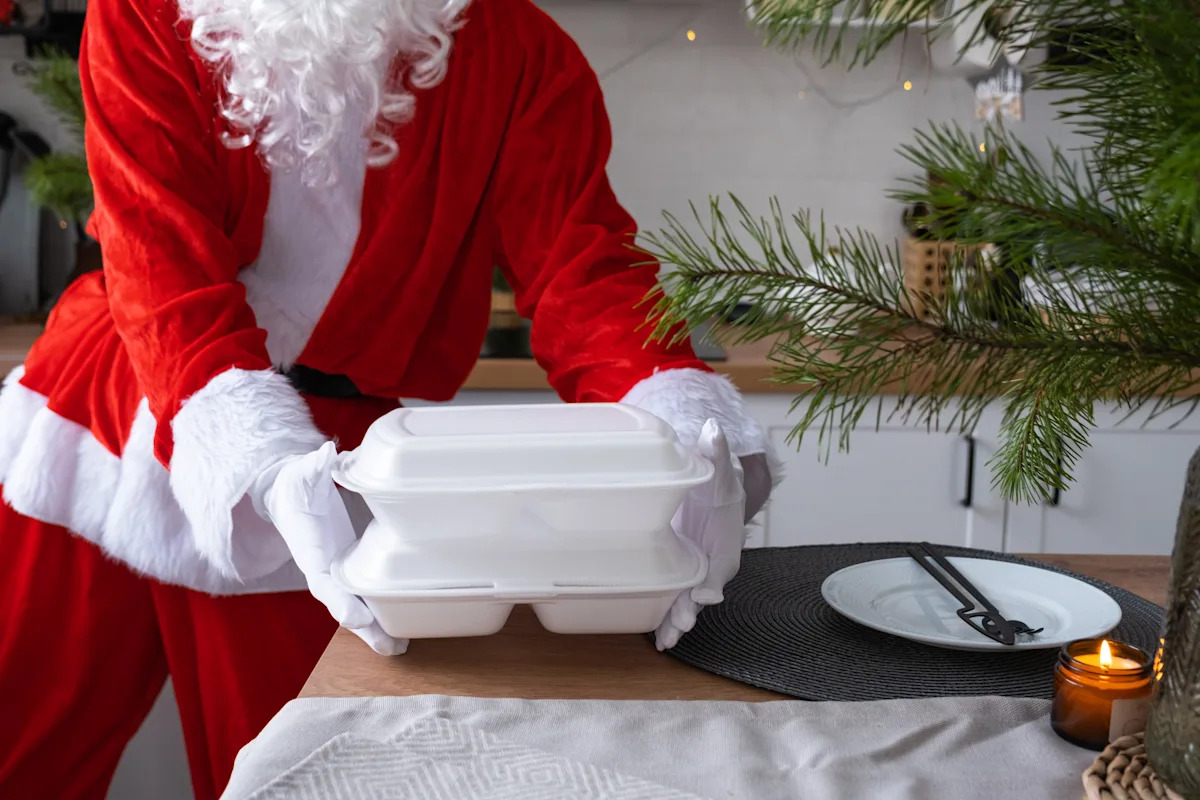
This month, millions of us will attempt to plot our way through the annual Christmas recycling minefield. The festive season takes a heavy toll on the environment – we give more, we receive more and, crucially, we eat more.
The food packaging that encases our turkeys, hams, mince pies, Christmas puddings and even Brussels sprouts doesn’t always go straight into the recycling bin.
Emma Douglas, senior lecturer in events management at Manchester Metropolitan University and a Carbon Literacy Champion, told Yahoo News: “Christmas is a time when negative environmental behaviours are emphasised as consumers are encouraged to over-consume. It is an important time of year for consumers to think about what food they are buying and how that food is packaged.”
Yahoo News UK takes a look at the Christmas food packaging that isn’t recyclable.
Soft plastics
The film over your turkey and ham; the film on your punnets of fruit; the nets over your fruit and veg; the plastic bread bags you use to keep your Christmas produce fresh or to keep it wrapped up before putting it in the fridge; the wrappers from your crisps, biscuits or sweets – all of these come under soft plastics and can not be recycled directly from home.
However, the good news is that most supermarkets now have collection bins for these types of plastics that you can bring there. But be warned, it must be cleaned and decontaminated first.
Dr Alison Stowell, a senior lecturer at Lancaster University Management School and the co-principal investigator for the Plastic Packaging in People’s Lives (PPiPL) project, told Yahoo News: “For Christmas 2025 in the UK, most households can’t recycle plastic film and bags (carrier bags, cling film, bubble wrap), pouches and sachets (yoghurt pouches, baby food, coffee packets), crisp packets or any foil-lined packaging, according to local authority recycling guidance and industry surveys.”
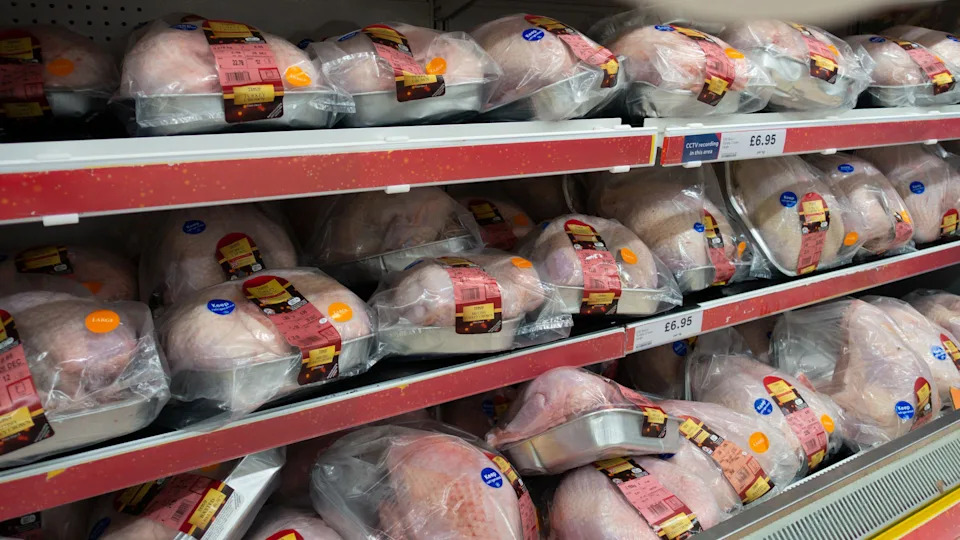
Much of the plastic packaging on turkeys will end up in the main rubbish bin. (Alamy)
Douglas said: “A turkey bought from a butcher tends to come in a box which can be recycled and a turkey from the supermarket on a plastic tray with film wrap. If the consumer were to take a Tupperware box to the butchers, this could avoid any waste from the purchasing stage.
“The turkey is not the only part of Christmas dinner that can be bought in a way to reduce waste – buying vegetables and potatoes loose rather than in plastic bags can also help consumers to prevent excess waste from food packaging.”
According to the Waste & Resources Action Programme (WRAP) charity, consumer plastic film and flexible packaging makes up more than a quarter of all plastic packaging in the UK, yet only 7% of it is currently recycled, although mandatory kerbside collection for plastic films will be introduced in England by March 2027.
Soiled paper or cardboard
The most important tip for recycling this Christmas? Clean everything. That means even easily recyclable items like cardboard. If it has food stains on it, it will go into landfill.
Beware of putting paper or card in your recycling bin if it is soiled or greasy, so any party food containers for example should be given a quick wash if they are dirty.
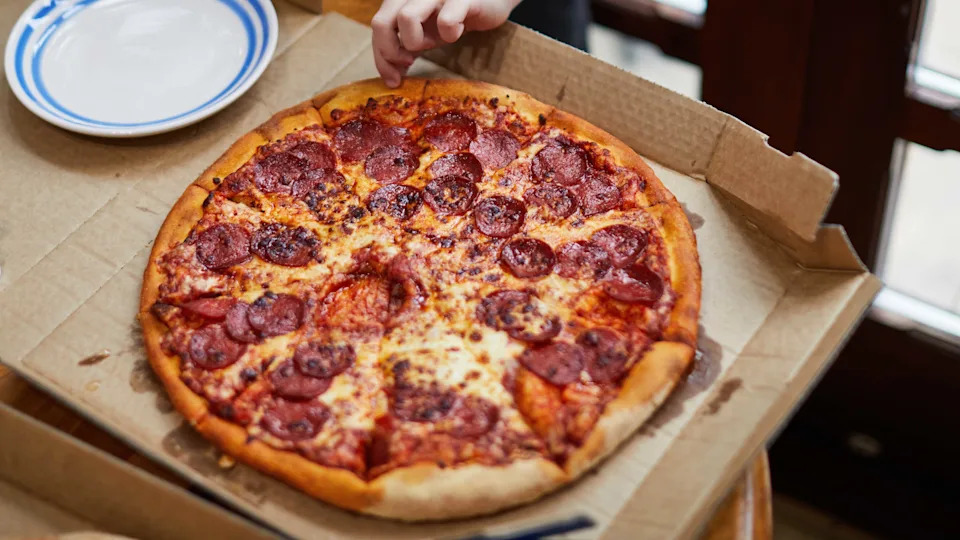
Stained or greasy pizza boxes will not be recycled and will instead go into landfill. (Getty)
Not only is this a factor for Christmas dinner, but also Christmas takeaways – in 2023, a third of Britons said they would order a takeaway on Christmas Day instead of cooking at home. Soiled pizza boxes, for instance, will not be recycled, as grease stops the fibres in the card separating from the oil during the recycling process. Throw it in the general waste bin if it’s covered in grease.
Soiled aluminium foil
Your turkey may come in a large foil tray, which is totally recyclable – but again, only if it has been cleaned and removed of food residue.
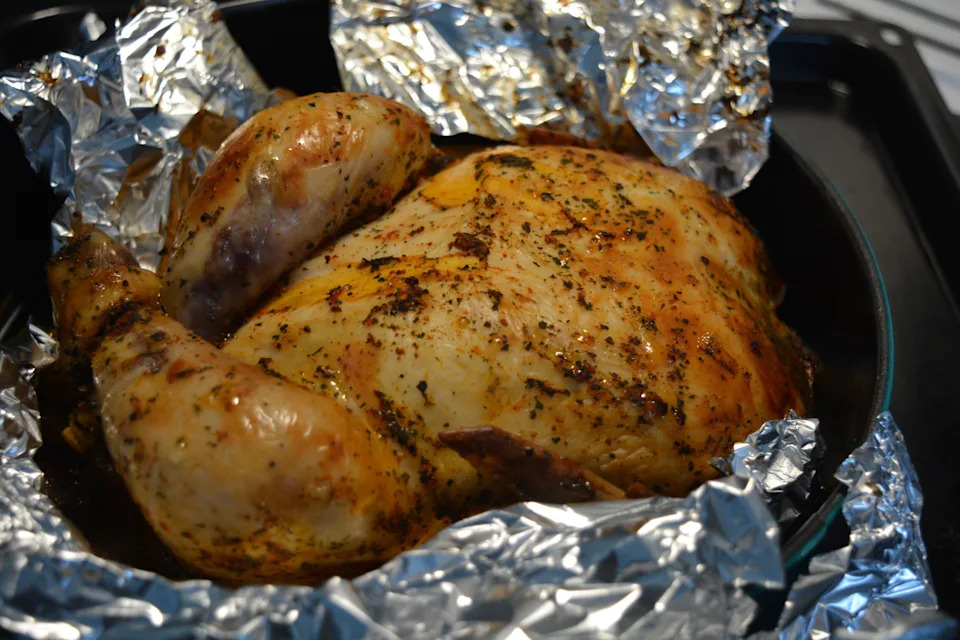
Food stained aluminium foil should go in the main rubbish bin. (Alamy)
Aluminium kitchen foil used to wrap up your Christmas leftovers is also recyclable, but only if it is clean, and if it is, you should scrunch it into a ball to make it easier to recycle. Any foil with grease or burnt on bits of food should go straight in the main rubbish bin and not in recycling.
Contaminated or broken glass
While empty bottles of sparkling wine are fine to recycle this Christmas, there are some glass items that won’t be recyclable, such as broken drinking glasses.
Glass jars containing cranberry sauce or goose fat are also recyclable, but must be empty and have been cleaned, otherwise they will end up in landfill if contaminated. Or they could contaminate other recyclable items which means it could all be ditched.
Advent calendars
They may look like they are simply cardboard packaging and can go straight in the recycling bin, but unfortunately advent calendars are a tricky proposition.
In the case of sweets and chocolates, yes, the exterior cardboard can go in the recycling, as can the plastic sheet inside used to house the treats, but any plastic wrappers they come in will have to go in the main refuse bin.
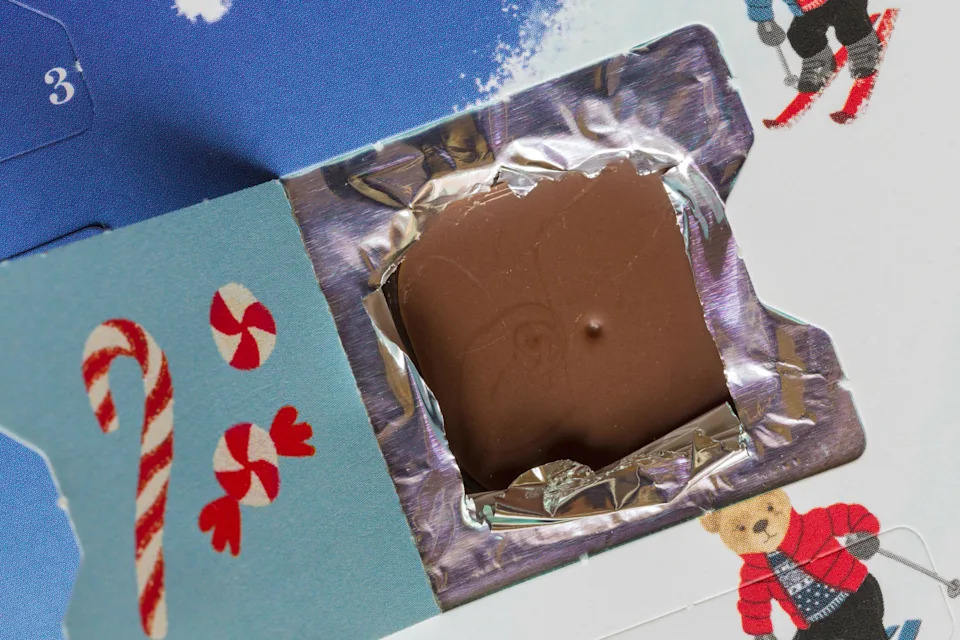
Consumers should pay attention when trying to recycle advent calendars. (Alamy)
Douglas said: “Most calendars are recyclable but not the sweet or chocolate wrappers. An example of how the waste from advent calendars could be reduced is by opting for a reusable calendar where the individual can choose what to put in it.”
Polystyrene
You might find that some of the meat you purchase for Christmas, particularly if you go to your local butcher, comes inside a polystyrene food container.
While these are used to keep out moisture and keep meat fresh, they come with a major environmental impact in that they are not widely recyclable, and should go in your main black bin. Many Christmas desserts may also come in polystyrene.
Dr Stowell said: “Polystyrene is another major culprit – it’s often used for meat trays and takeaway containers but cannot be recycled in your local council’s kerbside recycling bin.”
Baking paper
It can easily be overlooked, but baking paper can be a key item at Christmas, used for lining trays to oven cook everything from pigs and blankets, cookies and gingerbread.
However, baking paper cannot be recycled because it has a silicone coating and should go in the main general waste bin instead.