

As Japan struggles with a spate of bear attacks, analysts have warned of a proliferation of artificial intelligence-generated bear videos being posted online.
Videos uploaded to TikTok include fake footage of an elderly woman using a broom to shoo away a bear intent on entering a nursery school and of a fictitious “brown bear café”, where customers sip lattes and interact with them.
At least 13 people have died and more than 200 have been injured in a record number of bear attacks in Japan this year, prompting the deployment of the military.
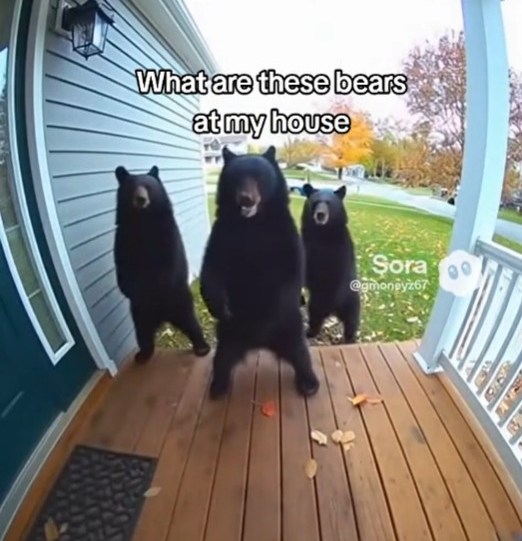
Viewers are falling for the videos despite the Sora watermark, indicating they were made using OpenAI
• Japan turns to the army as deadly bear attacks reach a record high
The bogus nursery school video, posted by a childcare magazine publisher, had more than 800,000 views in a month, according to the Asahi Shimbun newspaper. It received more than 2,500 likes and comments including: “Is this real? I’m sorry but I don’t know” and “it was in a newspaper”.
While bears have tried to enter schools and homes in real cases, analysts said there was a risk that AI videos might influence people’s views on wildlife or suggest it was safe to approach them.

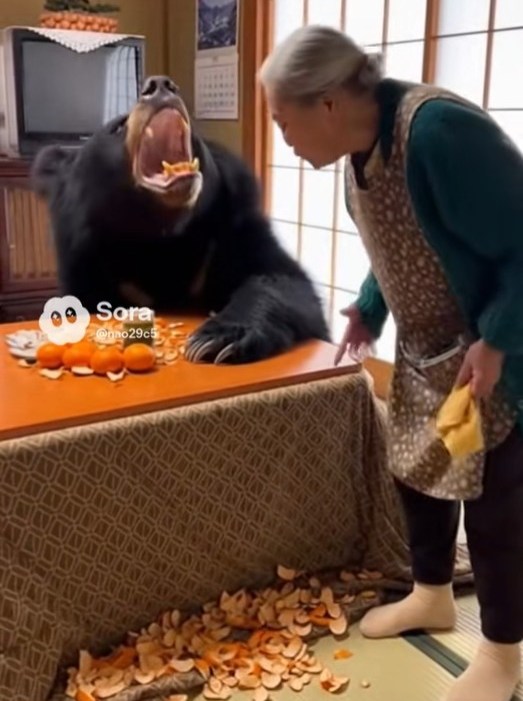
TikTok users are asking: “Is this real?”
Another fake clip that was widely shared on social media shows a brown bear leaping on to the roof of a moving car in Akita prefecture. Another showed a bear attacking solar panels, leading some commentators to assert that the animals were annoyed that green infrastructure was destroying their habitat.
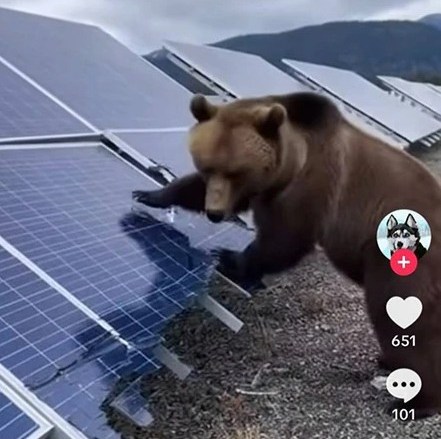
Shinsuke Koike, an ecology professor at Tokyo University of Agriculture and Technology, told the Asahi there was no evidence that solar panels were changing ursine behaviour. He warned that the misconception could hinder bear-management efforts.
Social media companies have been criticised for doing too little to detect and flag AI content. In November TikTok said it was releasing new tools to let users “shape” and label AI in their feeds.
The Japanese government also recently warned against AI-generated content in the context of fake videos that followed the earthquake in northern Japan.
Some videos have “AI-generated” labels or “Sora” watermarks, indicating they were made with OpenAI’s video-generation platform. However, these labels can be edited out and, even if they are present, many viewers apparently fail to notice and leave comments asking whether the video is real.

A real brown bear in Shiretoko National Park
FRANK FICHTMÜLLER/GETTY IMAGES
Though distinguishing real from fake is becoming more difficult, social media remained driven by an “attention economy” where posts are promoted based on the number of views instead of their veracity, said Isao Echizen, a generative-AI expert at Japan’s National Institute of Informatics.
“Identifying AI-generated content simply by checking for a watermark will no longer be reliable,” Echizen told the Asahi. “We have to recognise that what appears in our [social media] feeds is not necessarily true.”