
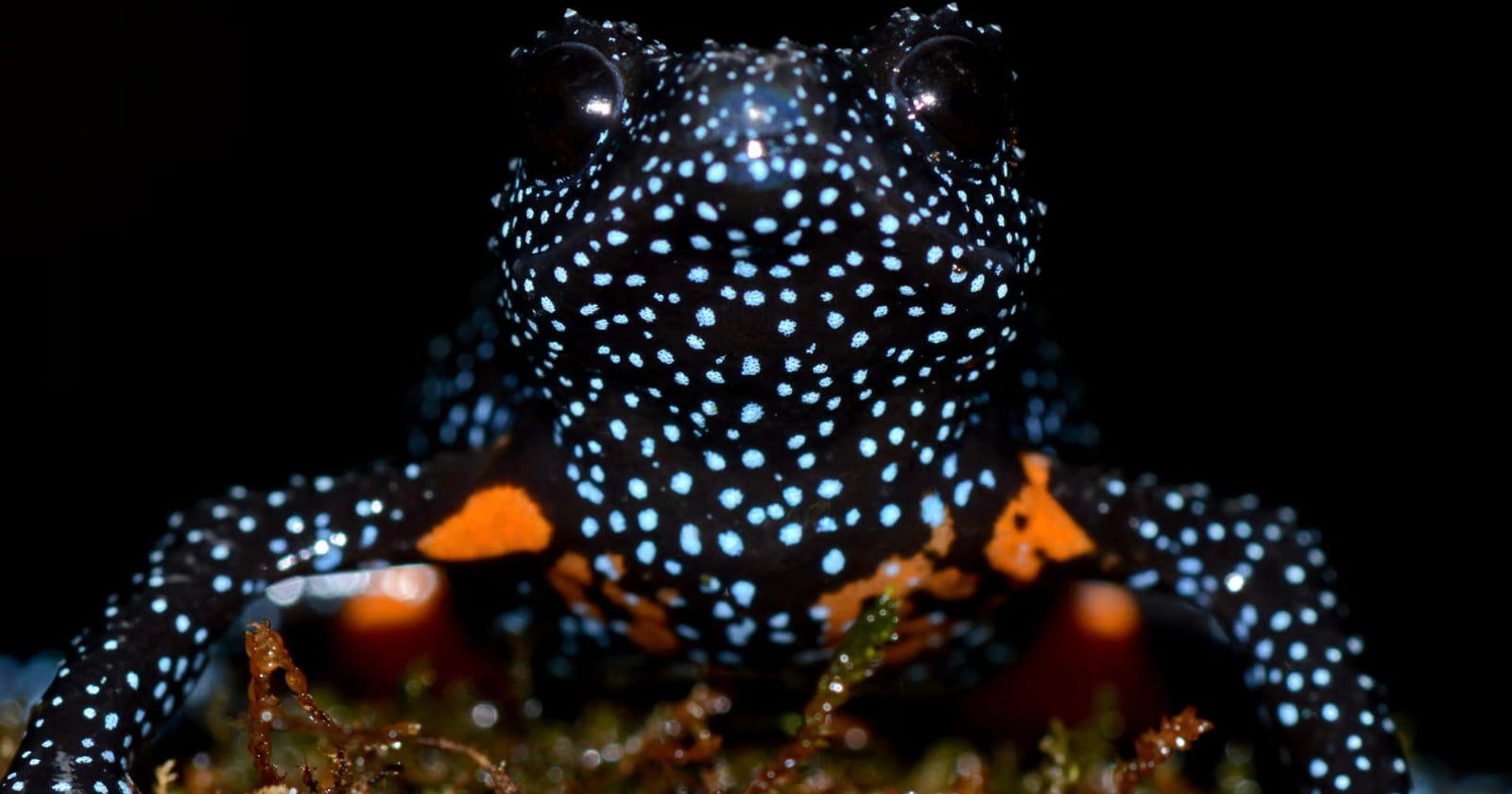
 Rare Galaxy frogs | Rajkumar K P / Zoological Society of London
A group of rare “galaxy frogs” have disappeared from an Indian rainforest and are feared dead after photographers reportedly destroyed their fragile habitats to take pictures of them.
Rajkumar K P, a Zoological Society of London fellow and researcher, has raised concerns after a group of endangered galaxy frogs went missing, presumed dead, following reports that photographers trespassed into their habitat and damaged the microhabitats the animals rely on.
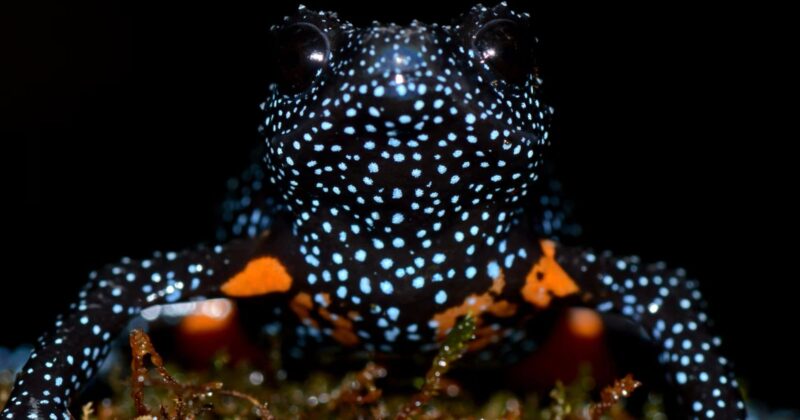
In early 2020, Rajkumar discovered seven individuals of the species in the Western Ghats rainforest in Kerala, India. The galaxy frog (Melanobatrachus indicus) is a tiny amphibian, measuring no more than about 1.18 inches, and is the only known species in its family. It lives beneath fallen logs in the Keralan rainforest. The frogs are named for their appearance, with bright blue spots scattered across a dark blue body, giving them a star-like, galaxy pattern. These spots are thought to be a mode of communication between the frogs.
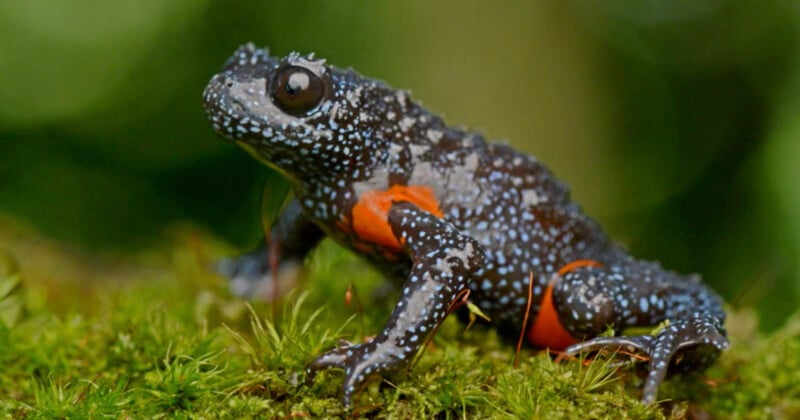 These creatures are nicknamed ‘galaxy frogs’ due to the star-like spots on their skin | Rajkumar K P / Zoological Society of London
“I fell in love with these frogs after seeing them,” Rajkumar writes. “You feel like they’re jet black in colour, but when you put them under light, you can find all the stars – like galaxies on their bodies. It’s just magical.”
Rajkumar was unable to visit the site during the COVID-19 pandemic. According to a report from the Zoological Society of London, when he later returned to the rainforest, the galaxy frogs were gone, and their habitat appeared to have been destroyed.
“The big beautiful fallen log that was there was completely broken and misplaced,” Rajkumar says, according to the Zoological Society of London report. He adds that the surrounding vegetation had been trampled and that the frogs were nowhere to be found.
Initially, Rajkumar suspected brown mongooses might have caused the damage, but he concluded they were not strong enough to overturn large logs. He later learned from a local tracker that several nature photographers had been visiting the site.
“He [the tracker] mentioned there were a couple of photographers visiting that location. Several small groups. So later I contacted my other trackers, and they started telling me everything that had happened,” Rajkumar writes.
According to the trackers, photographers had been turning over logs while searching for the endangered galaxy frogs. When they found them, they allegedly handled and positioned the animals for photographs. The trackers report that the photographers did not wear gloves, despite the frogs’ sensitivity, as they breathe through their skin. One tracker told Rajkumar that two small galaxy frogs died after being handled for extended periods.
“He said they would take the animal to some nice background or mossy log to take the photograph, relocating it from one place to another to get better photos,” Rajkumar writes. “On that day, they got five or six frogs and two of them died.”
‘The Consequences of Unregulated Photography’
Rajkumar says he searched for months after the incident but was unable to find any surviving galaxy frogs. He has condemned the photographers for interfering with the animals’ natural habitat.
“The forest department officers try to prevent these kinds of groups coming. But they use higher officials – politicians, high court judges, or something like that – to allow them to take photographs,” he says.
The Zoological Society of London report notes that while wildlife photography tourism can provide crucial funding and backing for conservation, it must be conducted responsibly to minimize its impact on animals. This involves limiting the handling or capturing of wildlife, controlling the use of bright lights, and ensuring habitats remain undisturbed.
“This sad event is a stark warning for the consequences of unregulated photography,” Rajkumar writes. “While their colouring and rarity makes the galaxy frog a sought-out subject for photographers, it’s vital that those wishing to photograph these unique frogs don’t inadvertently contribute to their extinction – it would be a tragic irony if a drive to capture their likeness on camera today turned them into a thing of the past.”
He adds: “Done correctly, photography can be a huge asset to helping conservationists build our understanding of areas such as animal distribution or behaviour… However, irresponsible photography can turn this asset into a hazard.”
The full report can be read here.
Image credits: All photos by Rajkumar K P / Zoological Society of London.