
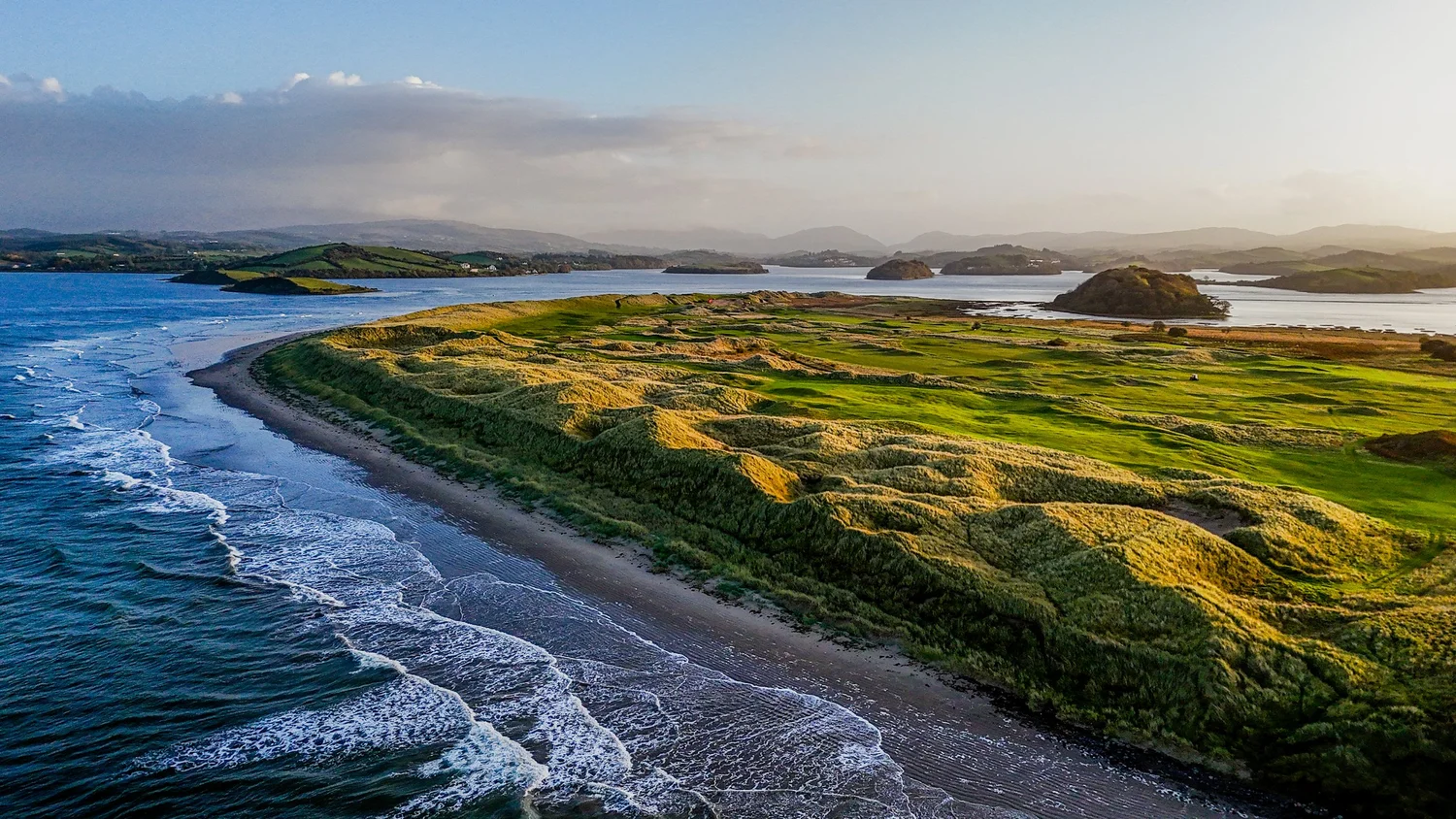
In developing the scope of the masterplan, McGinley Golf Course Design made an in‑depth study of the design history of the links at Murvagh from its opening in 1971.
“The past doesn’t limit us – it informs us,” Paul McGinley said. “There’s so much to learn from how Eddie Hackett and Pat Ruddy originally shaped these courses, both strategically and stylistically, and from the contributions that made sense of the routing. We will honour that.
“We’re very conscious, just like the members, that we’re only temporary custodians. Everything we do is about respecting the past, improving it where we can, and making sure that the course is considered among the very best of links courses that our country has to offer.
“Our overriding mission is that both members and visitors enjoy a fair, challenging course in the most magnificent of landscapes ”
Central to the design’s strategy is the defence of the existing routing and its historic foundations, reconnecting the links with the principles established by Eddie Hackett and Pat Ruddy.
Widths and angles are regarded as the soul of the renovation, while course set-up is the essence of the overall vision.
All proposed works are guided by the principle of evolution, not revolution, ensuring the Links retains its authentic character and timeless identity.
The masterplan is built around several key objectives:
Member‑first playability: Reduced severity, wider targets, improved visibility, and enhanced enjoyment for everyday play.
Championship readiness: Optional tee and pin positions to provide a demanding test for elite competition when required.
Classic links standards: Framed greens, raised tee platforms, revetted bunkers, naturalised contours, graded roughs, expanded marram and native grass areas, and subtle exposed dune features.
Environmental compliance: No interference with primary dunes, with all works guided by ecological best practice.
Operational sustainability: A manageable long‑term maintenance burden, improved resilience to weather exposure, and the integration of modern irrigation solutions.
A strong and collaborative working relationship has been established with the Officers and Membership of Donegal Golf Club (Murvagh) throughout the process.
The club has approved Phase 3 of the programme of works, which are scheduled to start in January 2026.
This phase will include the construction of several new back tees, the redevelopment of the par‑3 13th hole, and the refurbishment of ten bunkers.
A full schedule of the remaining works will be developed and presented to the members in the coming months by the club council.
About McGinley Golf Course Design
Founded in 2005, McGinley Golf Course Design is a full-service golf course design and consultancy practice that has delivered projects valued in excess of €200 million worldwide. The practice’s portfolio includes Macreddin Golf Club, County Wicklow, Ireland (2005); St. Sofia Golf & Spa, Sofia, Bulgaria (2008); Achimota Golf Club, Accra, Ghana (2012); and the North Course at Quinta do Lago, Portugal (2014).
In addition, McGinley Golf Course Design has undertaken notable works at many of the game’s most respected venues, including Wentworth and Sunningdale (Old Course) in the United Kingdom, as well as Mount Juliet Estate, Portsalon, Dunfanaghy, Grange, Lucan, and The K Club in Ireland. The practice collaborates with a select group of leading industry specialists to deliver all aspects of golf course development to the highest professional standard.
About Donegal Golf Club – Murvagh.
Donegal Golf Club, also known as Murvagh Links, is an 18-hole championship links course located on the Murvagh peninsula in South Donegal, Ireland. It is renowned for its stunning panoramic views of the Atlantic Ocean and Donegal Bay.The par‑73 championship Links stretches over 7,400 yards. It is situated along Ireland’s Wild Atlantic Way.