
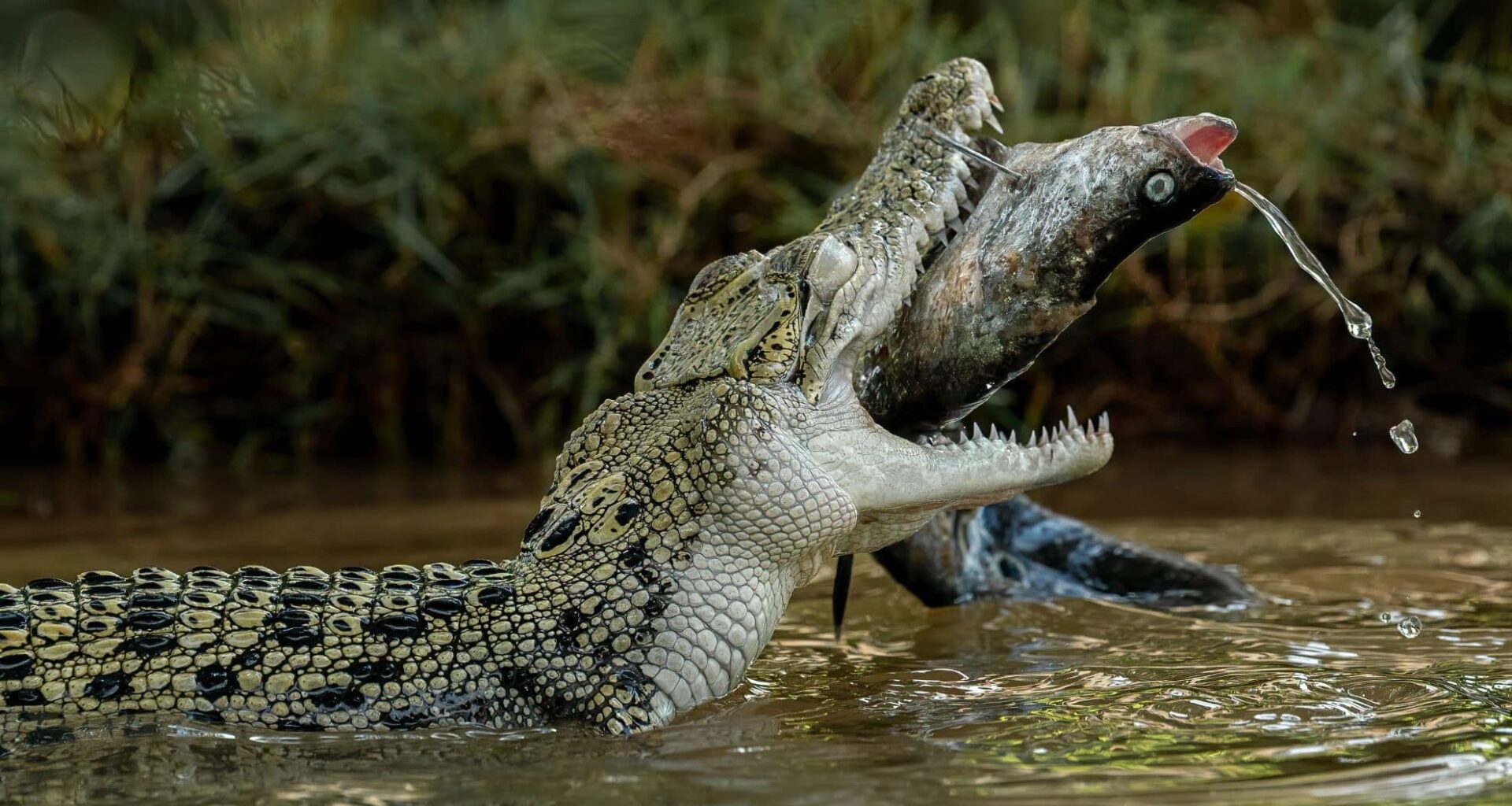
To put that into perspective, it takes about 4,000 Newtons to break a human femur. So a single bite from Crocodylus porosus—the species’ scientific name—is more than capable of crushing bone, or anything else unlucky enough to end up between its jaws.
The finding comes from an extensive biomechanical analysis conducted across all 23 species of extant crocodilians, which include crocodiles, alligators, caimans, and gharials. The study, led by Gregory M. Erickson and colleagues and published in PLoS ONE, was the first of its kind to directly measure adult bite forces and tooth pressures in crocodilians under standardized, controlled conditions. The saltwater crocodile stood out as the clear bite-force champion, an outcome directly linked to its sheer size and powerful musculoskeletal structure.
Unlike many predators that rely on speed or venom, crocodilians have relied on force for over 85 million years. According to the researchers, their consistent success at the water-land interface owes much to this biomechanical firepower, which enables them to take on a wide range of prey, from fish to large mammals.
The True Power of the Croc’s Bite
In the controlled tests described by Erickson et al., the highest value ever measured was that of a saltwater crocodile, whose molariform bite reached a staggering 16,414 Newtons (3,689 pounds of force). These tests were carried out using sandwich transducers placed in precise jaw positions, mimicking natural feeding behavior. The crocodile’s bite power eclipsed that of all other crocodilians tested, including the American alligator and the Orinoco crocodile, and dwarfed measurements taken from mammals like the spotted hyena, previously considered a top contender with a force of around 4,500 N.
The team’s analysis concluded that body mass was by far the strongest predictor of bite force across all tested species, with the relationship remaining consistent even after accounting for evolutionary lineage. According to the published study in PLoS ONE, “body size actually accounts for nearly all interspecific variance in adult crocodilian bite-force capacity.”
Although skull and snout shapes varied widely, from slender-jawed gharials to broad-headed caimans, these morphological differences played only a minor role. This directly counters long-standing assumptions that rostral proportions (the shape and width of the snout) were major indicators of biting performance.
Great White Sharks and Megalodon: Real Contenders?
While the saltwater crocodile’s bite has been physically measured, other apex predators are often cited in bite-force debates, including the great white shark. In a 2008 modeling study referenced in multiple reports, researchers reconstructed a digital 3D model of a 6.4-meter-long great white, estimating that its back teeth could deliver up to 18,216 Newtons of force. If accurate, this would place the shark slightly above the crocodile in terms of maximum potential bite.
But there’s a catch. Unlike the crocodile tests, the shark’s figures were generated through simulation, not physical experimentation. As Erickson’s 2012 study underlined, direct measurement is critical for confirming such extreme numbers. So, while the great white may theoretically bite harder, the saltwater crocodile remains the most powerful biter documented in real life.
In terms of prehistoric species, the bite of the Megalodon, an extinct giant shark, was once estimated at anywhere from 108,514 to 182,201 Newtons. These numbers make modern contenders look weak by comparison, but like the great white’s, they remain educated approximations rather than verified measurements.
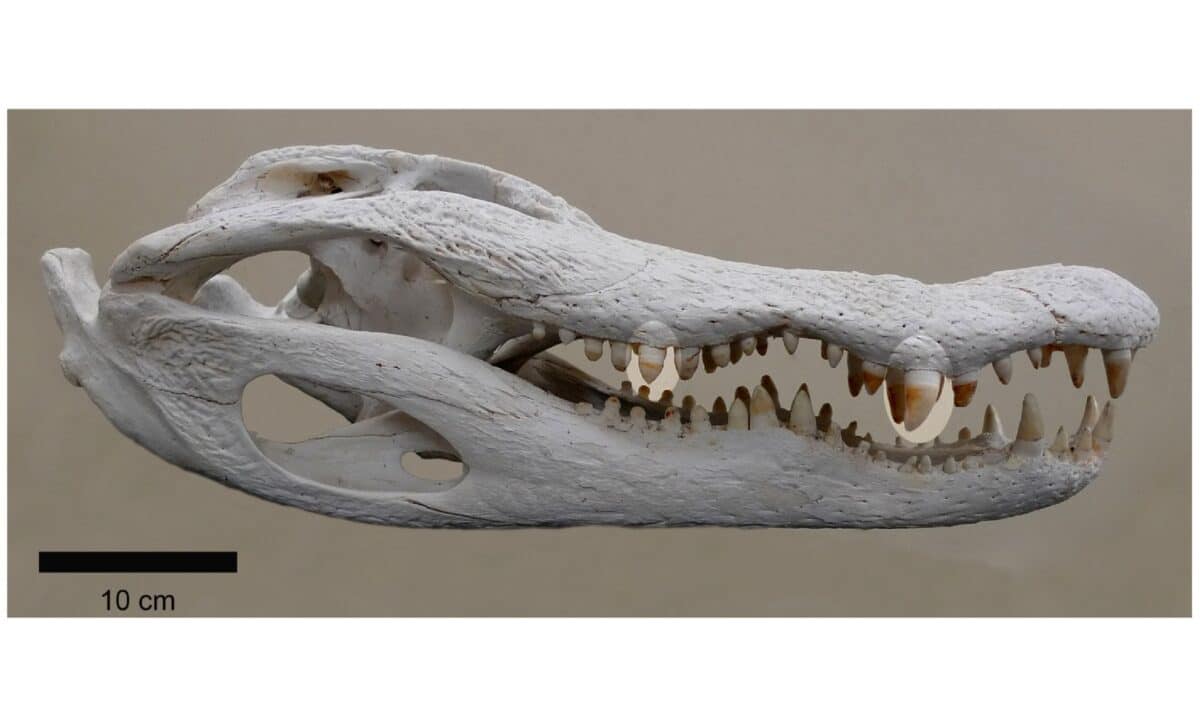 Skull and jaws of a wild adult American alligator ©PlosOne
Tooth Pressure: The Silent Killer
Beyond bite force, the study also investigated tooth pressure, which is the force divided by the surface area of the tooth that makes contact. While bite force determines how hard an animal can clamp down, tooth pressure tells us how efficiently that force is transmitted into prey. The highest pressure recorded in the 2012 research came from the Orinoco crocodile, with a staggering 1,344 MPa at the caniniform teeth.
Interestingly, tooth pressure values didn’t always line up with bite force rankings. The Gavialis gangeticus, for instance, had the lowest bite force but still delivered relatively high pressure, thanks to its slender, needle-like teeth. According to Erickson’s team, this shows that crocodilians evolved multiple strategies to handle different prey types—some relying on sheer power, others on precision puncturing.
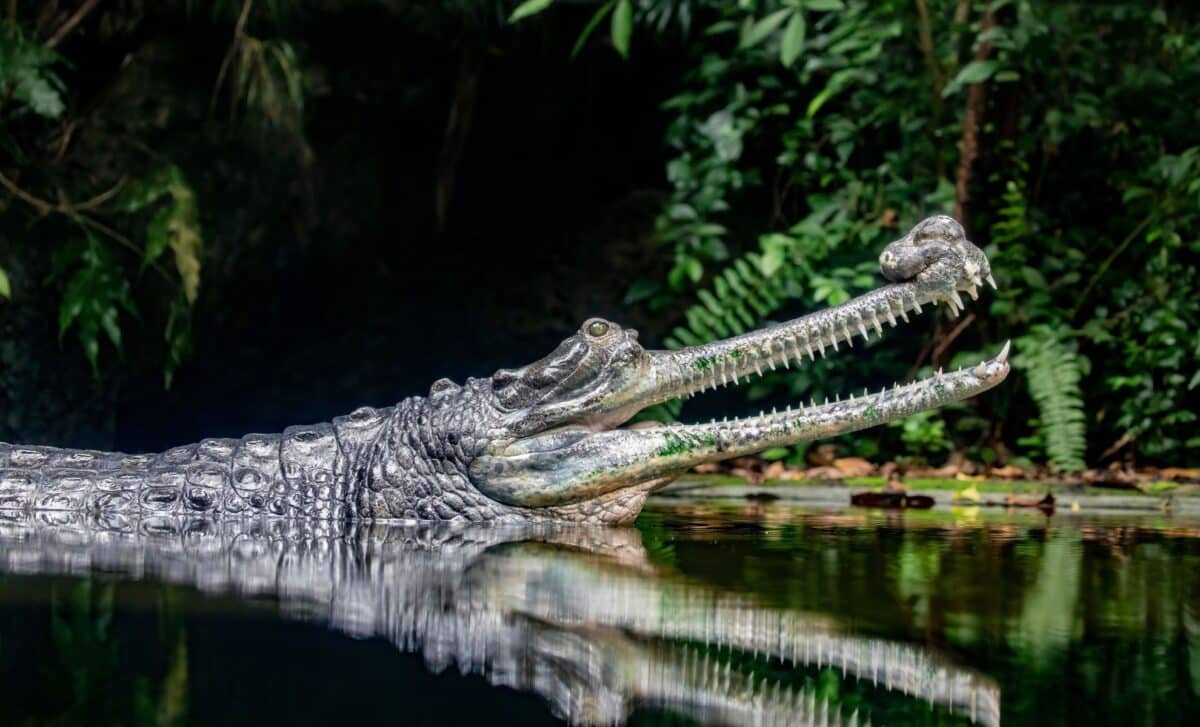 The Gavialis gangeticus with the lowest bite force but a high pressure delivery © Shutterstock
In all cases, the pressure values reported far exceeded the shear strength of bone, meaning any bite from these animals is enough to crack or crush most prey tissues, even underwater, where bite velocity naturally drops. The study emphasizes that tooth pressure and bite force evolved independently in crocodilians, offering a clearer picture of how these predators adapted to an incredibly wide range of ecological niches over millions of years.
Crocodilians may appear unchanged across time, but this research reveals a deep and varied biomechanical story. While only one species currently holds the bite force record, every crocodilian carries with it a legacy of evolutionary refinement and raw mechanical performance that has kept them at the top of their game for millennia.