
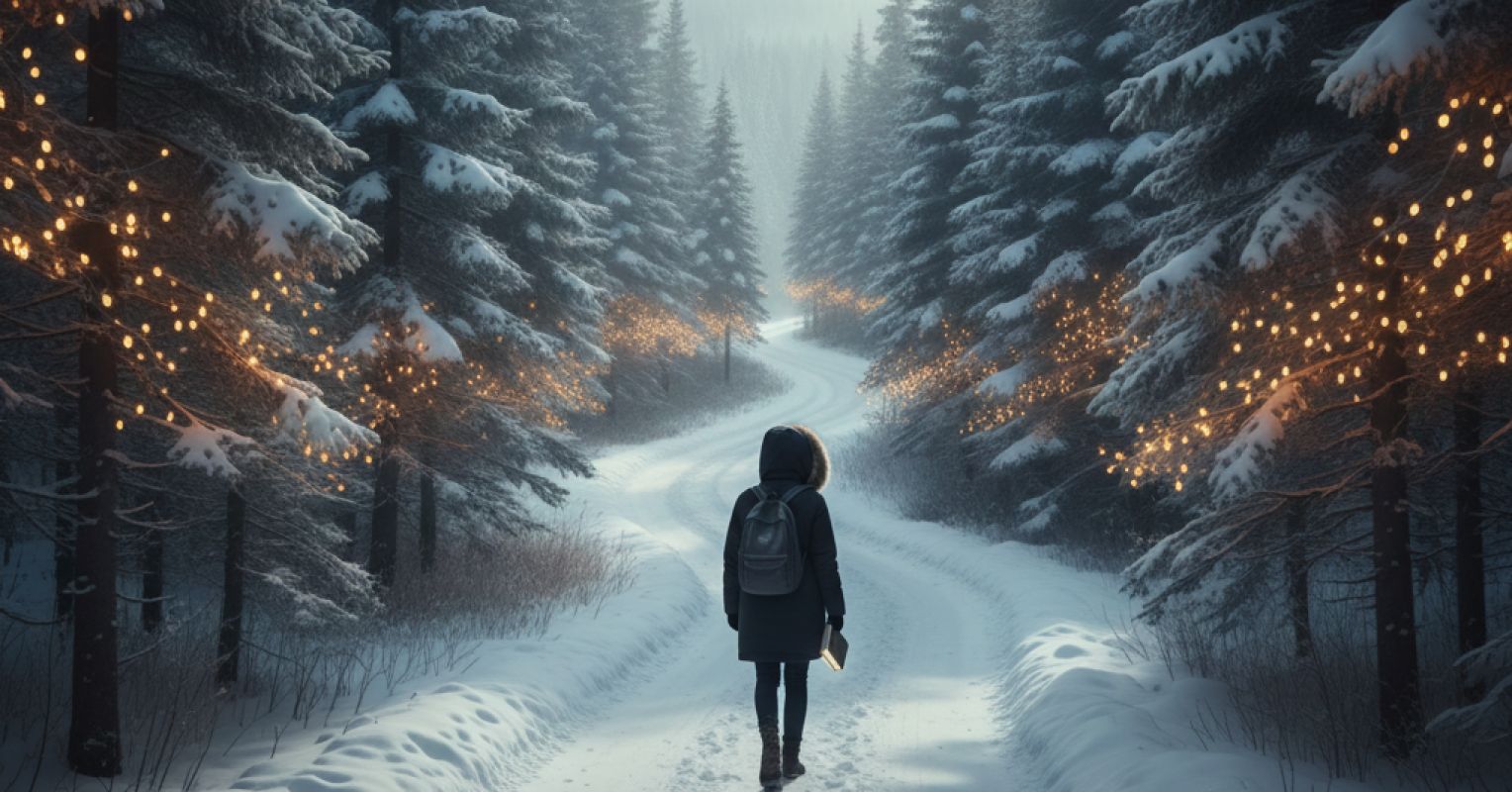
There is a holiday moment many of us know well: the quiet walk outside, the long exhale, the brief escape from a room full of people we love but sometimes struggle to navigate.
This season carries both beauty and weight. It can draw out our best qualities—generosity, gratitude, warmth—and also uncover the places where we are still growing.
I used to think this tension meant something was wrong—and honestly, part of me still does. But I’m also trying to see it differently, not because I’ve mastered it, but because I’m very much in the middle of learning how to approach these moments with curiosity instead of defensiveness.
One framework that has helped me rethink these emotionally charged experiences is the 70–20–10 model of development. Originally used in leadership psychology, it explains how people grow—not in theory, but in real life.
And the holidays offer all three of the following ingredients in abundance.
1. The 70%: Real-Life Experiences (The Hard Moments We Didn’t Choose)
According to the model, 70% of growth comes from challenging experiences—the kind that push us outside our comfort zones.
The holidays provide these moments with surprising precision:
A comment that lands too sharply
A disagreement about schedules or expectations
The resurfacing of an old family dynamic
The ache of grief or distance
The overwhelm of trying to please everyone
I don’t approach these moments with perfect composure. I’m not writing from the finish line—far from it.
For most of my life, and still right now, I’ve experienced these moments as obstacles to a peaceful season. But lately, I’m trying—imperfectly—to see them as part of my growth instead of proof of my shortcomings.
Psychologists call this a learning orientation—seeing challenges as opportunities to grow rather than threats to avoid.
It doesn’t make the moment easier.
But it does change how we make meaning of it.
2. The 20%: The People Who Help Us Make Sense of Things
Another 20% of growth comes from relationships—the conversations that help us process our experiences.
For some people, that’s a spouse or partner. For others, a therapist, pastor, friend, or sibling.
These people:
help us notice patterns
remind us we’re not failing
offer alternate perspectives
reflect how much we’ve already grown
And often, they help us laugh a little at ourselves—which is a form of grace we don’t give enough credit.
I rely on these conversations far more than I admit. They turn holiday tension into insight. Without them, the moment just stays a moment. With them, the moment becomes meaningful.
3. The 10%: The Tools We Bring With Us
The final 10% of development comes from formal learning—the articles we read (even this one), the concepts we study, the frameworks we carry, the skills we’ve practiced in calmer months.
These tools rarely show up perfectly in the moment. But afterward, they help us reflect with less shame and more clarity.
Knowledge alone doesn’t change us—but it supports the slow work that does.
Walking the Winter Path
The image accompanying this post—one person walking a winding snowy path lit by warm lights—captures the emotional landscape of the season:
Beautiful, but stretching. Quiet, but full of meaning. Lonely at times, but also illuminating.
Growth doesn’t happen when life is perfectly calm.
It happens in the swirl of relationships, expectations, misunderstandings, love, nostalgia, and complexity that the holidays bring.
It happens on the walk, not just at the destination.
If the Holidays Stretch You, Try This
Ask yourself:
“What might this moment be developing in me?”
Not as a way to excuse unhealthy behavior from others, but to acknowledge the possibility of growth in yourself.
Reach out:
Talk to someone who helps you see clearly and kindly.
Lean on what you know:
Whether it’s boundaries, breathing, reframing, or faith—every tool counts.
Be gentle with yourself:
You’re not supposed to have mastered this. None of us have. We’re all practicing.
A Final Thought
The holidays don’t require us to be perfect versions of ourselves. They simply invite us to be present enough to notice where we’re being stretched—and open enough to learn from it.
Growth doesn’t usually feel like growth. It feels like a long walk down a snowy path, trying to make sense of things, with small lights appearing just when we need them.
This year, may those lights guide your way. And may the challenges of the season become part of your becoming.