
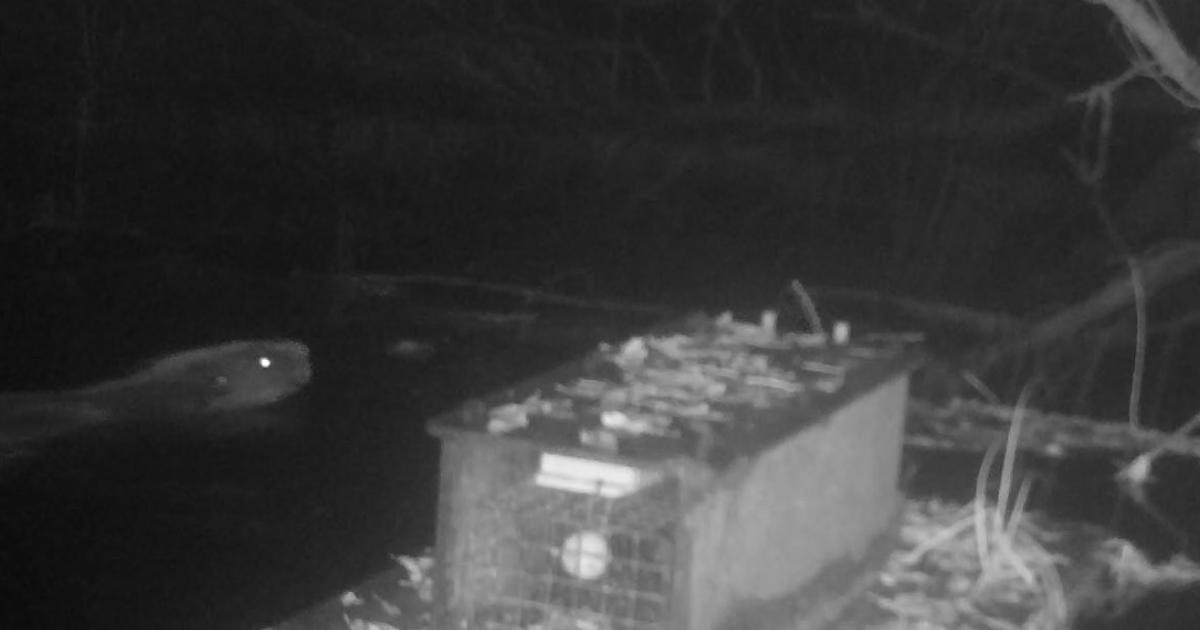
Reg and Rowena Langston, two of the founding members of the Little Ouse Headwaters Project (LOHP), made the discovery after putting out cameras to record otters and other wildlife along the valley in Thelnetham.
On November 2, Mr Langston was reviewing footage when he saw something unexpected in one of the clips.
“I check a thousand or so images each month and most are of branches waving in the wind, but occasionally I see an otter or a kingfisher perching in front of the camera.
“A beaver was the last thing I expected to see.”
READ MORE: Rare birds in Suffolk and where you can see them this winter
A tree stump gnawed by a beaver (Image: Ellie Beach)
It is believed that beavers went extinct in the UK during the 16th century as they were hunted for their valuable fur.
The latest discovery in Suffolk comes after a beaver was spotted in the neighbouring county of Norfolk.
Mr Langston added: “We don’t know where the beaver came from, and assumed it would just pass through, but we have had several more records on camera over the past months and started to record signs of feeding, so maybe it will stay for a bit longer.”
LHOP has been working to restore the local environment for the past 20 years, hoping that some of the wildlife that has been lost will return when the conditions are improved.
It will continue to use its trail cameras to monitor the situation and is working with local experts to try and trace its origin.
Ellie Beach, LHOP’s conservation manager, said: “The return of such an iconic species to the Norfolk and Suffolk border is a fantastic example of how restoring the valley can aid the local wildlife.”
READ MORE: LOOK: Camera captures fantastic snapshot of bird murmuration
Where can beavers be found in the UK?
Beavers went extinct in the UK during the 16th century (Image: University of Stirling/PA Wire)
At the end of October, a pair of beavers and a family of five were released into the wild in Scotland.
It came after NatureScot granted a licence for the release of four family groups of beavers to the waters above Beinn a Mheadhoin dam in the Glen Affric national nature reserve in the north-west Highlands.
A study by the University of Stirling found wetlands created by beavers could help reverse the decline in the numbers of pollinating insects.
Researchers compared the pollinators found around wetlands made by beavers to those found around artificial ponds.
They found that beaver-created wetlands showed a 29% increase in hoverfly species, 119% more hoverfly individuals and 45% more butterflies than those that were artificially created.
Study lead Patrick Cook, a PhD researcher at the university’s faculty of natural sciences, said: “Currently, in the United Kingdom, most agri-environment subsidy schemes support human pond creation, with little financial incentive for landowners to accommodate beaver wetlands – despite the potential boost in pollination services.
“This position needs to change if we are to benefit from the buzz, flutter and hum of pollinators that beaver wetlands promote.”