
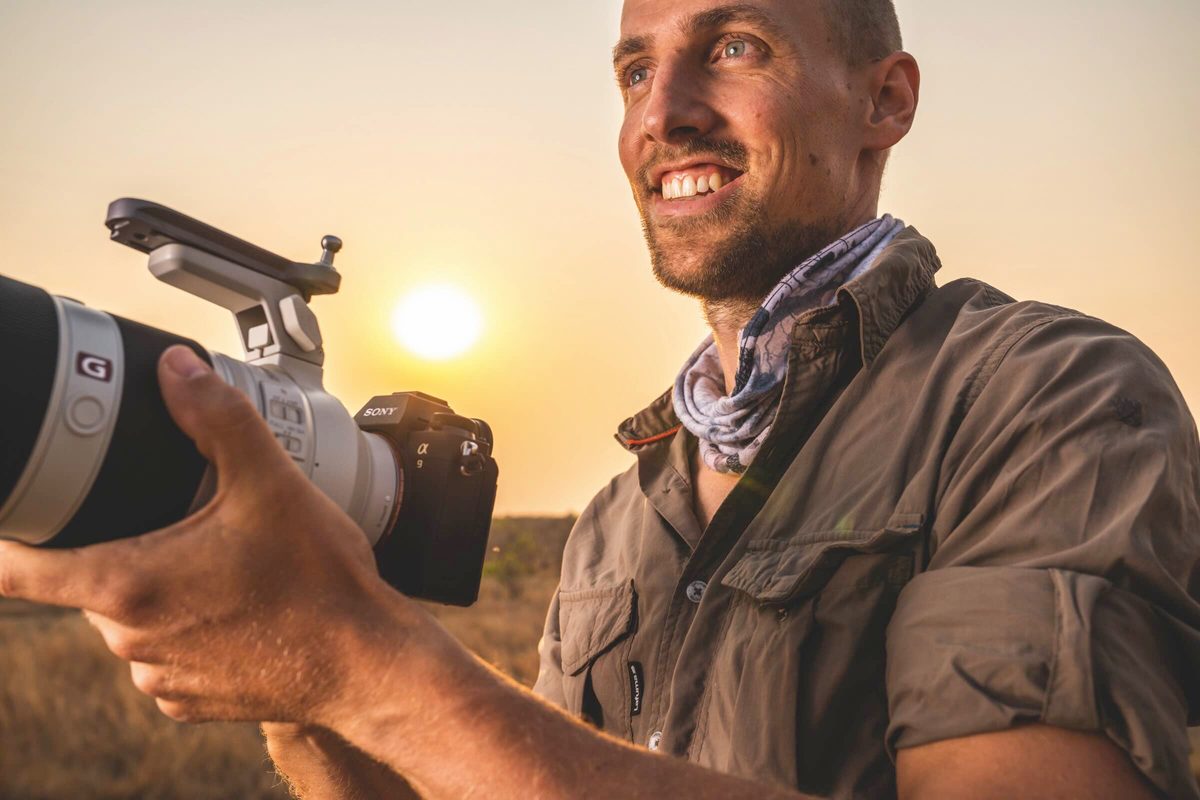
Sebastian Kennerknecht is a wildlife and conservation photographer, with a particular focus on big cats. His work has been shortlisted for Wildlife Photographer of the Year and featured in BBC Wildlife Magazine, Smithsonian, The New York Times and The Washington Post.
How did your career start?
Wildlife has always been my passion. My first photo project was in my mid-20s, on 11 endangered species in northern California, from tiger salamanders to sea otters, and culminated in an exhibition at the Santa Cruz Museum of Natural History in 2011. When it dawned on me how powerful photography can be for conservation, I decided to make it my career.
Which of your images is the most important to you, and why?
My shot of a wild Borneo bay cat from 2014. It’s probably the least studied wild cat in the world – we barely know anything about its ecology. My image was published all over the world and drew lots of funding. It is something I am still proud of.
What is your most memorable shoot?
Photographing snow leopards in Kyrgyzstan was incredible. Getting to base camp required a four-hour horse ride. I slept in a tent for five weeks at sub-zero temperatures. Every day I would hike 6-12km to put up and check SLR camera traps and search for this elusive cat. It was difficult work but, when I saw my first snow leopard, I took a few frames and just started crying.
What’s been your most memorable experience with wildlife?
When I was about 19 or 20, barely knowing how to find or photograph animals, I stumbled across a female bobcat with a kitten. Somehow, despite my naivety, she accepted me. She would hunt right next to me and sleep just a few metres away. I don’t know what I did to deserve her trust but it’s a memory that I cherish.
Any particularly close calls?
The scariest was a forest elephant in the jungles of Uganda. I was setting up a camera trap with a biologist when we heard a trumpet. A bull was charging, flattening every tree in its path. We ran, getting tangled in every vine and sapling. The elephant gained on us quickly. Ten metres, five metres, two metres.
Without discussion, the biologist and I went different ways. The elephant stopped, returned to the camera trap and destroyed parts of it. We were alive, and that was what mattered, but I had another four weeks in the forest and was terrified the entire time.
Any epic fails?
Too many to count. I was recently shooting from a hide in Botswana. On the last day, some lions showed up at sunset. The light was beautiful. I was ecstatic. Later that day I was prepping my gear for some night photography and I accidentally formatted the SD card with all the lion shots. I can laugh about it now but it still hurts.
Which species is top of your bucket list?
Sand cats in Morocco – which is what I’m photographing currently. There are lots of challenges, including landmines, which makes the situation a bit hairy. I haven’t seen a cat yet but my hopes are high.
What’s the worst discomfort you’ve had to endure in the name of photography?
I’ve had hookworms tunnelling through my foot in Borneo, appendicitis in Thailand, scorpion and centipede stings, mites under the skin and hundreds of ticks and leeches attached to me. Oh, and heatstroke in India and altitude sickness in the Andes.
What has been your favourite species to turn your focus on?
Photographing pumas is incredibly special. Being on foot with a predator that could easily kill you, yet ignores your presence, is dumbfounding. We often think of wild cats as solitary but spending hundreds of hours with pumas has revealed their social dynamics are far more complicated. For example, I once watched a puma kitten leave its mother’s side to travel with an unrelated female for hours.
Any tips for budding photographers?
Shoot what you are passionate about. Have fun and put the wildlife first. It will show in your photos.
See Sebastian’s work at pumapix.com.
Top image: self-portrait while on assignment in Zambia