
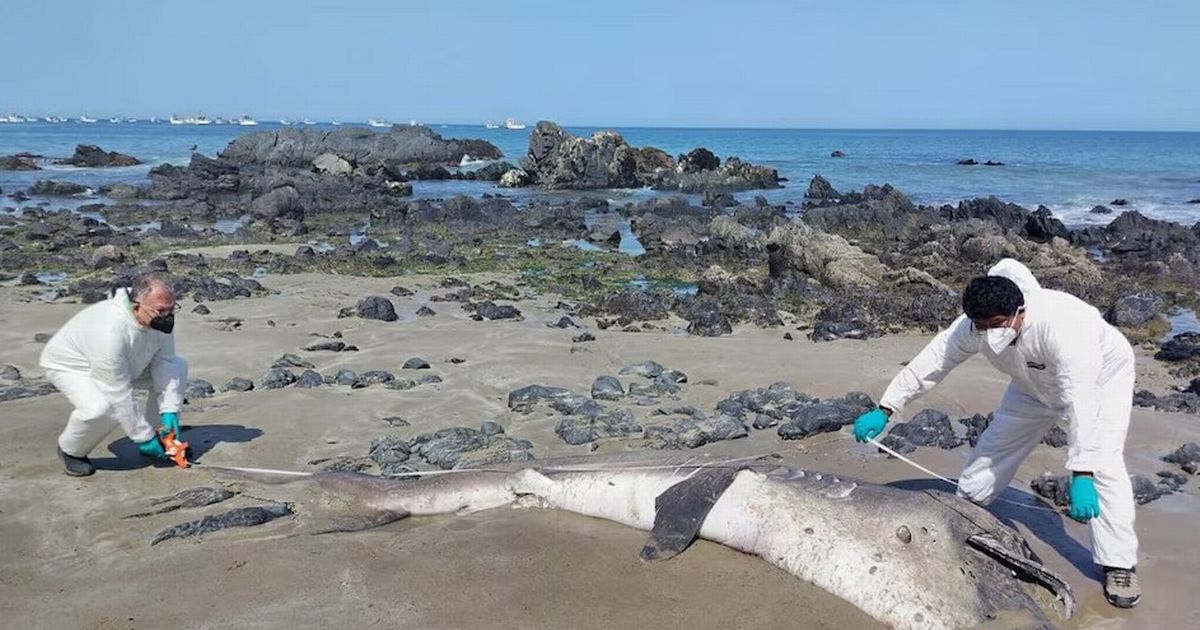
The massive megamouth shark is one of just 273 that have been identified since the species was first discovered, but was too decomposed when scientists found it washed up on a beach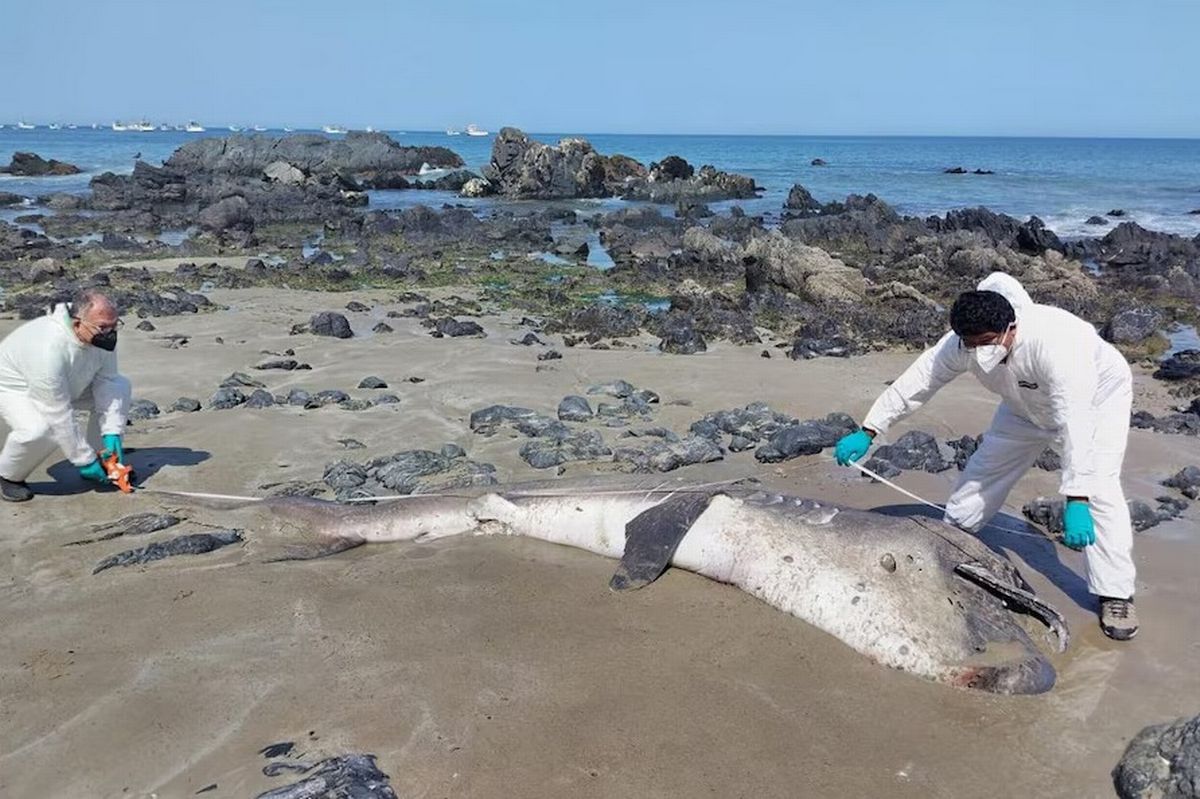 A rare shark was found washed up on a beach(Image: Jam Press)
An enormous sea monster that is rarely seen has washed up on a beach for a second time in just a month. The sighting of the 14ft creature has reportedly sparked concern among marine experts.
The megamouth shark is one of the least seen on Earth. However it was recently found stranded on the northern coast of Peru, the second recorded sighting in the region in less than four weeks.
The 14ft 8in shark was discovered on Wednesday between Playa Gaviotas and the fishing town of Yacila in the Piura region. Experts at the Peruvian Marine Institute confirmed the animal was a megamouth shark, known as Megachasma pelagios.
There have been fewer than 300 sightings recorded worldwide since the shark was first identified. They have been found across the world, including both the Pacific and Atlantic coasts.
As their name suggests, they have large mouths and small teeth with a rounded snout. Measuring up to 18ft-long, they are often believed to be mistaken as young orcas instead of sharks.
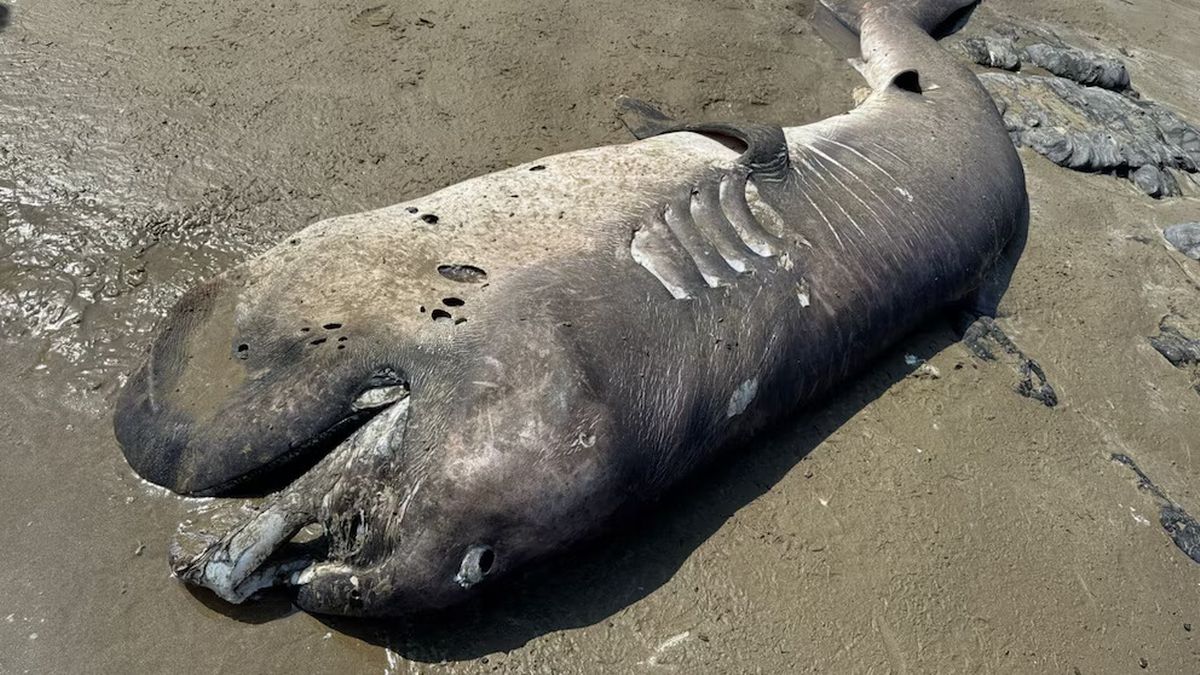 The megamouth shark is one of 273 that has been discovered (Image: Jam Press)
According to NeedToKnow, the shark was recently found in a remote coastal area dominated by cliffs, rocky outcrops and narrow beaches. The experts said it was already in an advanced state of decomposition.
It limited the number of biological samples that could be taken. Researchers were however able to complete a formal technical report.
The data will now be added to Peru’s official monitoring records for rare marine species. The megamouth is said to be one of the most mysterious creatures in the ocean.
The shark is said to live around 165m (541ft) below sea level. It is a pelagic, filter-feeding creature meaning it is rarely encountered by humans.
Previously it was spotted in the Piura region in November 2025. According to reports, local fisherman “filleted the specimen for sudado and ceviche”, two traditional dishes in the country.
Marine wildlife trackers OSEARCH have reported a number of sharks being “pinged” in recent weeks. Cayo, a 10ft 3in white shark was spotted off the coast of South Carolina on Wednesday, December 18.
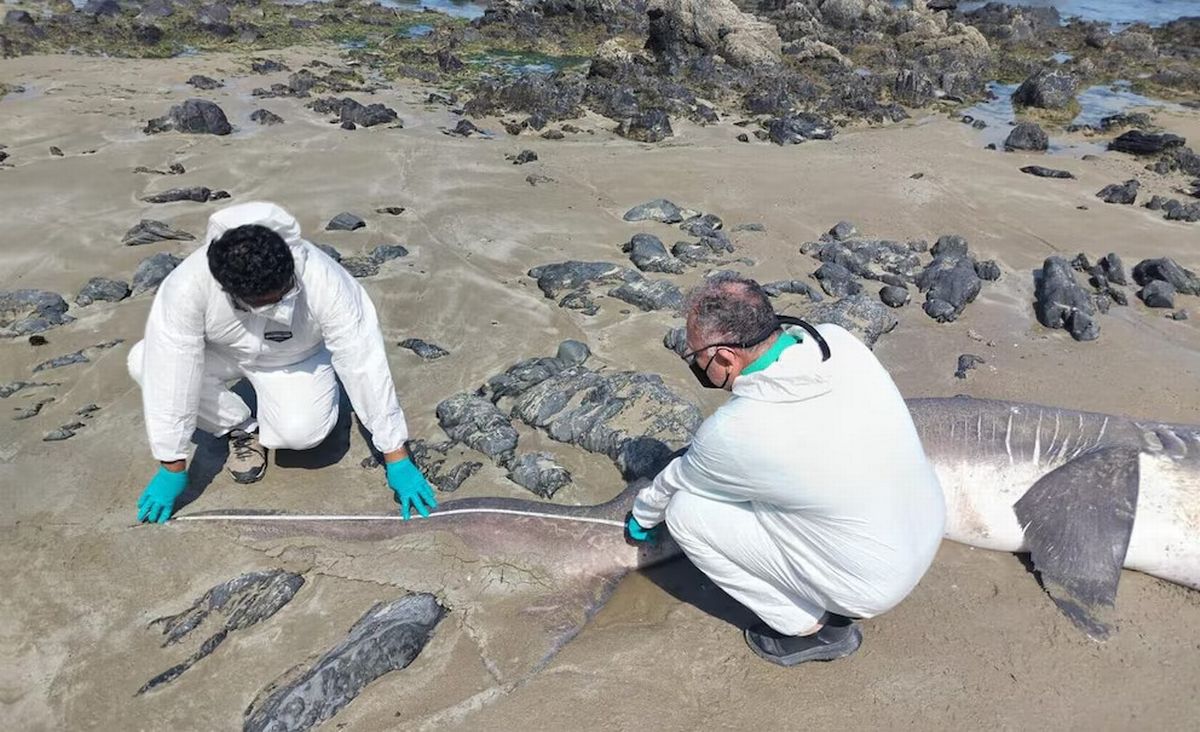 The shark was found dead on the beach
Cayo was first tagged by experts in July. OSEARCH said: “Cayo was tagged and released in Mahone Bay, Nova Scotia, by the Tancook Islands Marine Field Station Team, in collaboration with the OCEARCH Science and Fishing Teams.
“At the time of tagging, Cayo measured 10 feet 3 inches and is classified as a large juvenile female white shark.”
Meanwhile Danny, a 9ft 6in white shark, was pinged off the coast of Florida. He was first spotted on the Florida/Georgia line in February.
OSEARCH said: “At 9.5 feet in length and weighing an estimated 462 lbs, Danny is currently a subadult, part of the Western North Atlantic white shark population.”