
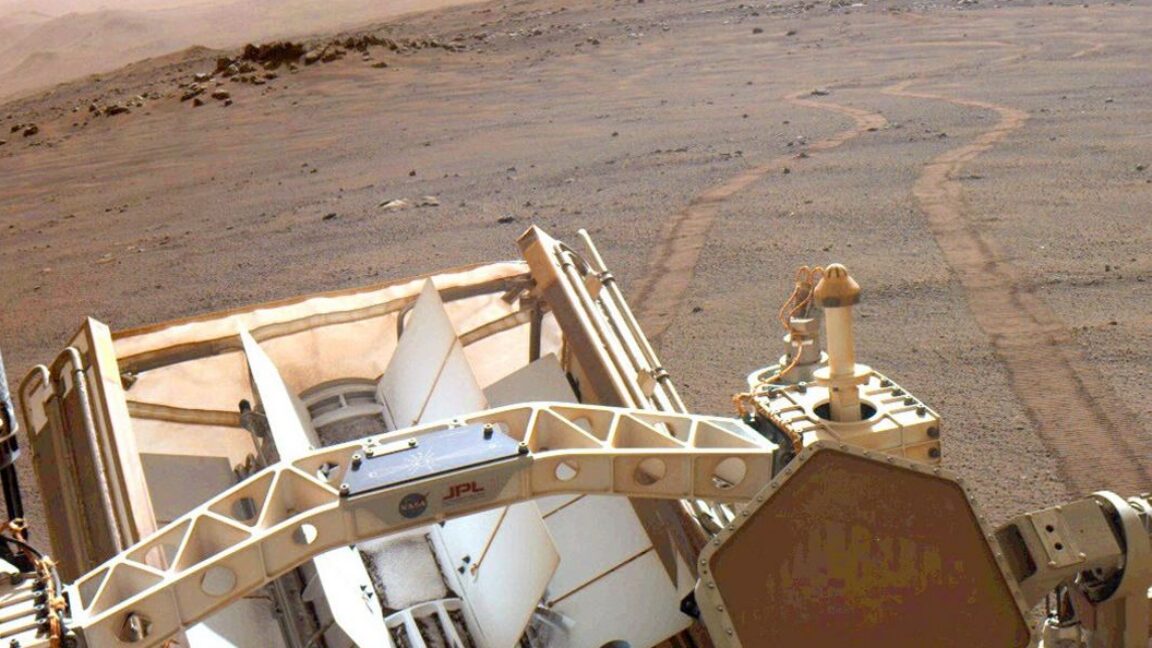
When the Perseverance rover arrived on Mars nearly five years ago, NASA officials thought the next American lander to take aim on the red planet would be taking shape by now.
At the time, the leaders of the space agency expected this next lander could be ready for launch as soon as 2026—or more likely in 2028. Its mission would have been to retrieve Martian rock specimens collected by the Perseverance rover, then billed as the first leg of a multilaunch, multibillion-dollar Mars Sample Return campaign.
Here we are on the verge of 2026, and there’s no sample retrieval mission nearing the launch pad. In fact, no one is building such a lander at all. NASA’s strategy for a Mars Sample Return, or MSR, mission remains undecided after the projected cost of the original plan ballooned to $11 billion. If MSR happens at all, it’s now unlikely to launch until the 2030s.
That means the Perseverance rover, which might have to hand off the samples to a future retrieval lander in some circumstances, must continue weathering the harsh, cold, dusty environment of Mars. The good news is that the robot, about the size of a small SUV, is in excellent health, according to Steve Lee, Perseverance’s deputy project manager at NASA’s Jet Propulsion Laboratory (JPL).
“Perseverance is approaching five years of exploration on Mars,” Lee said in a press briefing Wednesday at the American Geophysical Union’s annual fall meeting. “Perseverance is really in excellent shape. All the systems onboard are operational and performing very, very well. All the redundant systems onboard are available still, and the rover is capable of supporting this mission for many, many years to come.”
The rover’s operators at JPL are counting on sustaining Perseverance’s good health. The rover’s six wheels have carried it a distance of about 25 miles, or 40 kilometers, since landing inside the 28-mile-wide (45-kilometer) Jezero Crater in February 2021. That is double the original certification for the rover’s mobility system and farther than any vehicle has traveled on the surface of another world.
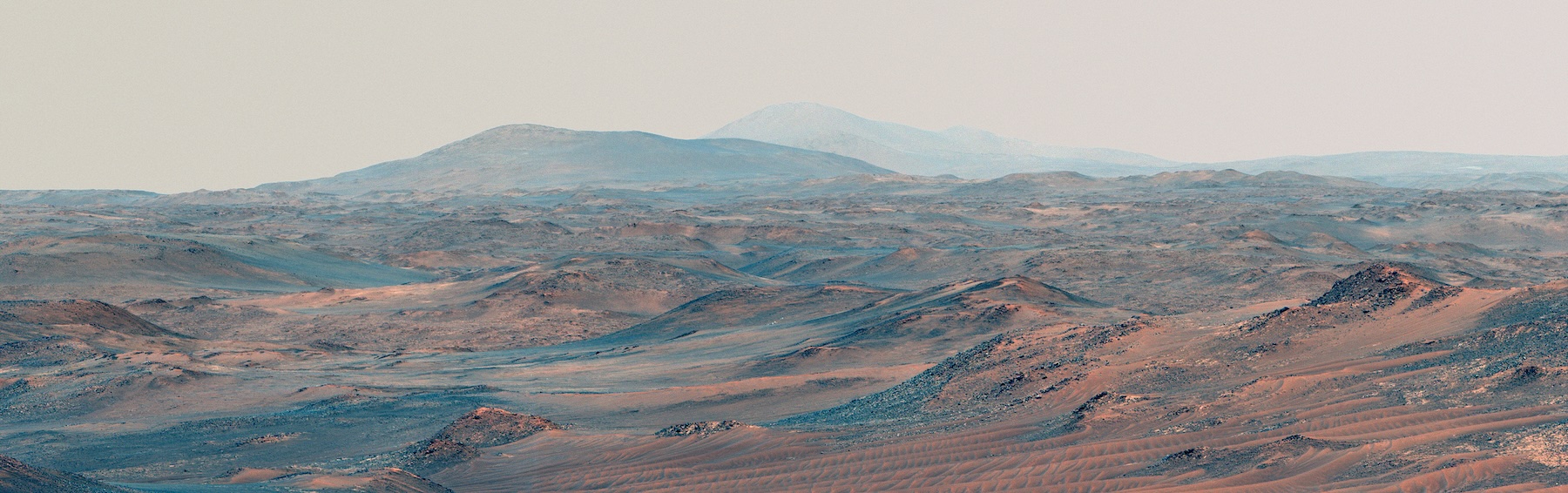
This enhanced-color mosaic is made from three separate images taken on September 8, 2025, each of which was acquired using the Perseverance rover’s Mastcam-Z instrument. The images were processed to improve visual contrast and enhance color differences. The view shows a location known as “Mont Musard” and another region named “Lac de Charmes,” where the rover’s team will be looking for more rock core samples to collect in the year ahead. The mountains in the distance are approximately 52 miles (84 kilometers) away.
Going for 100
Now, engineers are asking Perseverance to perform well beyond expectations. An evaluation of the rover’s health concluded it can operate until at least 2031. The rover uses a radioactive plutonium power source, so it’s not in danger of running out of electricity or fuel anytime soon. The Curiosity rover, which uses a similar design, has surpassed 13 years of operations on Mars.