
(Credits: Far Out / TIDAL)
Thu 18 December 2025 18:53, UK
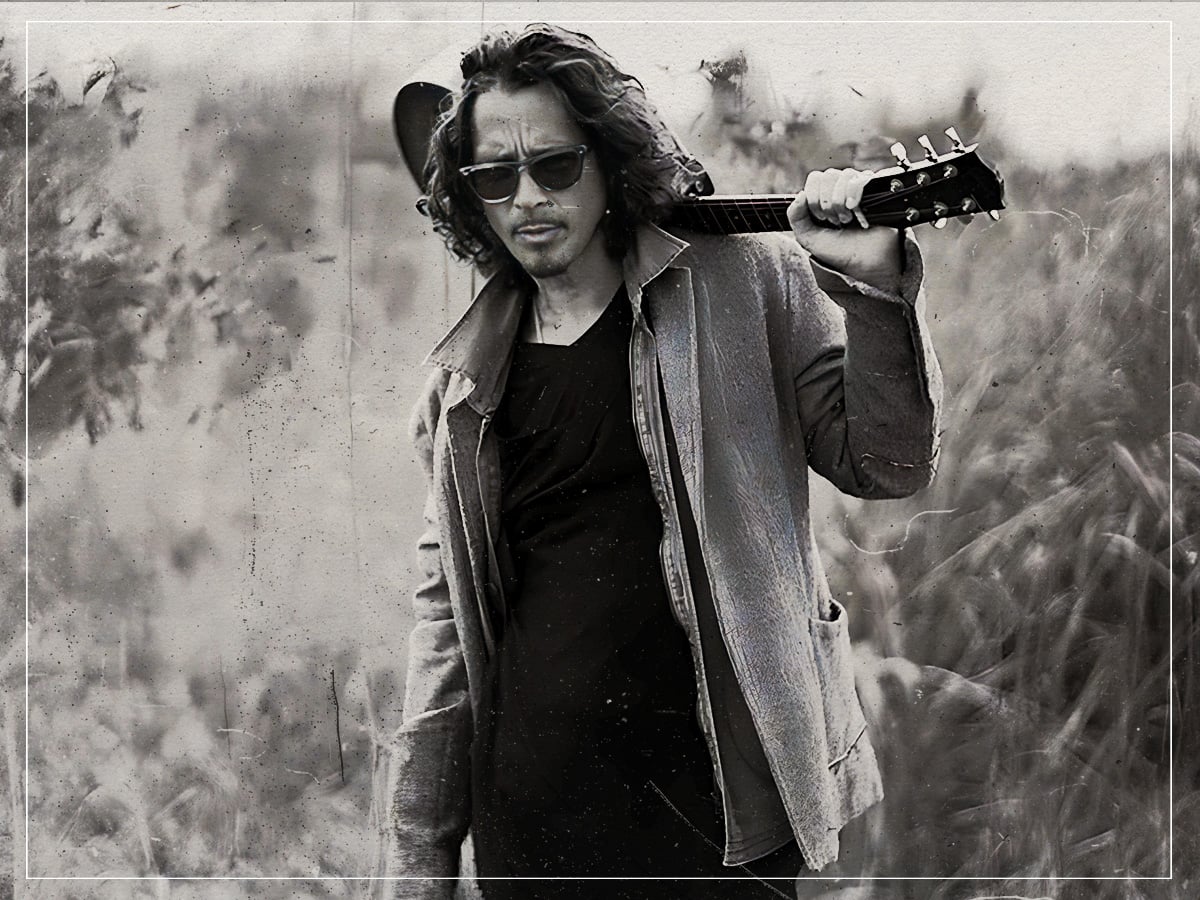
Most rock fans typically had their hair blown back the first time they heard Chris Cornell sing. There had been other vocalists coming out of the Seattle scene with impressive screams, but if Kurt Cobain sounded like he was channelling his inner pain, Cornell practically sounded like he was exorcising demons out of his body whenever he stepped up to the microphone. Cornell never claimed to be perfect, though, and even he had to admit that he couldn’t muster the same energy that Mick Jagger had in his prime.
Then again, comparing the stage presences of Jagger and Cornell feels like coming from two completely different worlds. Jagger helped usher in something darker for rock and roll, while Cornell was the all-star frontman who managed to sound like a rock and roll god in a world where such things were frowned upon.
If you look at the mechanics of what they do, there is still a massive amount of overlap. Both of them relied on the blues before anything else, and they each had their own way of amplifying the raw parts of their vocals to get the job done, whether that Jagger on ‘Stray Cat Blues’ or Cornell on ‘The Day I Tried To Live’.
But singing is just one part of what makes a frontman work. The other half of the time is spent trying to make sure that the audience is having the time of their lives, and Soundgarden man’s way of working usually involves playing up to the legacy of hard rock frontmen like Robert Plant and Ozzy Osbourne rather than Jagger’s lighthearted approach.
While Cornell may have the stronger delivery, Jagger has put in the road miles a lot more than he has. Outside of probably running the equivalent of a half-marathon at every other show, Jagger still manages to hit some of the high notes that he did back in the late 1960s, whereas most of his contemporaries ended up either lowering the keys to their songs or not even bothering to try it anymore.
 The Duracell bunny known as Mick Jagger. (Credits: Far Out / Alamy)
Even for someone who seemed to get better with age, Cornell said that he could have never come close to the kind of stage presence Jagger had, telling KROQ, “When I saw Scorsese’s Shine a Light with The Rolling Stones; I was on tour when I saw that. I’m watching Mick Jagger, who, by then, was in his mid-1960s and thinking, ‘I can’t do that now. I don’t even try to do that.”
Sure, Cornell could say that he couldn’t do that in his later years, but was anyone really asking for him to do the rooster strut? No, not at all. This was the same frontman who was known for soaring like a phoenix whenever he sang, and if he stood like a statue throughout the show or just played the guitar, it would have been more than enough just to hear the power behind his voice.
If anything, the only real tragedy is that we won’t be able to hear that voice again after Cornell passed away in 2017. Jagger might still be trucking after over half a century in the business, but what Cornell did in half that time with Soundgarden still contains some of the most interesting turns that mainstream rock music has ever made.
Are there any other singers beyond his repertoire?
Despite his absolute force as a vocalist and his ability to have audiences baying for more both live and on record, Cornell admitted to the publication that while he could replicate any notable metal singer due to his natural ability to belt it out when it came to pop singers, things were much more challenging. He really struggled to replicate the earthy tones of Lennon, no matter how hard he tried.
He said: “I can do any heavy-metal singer. Rob Halford? Not a problem. But there are certain timbres and styles that I can’t come near. No matter what, I can’t sound like John Lennon. But I can do Tom Jones.”
While watching Chris Cornell do a Tom Jones impression would have been quite the experience, it seems astounding that someone with such an elemental voice could not have matched Lennon’s blues-based tunes.
Related Topics