
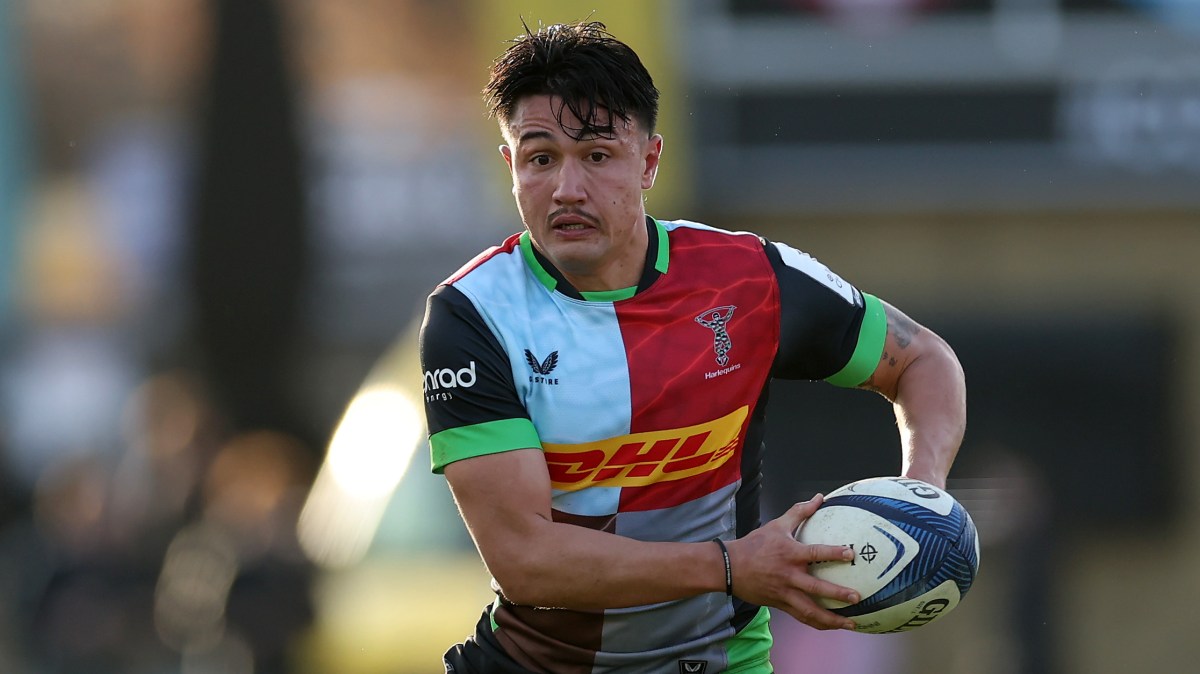
Marcus Smith was named man of the match against a much-depleted Bayonne side at the Stoop last Sunday. It was the third such award he has picked up recently, meaning some people think he is back to the form that has deserted him for much of the year.
He failed to work the magic as a full back in both the white of England and the red of the British & Irish Lions. He didn’t do badly. He is too talented a player for that. But nor did he emerge as the hybrid 10-15 genius, turning a Test with a shuffle of those Smith shoes.
He faded from the thought process of Andy Farrell as the younger Farrell, Owen, was selected for the bench in the second and third Tests in Australia, at Smith’s expense. The Dublin warm-up against Argentina was his solitary Lions start. By the final game in Sydney, he had slipped into the unwanted role of the utility player without any use.
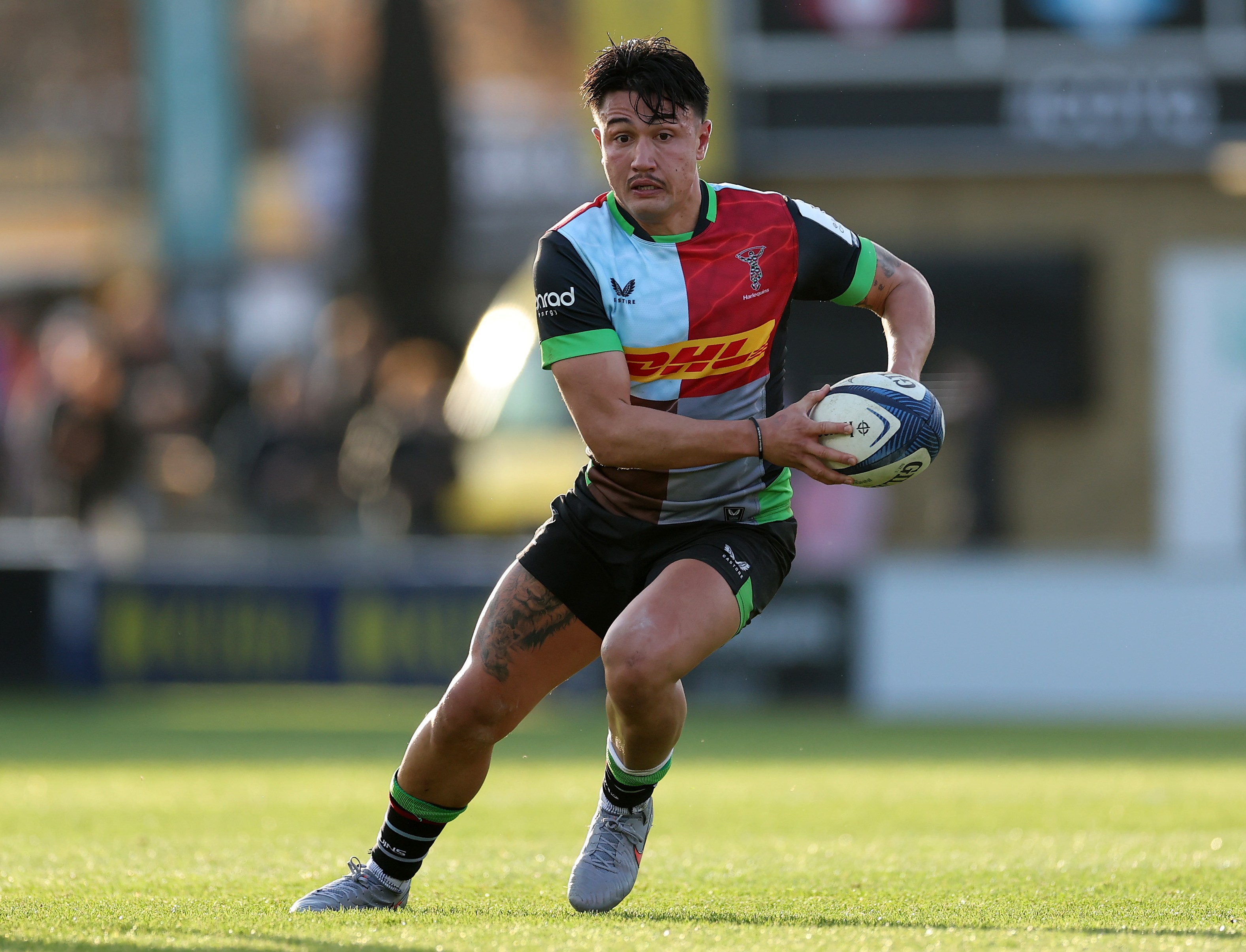
Smith produced a complete performance as Harlequins routed Bayonne last weekend
ALEX DAVIDSON/GETTY IMAGES
Smith’s club, Harlequins, rested him a fortnight ago for the defeat by Leinster, leaving him out of the match-day 23 for the trip to Dublin. It seems like a smart idea in retrospect, although with Leinster’s indifference in the opening rounds, who knows what might have happened had Smith orchestrated the Harlequins? As it was, he was held back for last weekend’s visit of the Basque Frenchmen.
Harlequins scored 60-plus points. Such a one-sided affair tends not to tell too much about an individual but this was an exception. I’ll not comment on the second half in which Bayonne capitulated after a stubborn first 20 minutes. There was no sign of what was to unfold until the visiting team’s defence was prised open by Smith.
What is more interesting is how that defence was opened up. Not a hint of the goose-step; a day off for the arcing outside break. It was the combination of brain and boot that broke Bayonne. A dart into the 22 and a beautifully delayed diagonal stab behind the midfield enabled Cadan Murley to gather the perfectly weighted kick for the first try. Soon after, a Smith cross-kick evaded Bayonne’s cover and landed straight into the welcoming arms of Kieran Treadwell.
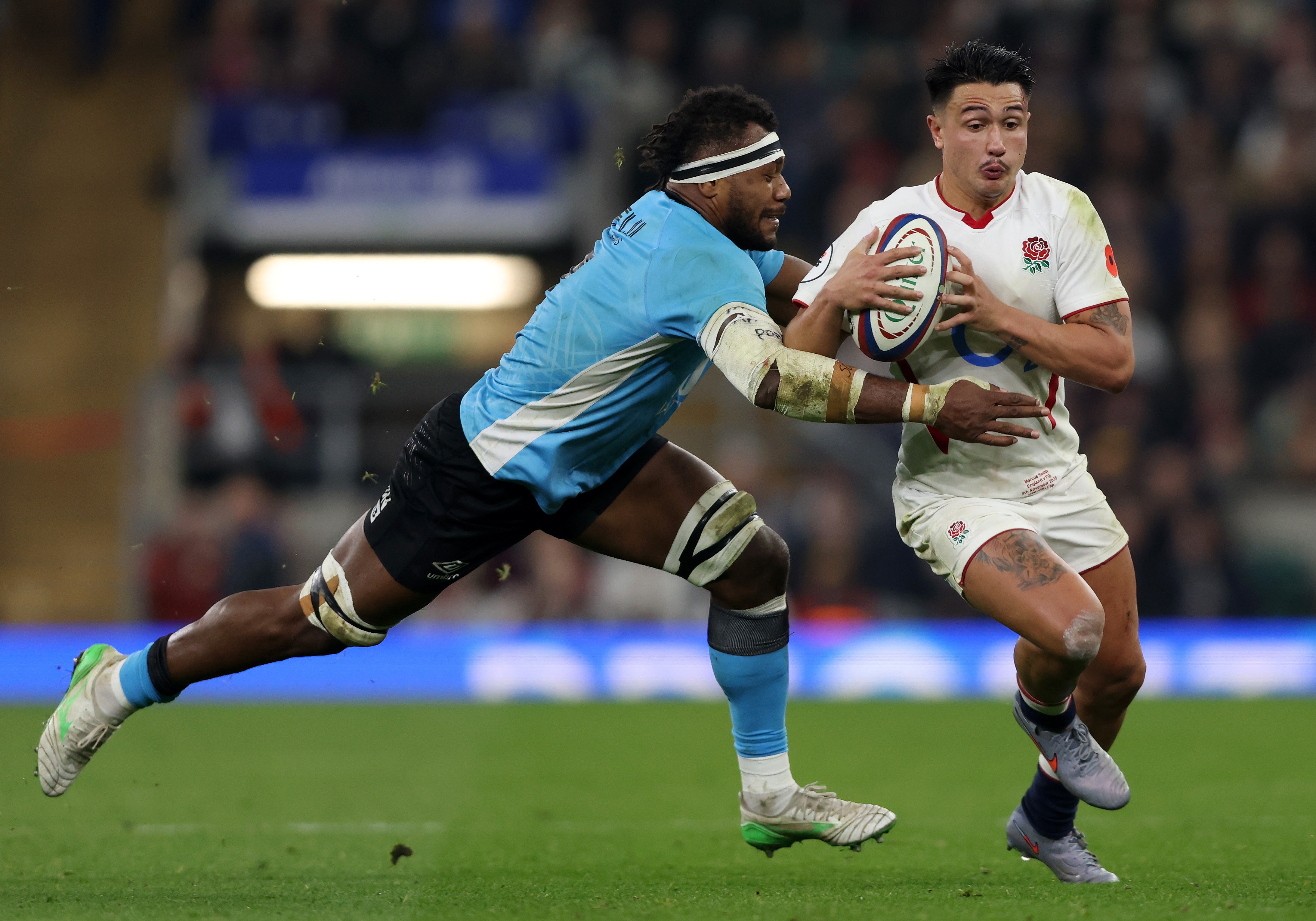
Smith, playing as a full back, takes on the Fiji defence during last month’s Test, which England won 38-18
PAUL HARDING/GETTY IMAGES
The vision and execution could not have been improved on. The two pieces of play reminded me of no one but Farrell. The Saracens fly half and former England captain was one of the best short-range attacking kickers in the game. Unfortunately, so good was his kicking game that he overplayed the varied ploys and booted ball away when passing was a potentially better option. And there was nothing wrong with his passing technique.
The question a few of us asked about Farrell was one of balance. It’s the same question that is being asked of Smith, only a different set of skills are being debated. Has he been too individualistic in the sense that his change of pace has become the ubiquitous ace in his pack, played too frequently?
When he burst on to the Harlequins scene, and in his early England days in tandem with Farrell, Smith created chaos for defences that weren’t used to his trademark step and acceleration. After a while, doubters became critics as they wondered whether it was too much the Smith show. The answer from me was always a resounding no, but when your greatest asset is so flashy, it can make a team player look like a poseur.
There have been brickbats but he can handle them. More serious has been the manner in which opposing defences handled his ever more predictable box of tricks. As Farrell’s kicking game became less effective, analysed through the years by defensive coaches, so did the goose-step dummy and go of Smith.
It is all about balance. The beauty of South Africa’s whirlwind of a fly half talent, Sacha Feinberg-Mngomezulu, isn’t the raw pace, the swivel of the hips, the late grubber kick or the searching diagonal cross-kick; it is the potent manner in which he mixes them all up in a Cape Town stew. What Smith delivered in a devastating 20-minute burst against an admittedly weak opponent in Bayonne was a reminder that he can kick, as well as dazzle the watching world with those feet of his.
On Saturday evening, all being well, he will take the field against a dangerous Bristol Bears side who are finding some form. Pat Lam’s men are not a team to conjure against. They need to be kept deep in their own territory, pretty much how Steve Borthwick expects England to play with the veteran George Ford in firm control. If Marcus Smith wishes to leapfrog Fin Smith and put the pressure on Ford for the England No10 shirt, he needs to ensure Harlequins play in the right parts of the field.
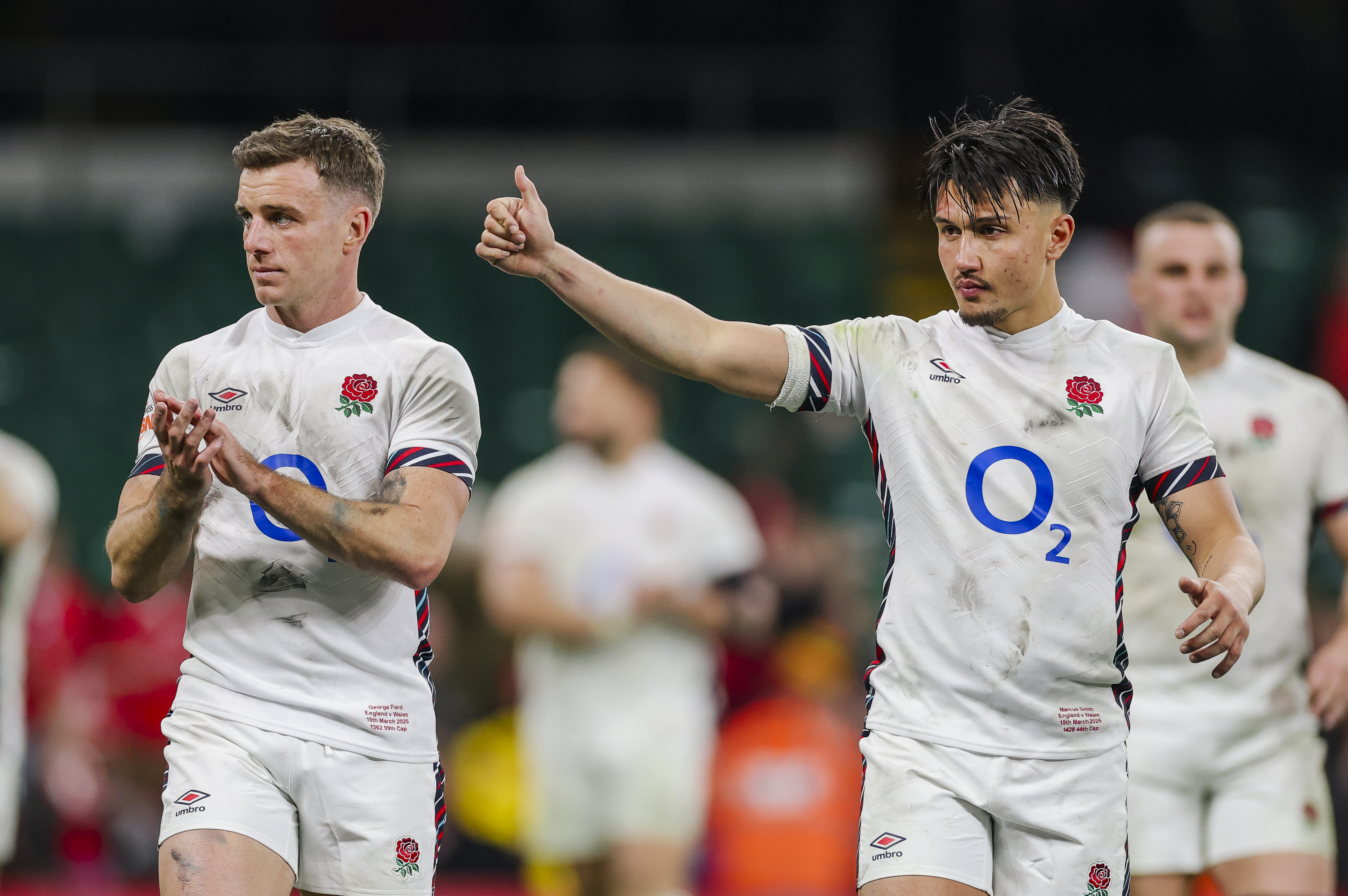
Ford, left, and Smith have been in competition for the England No10 shirt
MARC ASPLAND/SUNDAY TIMES
He has a fine kicking game. If his pack and the impressive Will Porter at scrum half provide a decent platform, Smith can make a statement with a conservative display of control from his own half. In a nutshell, Ford boots the ball long, high and without shame. In the opposing half he can pass the ball through the eye of a needle. Hence his status as England’s first-choice fly half.
Last weekend we saw some sizzling passing from Smith. He can just about match Ford as a passer but as a runner he eclipses his two England rivals. He may have overdone it in recent years but the more he kicks, the less the opposition are likely to be ready for those jaw-dropping moments of fizzing genius.
The last thing Smith needs to do is throw away his high-stepping shoes; just find a balance between the old razzmatazz and the caution of conservative English Test rugby. The less he shuffles his feet, the less prepared the opposition will be for the break when it comes. Two tryscoring breaks a game (combined with the underestimation of his excellent goalkicking) will keep him near the forefront of Borthwick’s mind. It’s all a question of balance.
Harlequins v Bristol Bears
Gallagher Prem, Twickenham
Saturday, 6pm
TV TNT Sports 1/ITV 4