
North Pacific Ocean —(Map)
Scientists have discovered that two different kinds of sea animals – orcas and dolphins – may be working together to hunt for salmon. Orcas and dolphins are both clever, but it’s unusual for two different kinds of animals to cooperate in this way.
Orcas, sometimes called “killer whales”, are the largest members of the dolphin family. Orcas are clever and strong, and are famous for hunting in groups. The orcas in this study are “northern resident orcas”, and they live off the coast of Canada’s British Columbia.
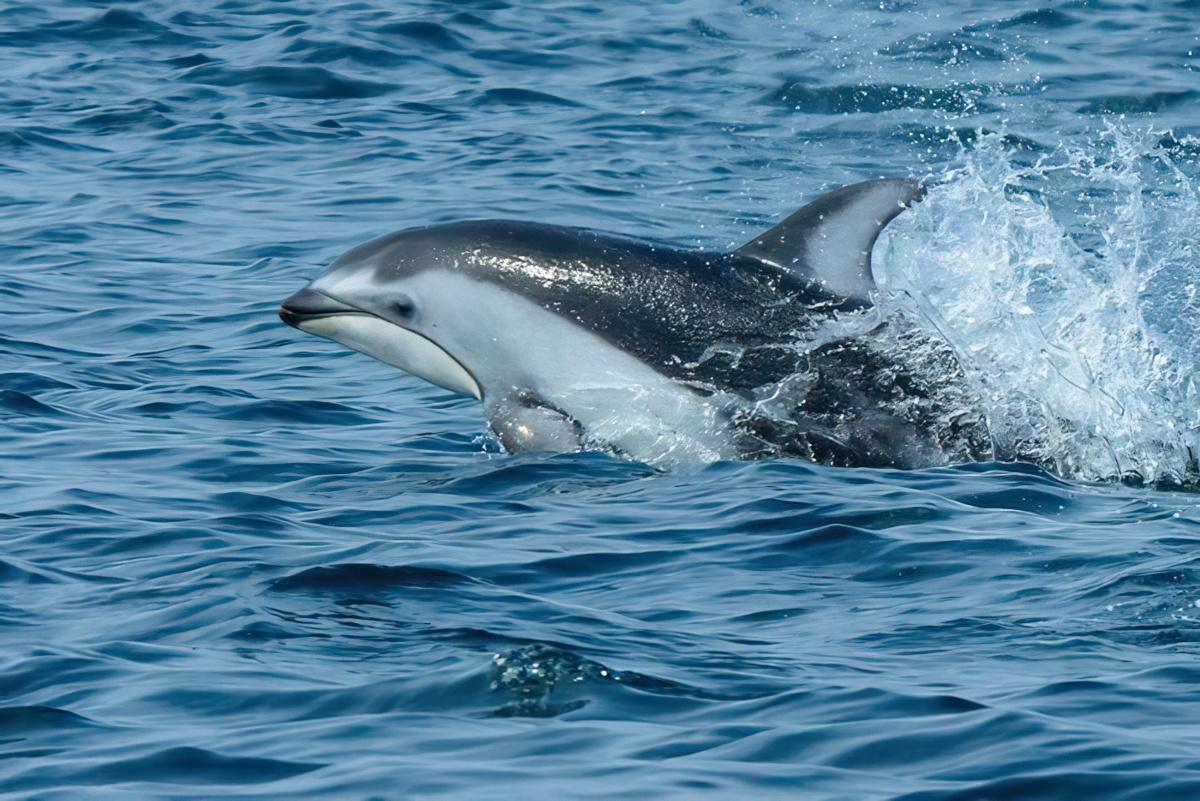 Scientists have discovered that two different kinds of sea animals – orcas and dolphins – may be working together to hunt for salmon. The orcas normally eat Chinook salmon. But Pacific white-sided dolphins, like the one above, usually hunt smaller fish, and can’t catch salmon.
(Source: University of British Columbia (A.Trites), Dalhousie University (S. Fortune), Hakai Institute (K. Holmes), Leibniz Institute for Zoo and Wildlife Research (X. Cheng).)
These orcas normally eat Chinook salmon – large, strong fish that can grow to be 3 feet (1 meter) long or more. On the other hand, Pacific white-sided dolphins usually hunt smaller fish like herring, and don’t have the ability to catch salmon.
Researchers have often seen these orcas and dolphins near each other, but they weren’t sure why. Some people thought the dolphins might be using the orcas as protection against other orcas that sometimes eat dolphins.
But the recent study suggests that something more complicated is going on.
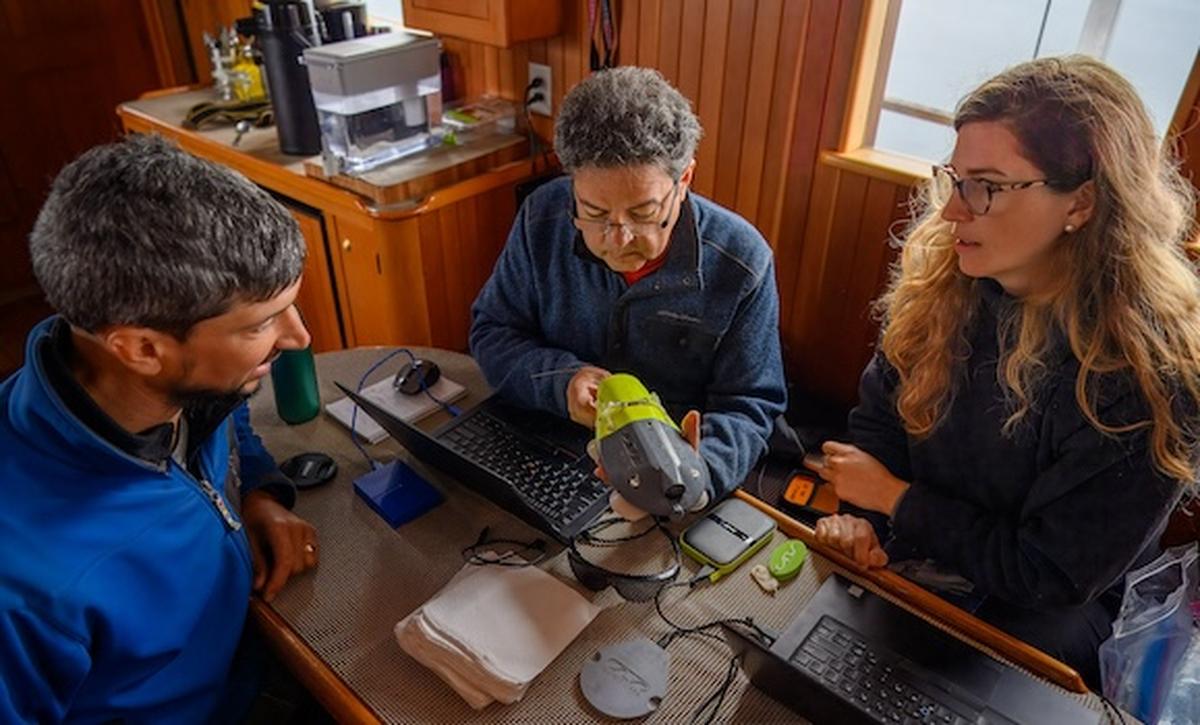 The discovery was made by scientists from several groups. Led by marine scientist Sarah Fortune (above, right), the researchers used drones, underwater microphones (above, center), and special cameras to record the sea animals as they hunted for food.
(Source: University of British Columbia (A.Trites), Dalhousie University (S. Fortune), Hakai Institute (K. Holmes), Leibniz Institute for Zoo and Wildlife Research (X. Cheng).)
The discovery was made by scientists from several groups, including the University of British Columbia and Dalhousie University. Led by marine scientist Sarah Fortune, the researchers used drones, underwater microphones, and special cameras to record the sea animals as they hunted for food.
Though the orcas are the ones that can actually catch the salmon, Dr. Fortune was surprised to see that the dolphins were often leading the chase. And when the orcas were following the dolphins, they dove deeper than when they hunted by themselves.
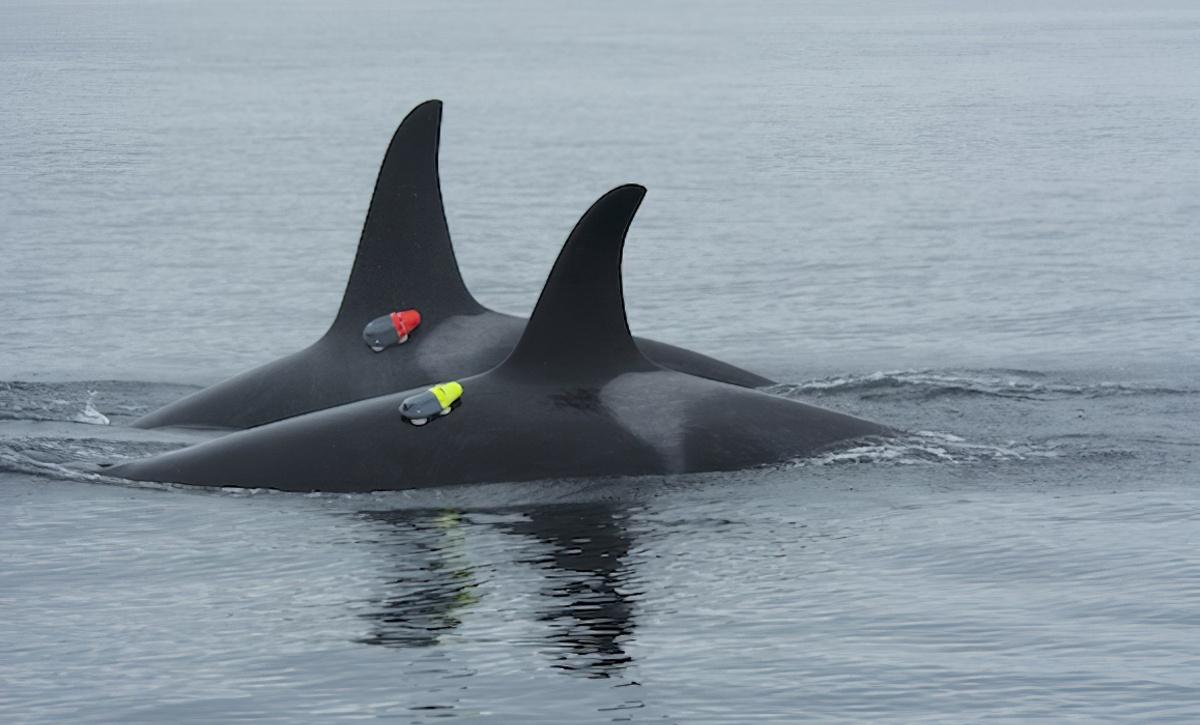 The animals took turns sending out clicking sounds for echolocation. The scientists believe the orcas may have been listening to the echos created by the dolphins calls. Above, orcas with temporary tracking tags that allow the scientists to record them and follow their movements.
(Source: University of British Columbia (A.Trites), Dalhousie University (S. Fortune), Hakai Institute (K. Holmes), Leibniz Institute for Zoo and Wildlife Research (X. Cheng).)
Both orcas and dolphins use “echolocation” – they send out sounds and use the echoes of those sounds to locate objects. The researchers noticed that the animals took turns sending out clicking sounds for echolocation. The scientists believe the orcas may have been listening to the echos created by the dolphins calls to find the salmon.
The two kinds of animals seemed to be working together to hunt the salmon. Dr. Fortune says the dolphins act as “scouts”, using their speed and high-pitched echolocation to find and chase salmon. The orcas follow the dolphins and use their strength to catch the salmon.
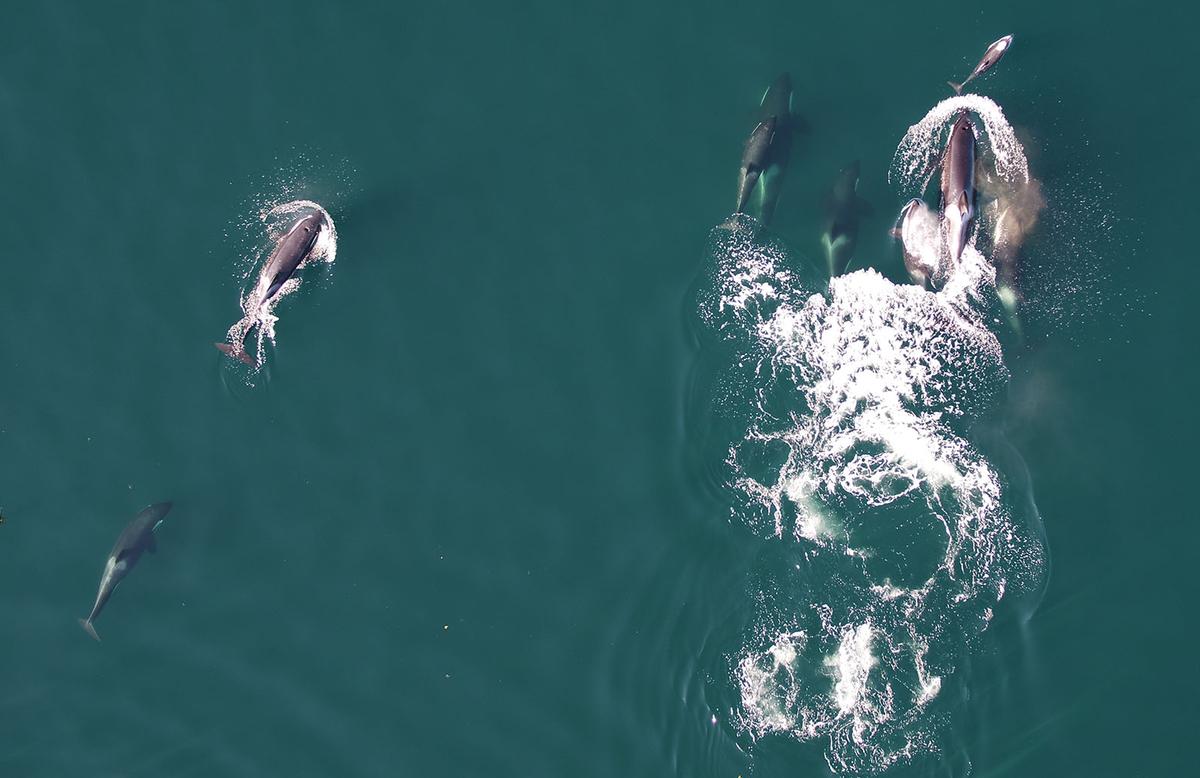 Teamwork could help both the orcas and the dolphins. The orcas can get help finding and catching food. The dolphins get protection from other orcas, plus salmon scraps left over by the orcas. Above a dolphin with a pod of northern resident orcas.
(Source: University of British Columbia (A.Trites), Dalhousie University (S. Fortune), Hakai Institute (K. Holmes), Leibniz Institute for Zoo and Wildlife Research (X. Cheng).)
Such teamwork could help both the orcas and the dolphins. The orcas get help finding and catching food.
What’s in it for the dolphins? They get to eat scraps left over by the orcas. The scientists say that normally, orcas try to keep other animals away from their food. But they didn’t mind when the dolphins stayed nearby when they were eating. The researchers saw dolphins eating some of the leftovers.
Not everyone is convinced that the animals are working together. Even the scientists behind the study still have some questions about what’s going on.
They plan to continue their studies. One thing they want to research is whether orcas that work with dolphins have more success catching fish than orcas that hunt on their own.
😕
This map has not been loaded because of your cookie choices. To view the content, you can accept ‘Non-necessary’ cookies.