

More than a quarter of a million people are set to see a change to their pension payments every year
Robert Rowlands Deputy editor, Money and lifestyle hub
15:49, 18 Dec 2025
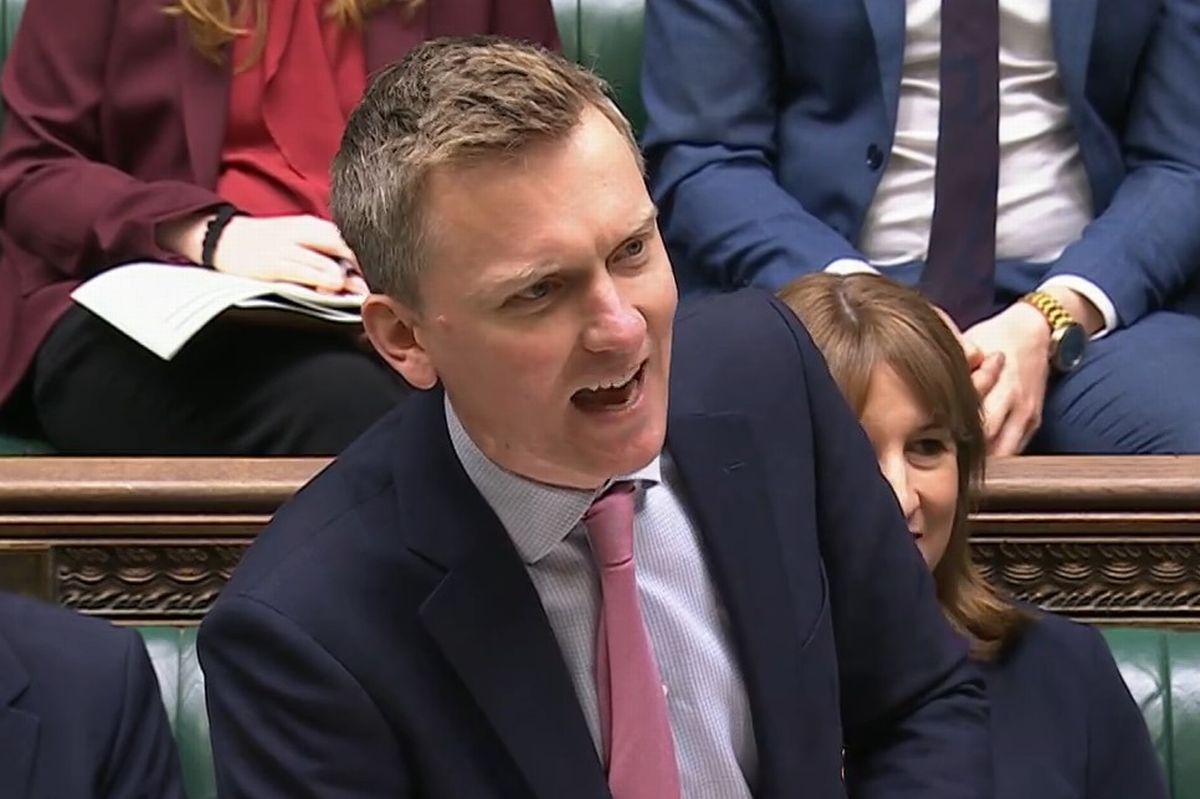 Torsten Bell MP speaking in the Commons this month
A significant update from the Department for Work and Pensions (DWP) suggests that over a quarter of a million individuals could soon see a difference in their pension payments. A minister has provided MPs with details that are expected to impact 256,000 people.
The development is linked to a long-standing rule within the intricate realm of pensions that has affected many savers for years. Essentially, it involves a large number of people enrolled in defined benefit pension schemes who have missed out on potential earnings compared to others.
Defined benefit pension schemes promise members a specific payment based on their length of service and salary at the time of retirement. However, obscure regulations dating back more than 28 years have resulted in many scheme members receiving less than they might have done.
In 1997, these rules were amended to ensure that payments to members of such schemes increased annually in line with inflation. Prior to this change, some did not, resulting in some savers seeing their money eroded by inflation every year.
The DWP has now shared new information regarding this issue with MPs. The government is planning amendments that are anticipated to result in many tens of thousands of people receiving higher payments once the law is updated, reports the Mirror.
Since April 1997, there has been a statutory requirement for pension payments linked to such schemes to be adjusted each year in accordance with inflation. However, for amounts accrued prior to that date, no comparable provision applies – leaving some individuals with static payments whilst inflation diminishes their purchasing power.
Simultaneously, certain savers belonged to pre-1997 schemes offering so-called discretionary annual increases – though these varied between providers, with some offering no uplifts whatsoever. DWP minister Torsten Bell addressed Members of Parliament to outline what is now being planned.
How many UK savers could get more money in pension change
Labour MP Mr Bell – formerly chief executive of the Resolution Foundation think tank and an established author – fielded an enquiry on this matter from Neil Duncan-Jordan, Labour MP for Poole. Mr Duncan-Jordan asked “how many pension scheme members affected by the absence of pre-1997 indexation will receive indexation [that is, payments linked to inflation]; and how many affected members will not receive indexation because they are in schemes that remain in operation.”
Essentially, he sought to establish how many individuals in such arrangements might gain from proposed Labour reforms – and conversely, how many might remain excluded.
Identifying potential beneficiaries is relatively straightforward. The government intends to assist certain individuals whose schemes either collapsed into insolvency or whose sponsoring companies have ceased trading.
The Pension Protection Fund (PPF) safeguards members of insolvent schemes whilst the Financial Assistance Scheme (FAS) protects members whose original employers have long since ceased operations. Mr Bell explained that Budget changes mean tens of thousands of individuals could shortly receive enhanced payments.
Responding to the question, he said: “At the Budget, the Chancellor announced that the Government will introduce pre-1997 indexation in the Pension Protection Fund (PPF) and the Financial Assistance Scheme (FAS), for members whose original schemes provided this. Compensation payments from these schemes on pensions built up before 6 April 1997 will be CPI-linked (capped at 2.5%), and this will apply prospectively [ie – going forwards].
“The PPF have made an assessment that around 165,000 PPF members and 91,000 current FAS members will benefit from this change as they have some pre-97 benefits where their former schemes provided mandatory indexation.”
Combined, the 165,000 and 91,000 members total 256,000. Individuals can only belong to one scheme, meaning there’s no duplication – however, those set to gain from this adjustment are savers previously enrolled in inflation-protected schemes prior to joining either the PPF or FAS.
How many scheme savers are presently receiving no uplift whatsoever
The Parliamentary Secretary for the Treasury and Parliamentary Under-Secretary of State for Pensions also fielded a question on the issue from Joshua Reynolds, Liberal Democrat MP for Maidenhead. The Lib Dem MP enquired “what estimate he has made of the number of members of defined benefit pension schemes with pre-1997 service who have received no discretionary pension increases in the last ten years; and what steps he is taking to encourage sponsoring employers and trustees to grant discretionary increases to pre-1997 pension benefits.”
 Torsten Bell addressing MPs in the House of Commons
In his response, Mr Bell acknowledged that substantial numbers of people enrolled in private sector defined benefit schemes receive no inflation-adjusted increases on payments relating to service before 1997. He explained: “Analysis published by the Pensions Regulator indicates that, as of March 2023, around 17 per cent of members of private sector defined benefit pension schemes do not receive any pre-1997 indexation on benefits.”
That said, he highlighted forthcoming reforms designed to assist those impacted. He added: “Reforms in our Pension Schemes Bill will enable more trustees of well-funded defined benefit pension schemes to share surplus with employers, and deliver better outcomes for members, and benefit the wider economy, unlocking some of the estimated £160 billion of scheme surplus. As part of any agreement to release surplus funds to the employer, trustees will be better placed to negotiate additional benefits for members such as discretionary indexation.”
What this proposal entails is fairly straightforward. Pension scheme trustees would receive legal support to redistribute surplus funds currently locked within defined benefit schemes to employers, provided existing members’ pensions remain safeguarded. According to Mr Bell, this approach could stimulate economic growth by releasing capital presently invested in assets like bonds, redirecting it towards more productive uses within the UK economy.
Additionally, scheme members themselves could see enhanced benefits. Mr Bell explained: “The Pension Regulator already sets out that trustees should consider the situation of those members who would benefit from a discretionary increase and whether the scheme has a history of making such awards. The Regulator will be producing further guidance on surplus sharing once the legislation is in place.”