
A rare albino badger named Alberto could derail ambitious plans to restore a fire-ravaged 16th century stately home – despite the project being billed as a £25million rescue mission.
Major proposals to revive the historic Parnham House in Dorset are facing fierce opposition amid fears they would wipe out the protected wildlife habitat of Alberto and his growing family.
The striking white badger has lived peacefully in a riverside meadow near Beaminster for almost a decade – and conservationists warn that building dozens of luxury homes to bankroll the restoration could spell disaster for one of Britain’s rarest animal populations.
The Grade I-listed Elizabethan manor, once one of the grandest houses in the county, was left a blackened shell after a huge blaze in 2017.
Now, as plans are unveiled to rebuild the historic house by developing its surrounding land, campaigners say the future of Alberto and his fellow albino badgers hangs in the balance.
In 2020 entrepreneur James Perkins bought the blackened shell of 500-year-old Parnham House and vowed to restore it to its former glory.
He intends to build 82 homes on the sprawling estate near Beaminster in order to fund the £25m restoration project.
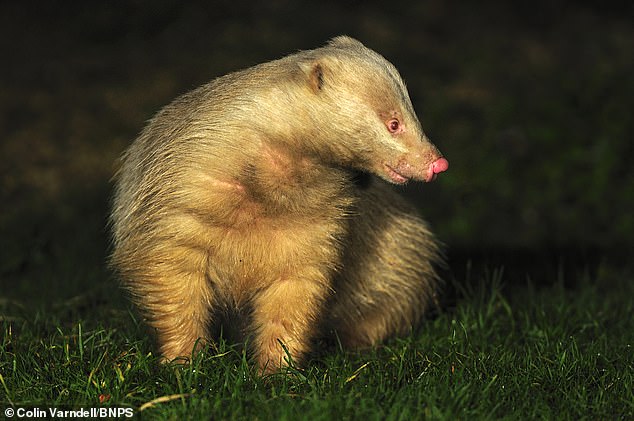
A rare albino badger named Alberto could derail ambitious plans to restore a fire-ravaged 16th century stately home
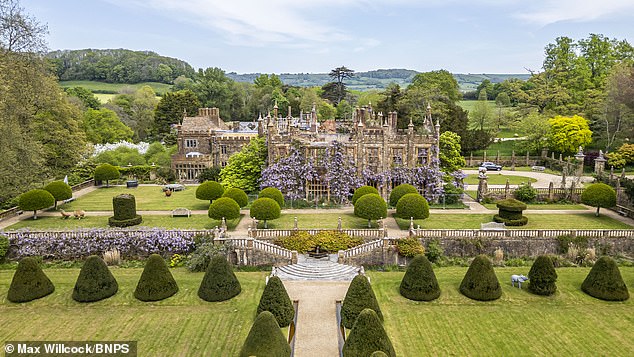
Major proposals to revive the historic Parnham House in Dorset are facing fierce opposition
But the plans, that were unveiled for the first time last week, have been met with great concern by conservationists and wildlife enthusiasts.
They say the ‘bulldozing’ the meadow will destroy the natural habitat for the badgers which are a protected species.
A spokesperson for Dorset Natural Heritage Initiative said: ‘Millground Meadow isn’t just a green space – it’s home to one of the UK’s rarest sights: a regular population of albino badgers.
‘Beaminster first grew attached to Alberto, an injured albino badger, which was rescued back in 2015, but he’s no longer alone.
‘These pale, pink-eyed badgers now rely on the meadow’s quiet, undisturbed habitat to survive – occasionally visiting the houses dotted along this stretch of the River Brit.
‘Badgers and other wildlife were the winners in the Covid lockdowns, taking advantage of the resultant peace and quiet to explore and thrive in their reclaimed territories.
‘It now looks like that peace could be shattered forever.
‘The proposed Parnham housing development will bulldoze the meadow area to erect a dozen £1.25m town houses along with a £2m road bridge across the river – threatening to destroy this fragile environment.’
Local resident and nature lover Colin Varndell said the meadow was a haven for lots of wildlife, including barn owls, otters, grass snakes and dormice.
He said the development of it would be ‘catastrophic’ for nature.
He said: ‘I am not interested in saving the house, that can fall down as far as I am concerned but it would be catastrophic for nature.
‘The river is totally secluded and there is no public access. There are a couple of bridges across it that people can stand on to observe the wildlife.
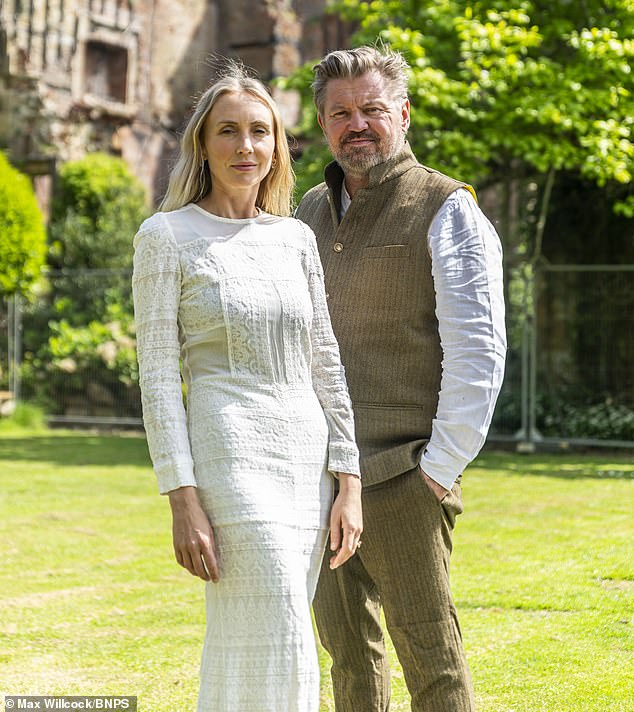
James and Sophie Perkins. In 2020 entrepreneur James bought the blackened shell of 500-year-old Parnham House and vowed to restore it to its former glory
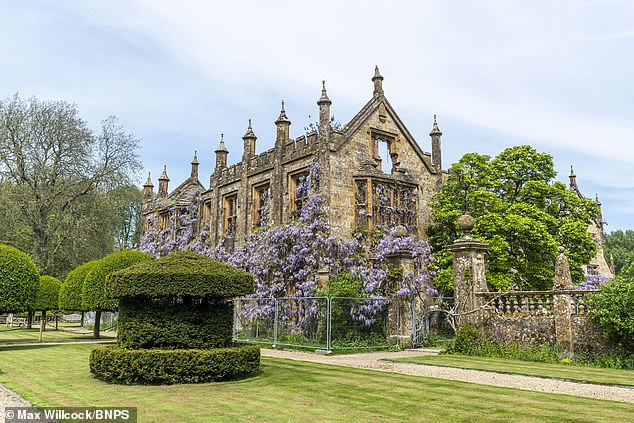
They say the ‘bulldozing’ the meadow will destroy the natural habitat for the badgers which are a protected species
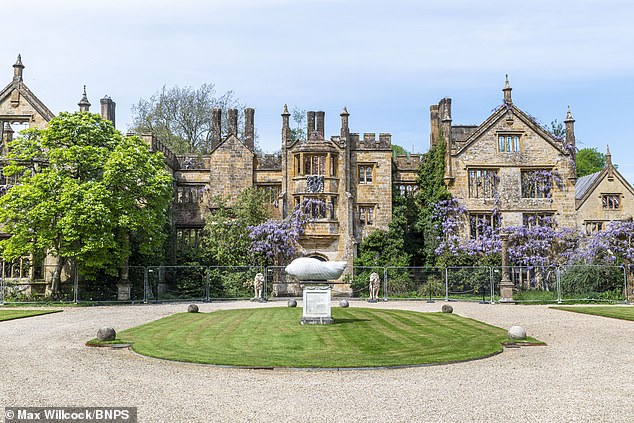
Mr Perkins’ design and access statement for his ambitious scheme states the scale of development is necessary to make the restoration of the south wing of the house ‘financially sustainable’
‘They are talking about opening it all up and making it a walkway for the public to us. It will be bereft of wildlife.
‘I am totally against it. The estate will be built for the benefit of wealthy people who can afford to pay £1m for a town house in the country.
‘Parnham House was destroyed by fire, which is regrettable, but it is just a building. Destroying the natural environment and the nature and character of Beaminster would be inexcusable.
‘There would be a massive loss of habitat, loss of dark skies, loss of recreational land and the character of the Parkland and Mill Ground would be changed irretrievably.’
Mr Perkins’ design and access statement for his ambitious scheme states the scale of development is necessary to make the restoration of the south wing of the house ‘financially sustainable’.
It states the housing estate would replicate nearby Poundbury, King Charles’ model town built on Duchy of Cornwall land near Dorchester.
The two and three-storey homes will have distinctive design features from Parnham House including store windows, pinnacles and castellations.
Mr Perkins’ developers said that the design was ‘sympathetic and would not have an undue impact on the setting of Parnham House’.
Mr Perkins’ planning agents said: ‘The overriding aim of the applicant is to conserve and restore this exceptionally important Grade I listed house to a standard where it will be financially sustainable, thus maintaining the heritage asset and securing its future and ensuring that it will once again be at the heart of the local community.
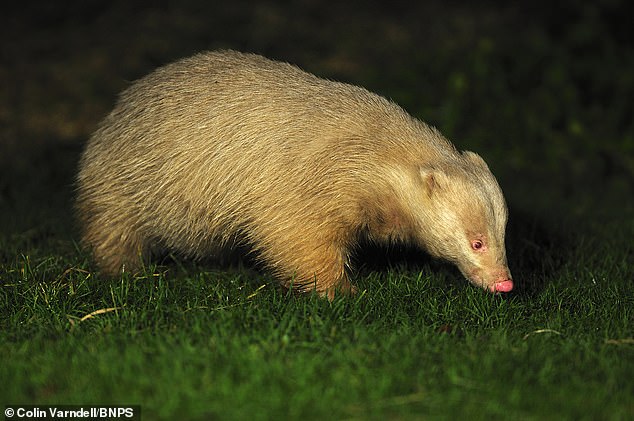
The striking white badger has lived peacefully in a riverside meadow near Beaminster for almost a decade
‘In view of the very substantial costs associated with saving and protecting the house, enabling development is proposed to address a viability gap in the funding.
‘Whilst there are no direct precedents for the unique challenges of this site, development at the nearby Poundbury extension to Dorchester have been reviewed as have other ‘urban extension’ and developments creating new communities near existing centres.
‘The proximity of the site to Beaminster offers opportunities for design cues to be taken from the town and enhanced to create a truly unique ‘Parnham’ development.
‘The enabling development has been designed with connections to Beaminster town and has been very carefully sited to sit sympathetically within the estate to ensure that it does not have an undue impact on the setting of Parnham House, nor on views in to the site from the surrounding landscape.’