
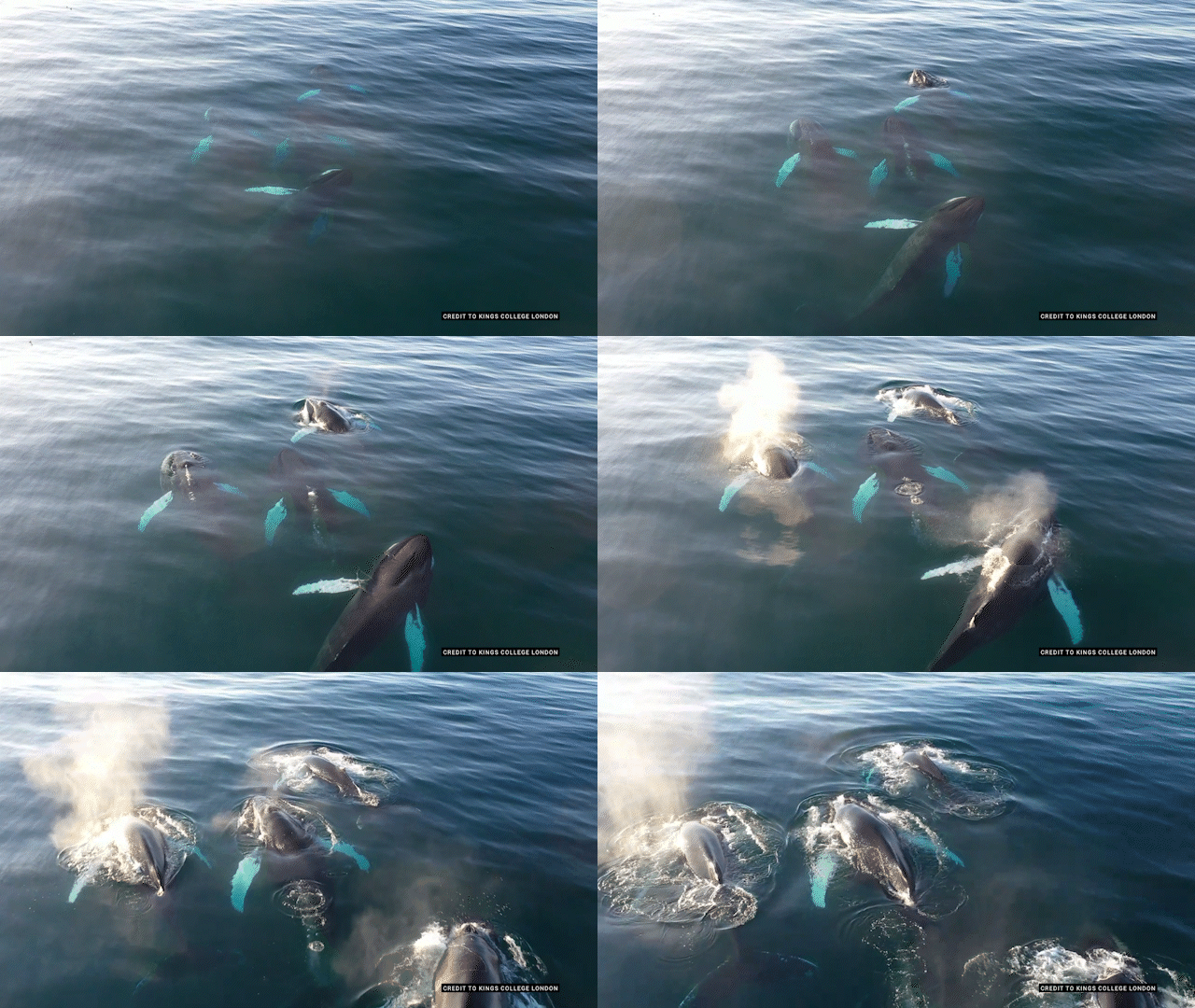
Drones have collected samples of whales’ breath in the Arctic, confirming for the first time that a potentially deadly virus known as “the measles of the ocean” is circulating among them.
The pathogen, whose proper name is cetacean morbillivirus, can cause disorientation and “stranding” behaviour while also weakening the immune systems of infected whales and dolphins.
Though it is related to the virus that causes measles in humans, there is no record of it passing to people.
Drone sampling of whale breath reveals first evidence of potentially deadly virus in Arctic
Scientists, however, are monitoring the risk of a range of pathogens, including cetacean morbillivirus and different strains of influenza, leaping between species.
The study focused on humpback, sperm and fin whales, using drones fitted with sterile Petri dishes.
The devices hovered briefly above the whales’ blowholes to collect fine respiratory droplets released as they exhaled. The technique, called “drone blow sampling”, allows a new means of monitoring the health of some of the largest animals on Earth. Experts say this novel use of drones could aid conservation efforts by allowing early detection of emerging disease threats, without disturbing or harming the creatures.
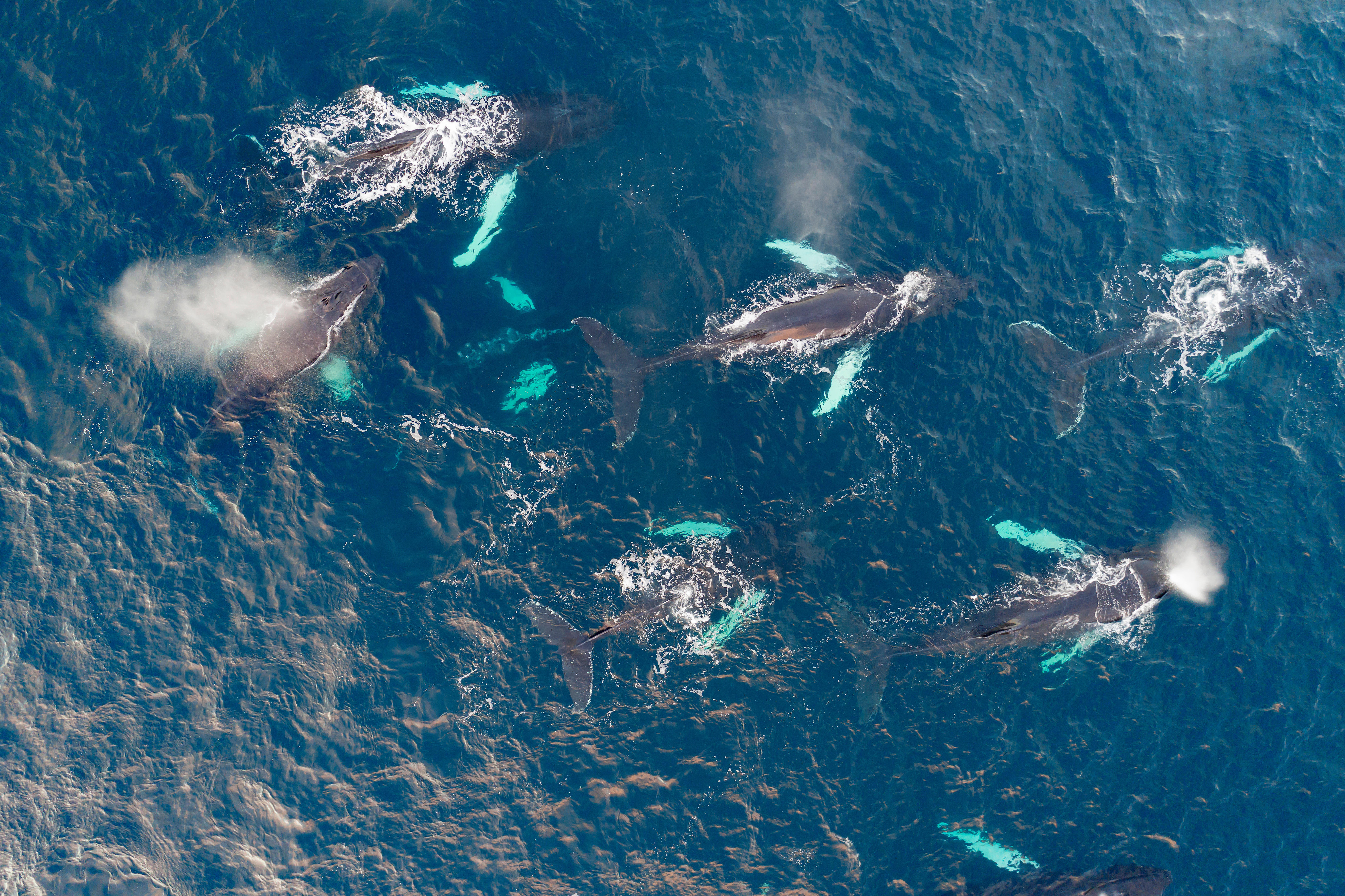
Humpback whales in the Atlantic Ocean off Norway
ALAMY
Professor Terry Dawson, a co-author of the study from the geography department at King’s College London, said drone blow sampling was a game-changer. “It allows us to monitor pathogens in live whales without stress or harm, providing critical insights into disease dynamics in rapidly changing Arctic ecosystems,” he added.
Adult humpback whales can reach up to 16m in length and weigh as much as 40 tonnes. Sperm whales are even larger, growing up to 18m and weighing about 50 tonnes, while fin whales, the second-largest animal ever to live, can reach 27m and weigh more than 70 tonnes, surpassed only by the blue whale.
• Whale that repairs own DNA may hold secret of far longer life
The Arctic is undergoing rapid climate change, with rising ocean temperatures and shrinking sea ice coverage altering food chains and animal migration patterns.
Between 2016 and this year researchers sampled whales in waters off northern Norway and Iceland. They also investigated mammals further south close to Cape Verde, off the coast of west Africa.
• You find, we’ll shred: how orcas and dolphins hunt salmon as a team
Blow samples and skin biopsies were screened for infectious agents using molecular tests that detect genetic traces of viruses.
The team identified cetacean morbillivirus in humpback whale groups in northern Norway, as well as in a sperm whale that was showing signs of poor health.
Since its discovery in 1987, the virus has been linked to mass deaths of different cetacean species.
Herpes viruses were also detected in humpback whales. The researchers, however, found no evidence in the pods of avian influenza virus or the bacterium Brucella, both of which have previously been associated with cetacean strandings.
Helena Costa, a veterinarian and PhD student at Nord University in Norway, who led the study, said: “Going forward, the priority is to continue using these methods for long-term surveillance, so we can understand how multiple emerging stressors will shape whale health in the coming years.”