
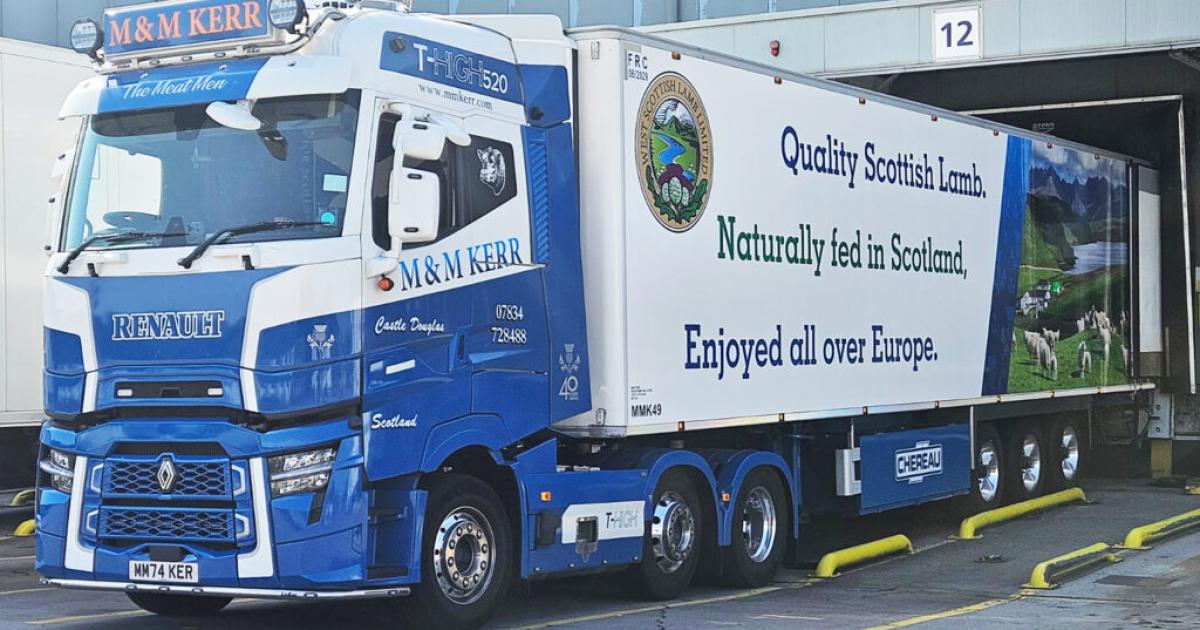
Scottish farmers this week reported lambs being cancelled just hours before they were due to leave the farm, with processors said to be blaming anxiety over exporting to France for the cut in kill.
The concerns follow a £650,000 lamb shipment being turned away at Calais after a port inspection found traces of wool on carcases. The load had previously been cleared by British vets for export with the rejection causing shock among the UK meat sector.
Dumfries farmer and former NFU Scotland President Jim Walker, was one of the farmers who had his load of lambs cancelled by his abattoir. He said: “Selling all finished stock takes careful planning particularly at this time of year when abattoirs across the country are working short weeks.

“To have finished lambs cancelled minutes before collection is more than frustrating, particularly when it is no fault of the customer or supplier. Farmers and processors are equally angry and feel let down by our politicians yet again.
“The actions of the French at their borders is illegal and indefensible even in this post Brexit era and Starmer needs to tell Macron just that. Exporting food products that have gone through rigorous health checks in British abattoirs cannot be stopped due to local politics and disputes in France or anywhere else and our government should make that crystal clear to both the French and the EU.
“Our economy is in a precarious position courtesy of this government’s decisions. The least they can do is to force the French to allow us to trade freely in or out of the EU, even with the extra costs of Brexit cuddles and love ins are worthless if there is no real substance behind the cringe”
SAMW chief executive Scott Walker said: “This incident highlights the ongoing fragility and cost of post-Brexit trading arrangements. Abattoirs and exporters operate to high standards under UK official controls, yet continue to face uncertainty, delay and significant financial risk at EU borders. It underlines the urgent need for greater regulatory clarity, consistency in enforcement, and progress on arrangements that support smooth and predictable trade. It is equally important that UK and EU authorities work proactively to prevent a repeat of this situation and provide businesses with greater confidence when exporting.”
A UK government spokesman said: “We are working closely with French authorities and the companies involved to resolve this situation immediately. We are negotiating an SPS [Sanitary and Phytosanitary] agreement that will boost food trade and remove border checks while protecting our collective biosecurity.”
The rejected load of lambs was stuck for weeks in limbo at the French port with authorities threatening to destroy the shipment costing the West Scottish Lamb, an export abattoir based in Carlisle hundreds of thousands of pounds.
A spokesman for the company said: “We have received a message from AIMS confirming that our lorries will be cleared to return to the UK with lamb carcasses. Of course, we can try and trade the lamb we have got left. But it’s a disadvantage to us because they are going to be worth a lot less due to the time they were out in France. However, something is better than nothing.” He added: “It looks like the French authorities were going to completely write off this whole consignment.”
The lamb was initially rejected after French inspectors reportedly found traces of wool on individual carcasses, despite them being stamped fit for human consumption by UK meat inspectors on behalf of the Food Standards Agency.
One of the four loads has likely exceeded the viable time limit for chilled export meat, but the company hopes the remaining three can still be sold once cleared. Charitable donations are also under consideration: “If we can donate 400 carcasses to a charitable cause, we will do. We will stand by our word.”
The National Sheep Association (NSA) welcomed the release, with chief executive Phil Stocker noting the importance of compliance at EU borders. He said the organisation helped ‘build communication’ between the processor and officials, enabling a faster resolution.
Mr Stocker warned exporters to be careful in the future, saying: “If we want the support of our CVO and officials in the future we must not do anything to undermine agreements and trust.” He also urged the FSA to ensure meat inspectors exercise ‘due diligence’ amid increased scrutiny at EU posts, adding that consignments must leave no room for error.
Gareth Wyn Jones, a hill farmer from North Wales, highlighted the issue on social media after being contacted by the affected companies. He said: “These are top-quality British lambs, inspected to the highest standards in the world, and they’ve been held for days by the French government. It’s an absolute disgrace.”
He accused both governments of failing exporters at a critical time just before Christmas: “Sir Keir Starmer and Rachel Reeves should be protecting British businesses trying to make a living. Instead, we’re watching our meat get seized in France while lorry loads of illegal meat are allowed to drive straight into the UK with barely a check.”