
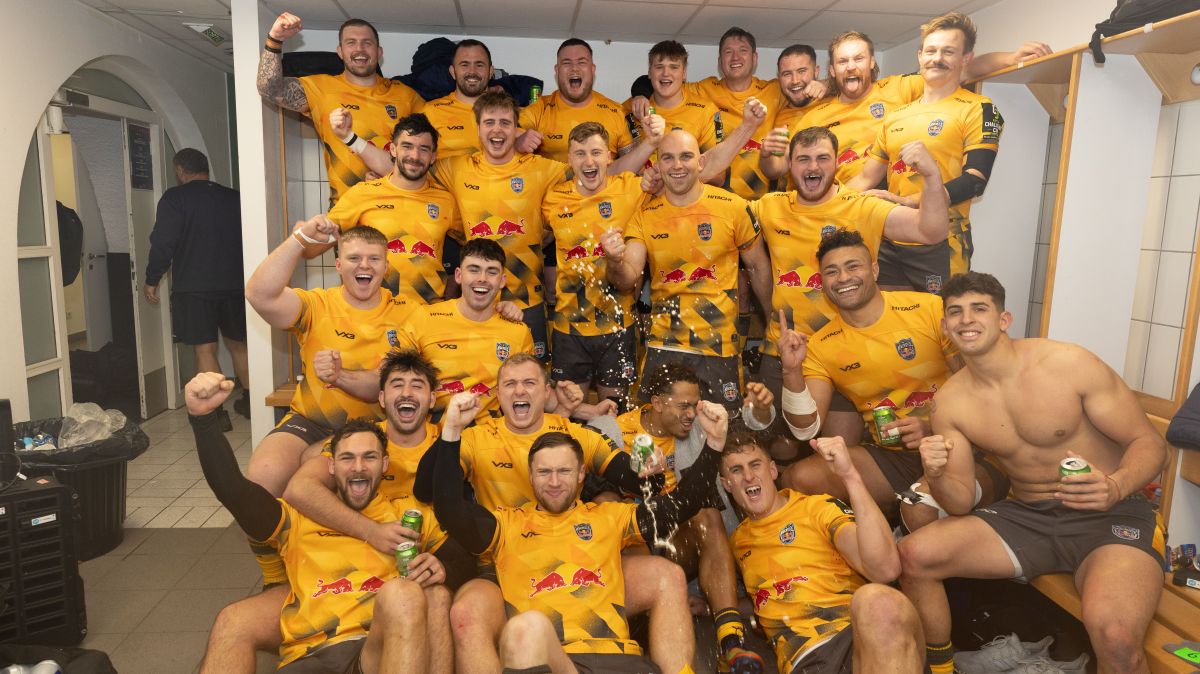
Another sell-out crowd is expected at Kingston Park on Sunday. Newcastle Red Bulls, the home team, will be looking for their first league win in more than a year, an unlikely prospect against a Bath side who won the league last season and are top of the Gallagher Prem once again. Those two variables — a losing team and attendances increasing — do not normally go together in sport, but this is the unique position Newcastle find themselves in.
The investment made by Red Bull in August, when the drinks company added English rugby’s northern outpost to its broader sporting portfolio, has quickly made an impact in marketing home matches to the local community. In their previous guise as the Falcons, Newcastle had not sold out their 10,200-seat ground for 7½ years, but all three home Prem matches have been played in front of full houses this season. On the pitch, the improvements will inevitably take longer to materialise, a reality that has been widely acknowledged after too many seasons scraping along at the bottom of the table.
But the mood around the club has been buoyant over the past couple of weeks. The long losing sequence in the league has been interrupted by two wins in the European Challenge Cup, away to Lyon and at home to the Lions from Johannesburg last week. As much as a team in such a developmental phase strive to focus on the process rather than the outcome, the performance rather than the result, a reacquaintance with the winning feeling has been most welcome.

All three of Newcastle’s Prem matches this season have been watched by capacity crowds
MICHAEL DRIVER/MI NEWS
“It certainly helps, winning,” Alan Dickens, the head coach, said. “Every week, we’re looking to build and it’s good to see the lads coming in on a Tuesday morning [to training] and smiling. We’re not just sitting back and taking the plaudits. But certainly the buzz around the place and the confidence have been lifted.”
There are no claims that a significant corner has been turned and that Newcastle are about to surge up the league table. But there is a sense of a team that started the season in a parlous position slowly coming together to become more competitive. When Red Bull’s takeover was completed in August, Newcastle had only 11 senior players contracted. A wave of signings followed, some of whom, naturally, had simply been unable to find deals elsewhere.
But some additions are now beginning to make their presence felt. Tom Christie, 27, the former New Zealand Under-20 flanker, recruited from Crusaders, has played the past three weeks at No7 and brought knowhow to the back row. “He’s a leader of men,” Dickens said. “We’re seeing the rewards of the group coming together and hopefully we get more results.”
Hoskins Sotutu, the former New Zealand No8 who could qualify for England, will arrive next season, while Christian Wade, the prolific former Wasps and Gloucester wing, was another eye-catching signing after his brief sojourn in rugby league with Wigan Warriors. He made his Newcastle debut against the Lions last weekend, but was knocked out after 30 minutes and will miss the Bath game as a result.
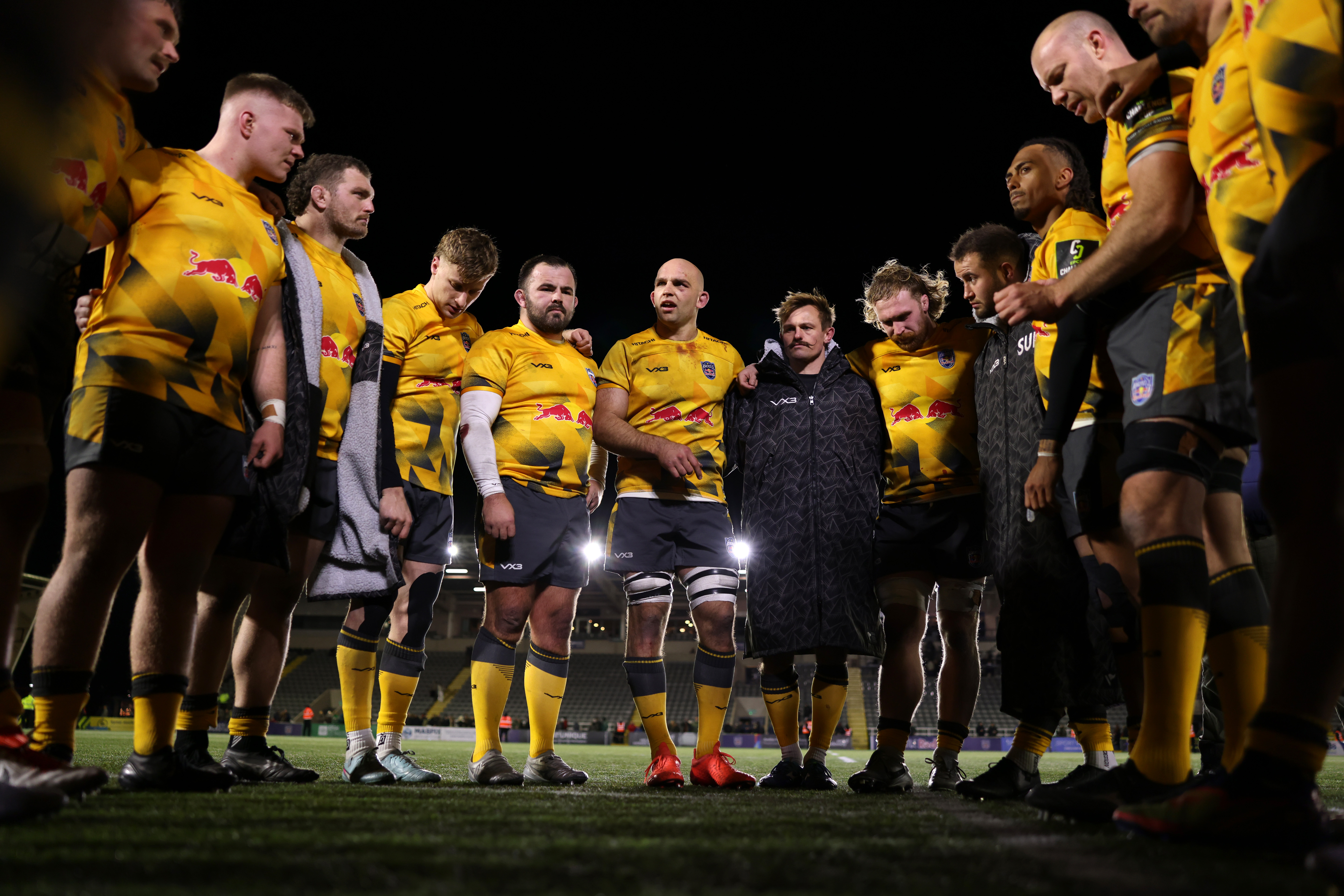
Christie, centre, has brought nous to the back row and is a “leader of men”, according to his head coach
GEORGE WOOD/GETTY IMAGES
A significant recruit to the coaching team has arrived over the past couple of weeks, adding his vast experience to bolster the Red Bulls’ attacking game. Stephen Jones, the former Wales and British & Irish Lions fly half, has spent the past year working with Moana Pasifika, the Super Rugby franchise, after spells as attack coach with Wales, Scarlets and Wasps, and attracting a coach of his calibre is a signal of the new owners’ intention to turn the former Falcons into a formidable force.
“We said from the start of the season that we needed more coaches and Stephen has had an instant impact,” Dickens said. “He can focus solely on attack, which allows me to concentrate on defence. He’s got attention to detail, the enthusiasm about wanting to attack and create opportunities, and that’s rubbing off on the players already.”
The team have also been boosted this season by running out in front of packed stands, as Red Bull turns its marketing expertise to a northeastern fan base that it believes can be lured to Kingston Park. Before the first game this season, the company sent a four-pack of its energy drink to every address within a mile of the ground, printed with a QR code that allowed them to access a tranche of 1,500 free match tickets.
Different marketing strategies have been employed for each match, with university students a particular focus, and former players have been invited to games, with Mark Wilson, Will Welch and Hall Charlton now regulars in the stands. “It’s been absolutely brilliant,” Dickens said. “It shows the interest surrounding the club being bought by Red Bull. Last year, for some games in Europe or the Prem Cup, the players were playing in front of about 2,000. So it’s just a massive positive for the club and the region.”

Newcastle are feeling the benefits of being part of Red Bull’s extensive sporting stable
STU FORSTER/GETTY IMAGES
The benefits of being part of Red Bull’s extensive sporting stable — taking in Formula 1, football clubs, extreme sports and cycling, among others — are also being felt. Two injured Newcastle players have travelled to Austria recently to continue their recoveries at Red Bull’s renowned Athlete Performance Centre, while Matt Tinsley, a physiotherapist from the Red Bull-Bora-Hansgrohe cycling team, has visited Kingston Park to discuss best practice with the rugby team’s medics.
Dickens, who took charge when Steve Diamond left one game into the season, leads a coaching team that, Jones apart, is staffed by former Newcastle players, with Lee Dickson as skills coach, Micky Ward working on the scrum and Scott MacLeod the lineout. Above them, Neil McIlroy is the general manager, a former Scotland prop who spent many years behind the scenes in French club rugby, mostly with Clermont Auvergne, and more recently in rugby league with Catalans Dragons. McIlroy works on recruitment and broader long-term aspects of the project such as facilities at Kingston Park.
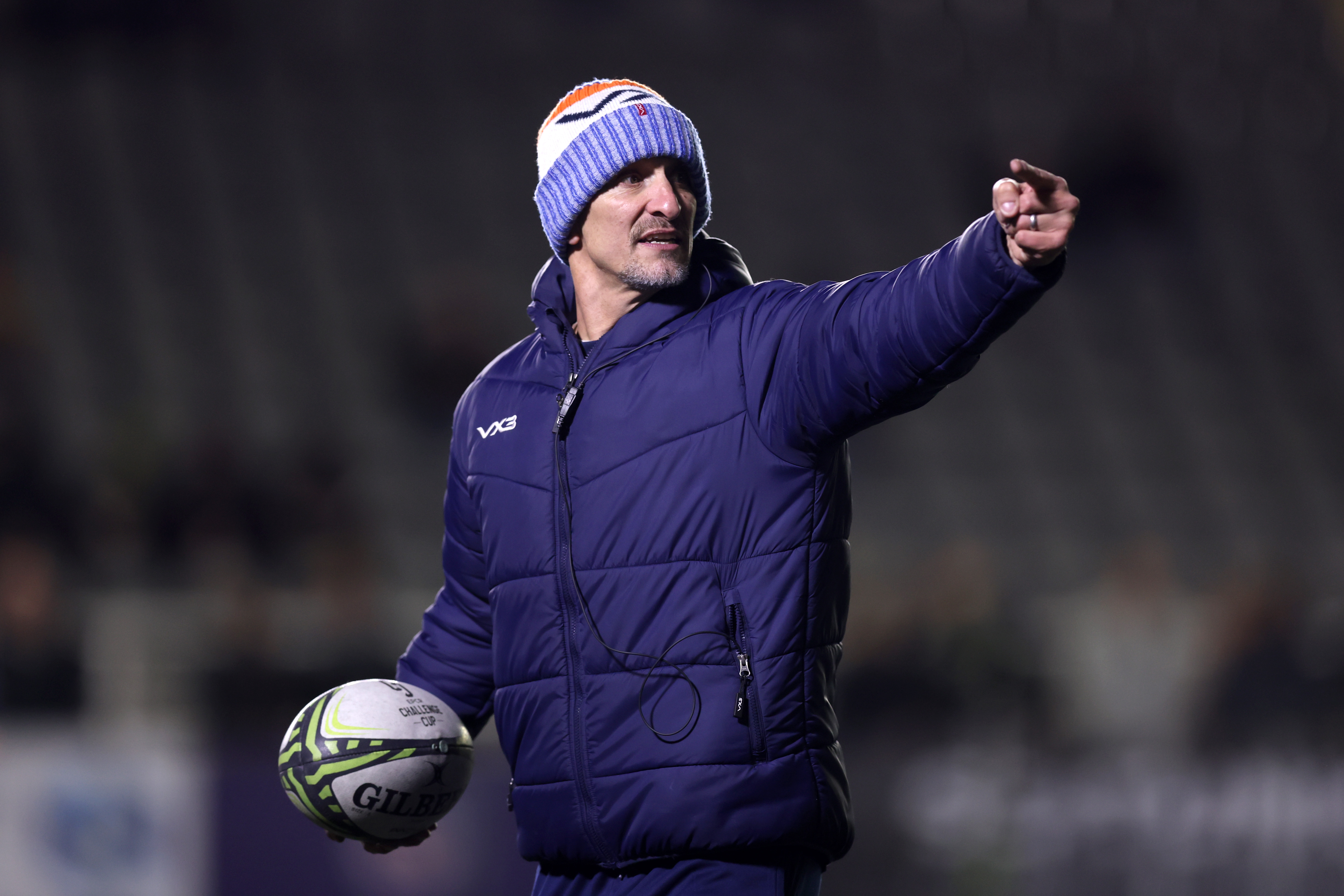
Dickens took charge when Steve Diamond left one game into the season
GEORGE WOOD/GETTY IMAGES
There is also the looming presence of Gregor Townsend, the Scotland head coach, recruited by Red Bull in a consultancy role to offer advice on their first foray into rugby, but Dickens’ dealings with Townsend have been limited. “Gregor is an advisor to Red Bull,” Dickens said. “I’ve spoken to him a couple of times, but not regularly.”
For all the grand plans and the heightened profile that Red Bull has brought, there is also a determination to build a solid base through the club’s academy. John Fletcher, the club’s former director of rugby, has been brought back to work alongside James Ponton, the present academy coach, to enhance what has long been one of the club’s strengths. The northeast has always been a fertile breeding ground for rugby, but in recent seasons so many of the club’s academy products have swiftly flown the nest.
Guy Pepper, the Bath flanker who made such a strong impression with England in the autumn, is the most notable recent example, and whether they can hang on to local prospects such as Finn Baker, the lock, and Oli Spencer, the wing, will be a telling test of the project’s progress.
“Finn was 15 when he came here and that’s what we want to produce, players from within the region to come through and play for the first team,” Dickens said. “There will be players like Finn in the academy now who see what he’s doing and know it’s achievable. A good academy provides a good, strong club for years to come.”