
Bristol Myers Squibb and its subsidiary Karuna Therapeutics received the latest Untitled Letter from the Food and Drug Administration earlier this week.
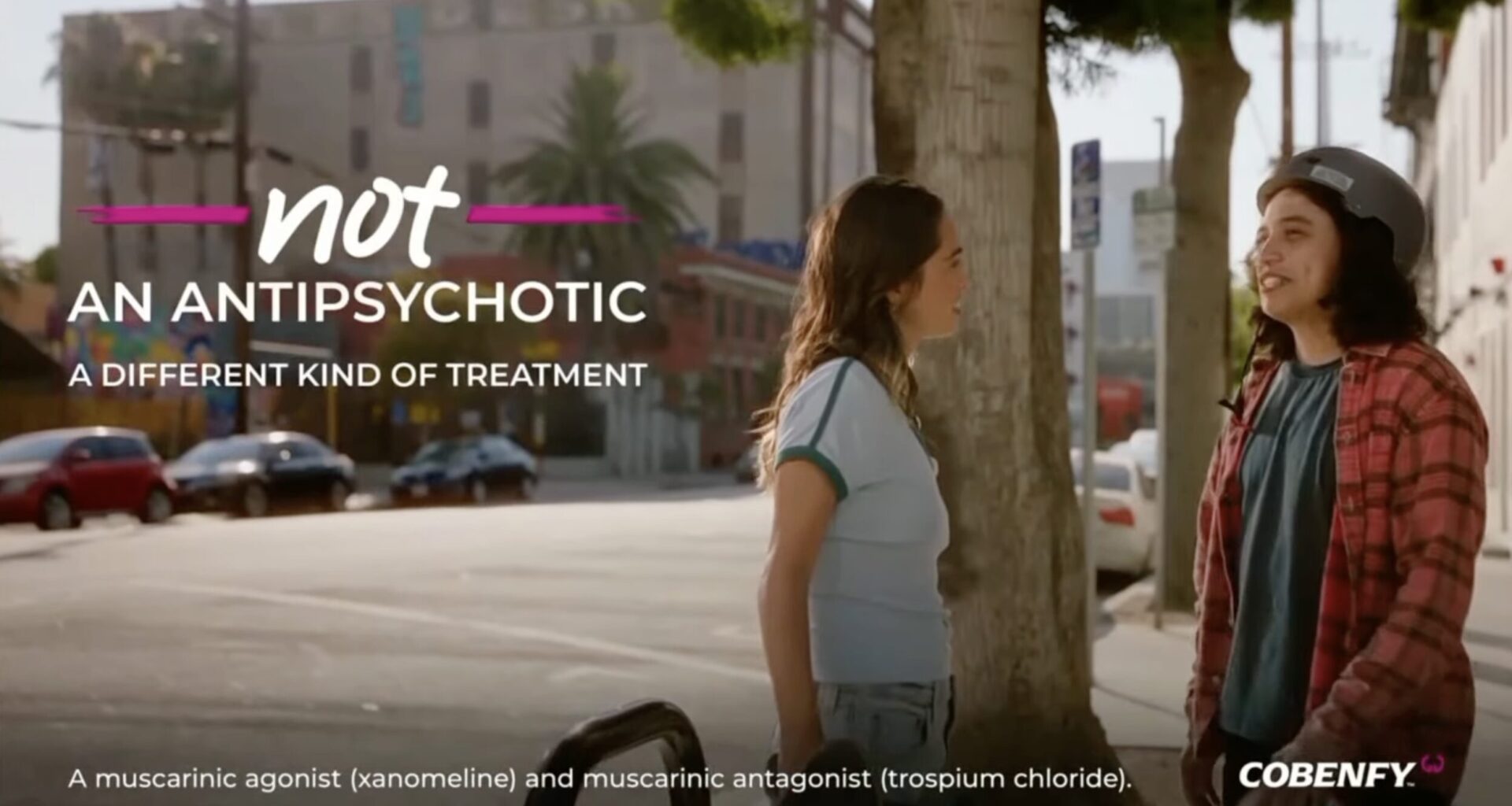
In a letter issued on December 15 to Nicole Van De Vaarst, senior manager of U.S. commercial regulatory affairs at BMS, a 60-second DTC TV ad for the schizophrenia drug Cobenfy was faulted for violating the Federal Food, Drug, and Cosmetic Act.
Cobenfy was approved by the FDA in September 2024 – becoming the first new schizophrenia drug on the market in three decades.
Like so many of the more than 60 Untitled Letters issued during the spree beginning in mid-September, the TV ad was deemed misleading because of “compelling, attention-grabbing visuals,” namely frequent camera angle changes that interfere with the presentation of the major statement.
One of the key elements of the minute-long spot – which features a young adult patient riding a skateboard and going about his normal day – is text highlighting Cobenfy’s use “across a range of symptoms.”
The visualization of how Cobenfy provides improvement across a range of symptoms uses overlapping circles labeled “positive symptoms” and “negative symptoms,” which the FDA argues imply the drug treats both distinct categories.
In the letter authored by two members of the division of advertising and promotion review within the Office of Prescription Drug Promotion at the FDA, the reviewers note that the pivotal trials for the drug were not designed to evaluate positive or negative symptoms as distinct groups.
“We acknowledge the SUPER, ‘In two 5-week clinical studies, a rating scale measured changes in schizophrenia symptoms overall versus a sugar pill in 470 adults. Individual results may vary,’” the letter read. “However, inclusion of this statement does not mitigate the misleading representations or suggestions of efficacy in improving negative symptoms of schizophrenia with Cobenfy treatment.”
When it comes to Cobenfy’s indication, the FDA objected to the suggestion in the ad that the drug has efficacy in treatment-refractory cases of schizophrenia.
The letter stated that this indication “has not been demonstrated” and noted that the pivotal studies did not specifically enroll a “treatment-refractory population or patients with documented inadequate response to prior antipsychotic therapy.”
The FDA urged BMS to submit that data for review if it is available to support that claim.
OPDP also criticized BMS’ ad for creating a “misleading impression” about Cobenfy’s classification, reiterating that the drug should be considered an antipsychotic despite the commercial’s claim otherwise.
The letter concludes that the spot “misbrands” Cobenfy and violates the law as a result. BMS now has 15 working days to respond to the complaints listed in the letter and address those concerns.
This is the fourth letter BMS has received since the FDA stepped up enforcement of its crackdown on pharma TV ads in mid-September.
The pharma giant received three notices in the initial tranche of letters sent out, including two for ads promoting cancer drug Opdivo – one for Opdivo Qvantig and the other for Opdivo and Yervoy – as well as one for symptomatic obstructive hypertrophic cardiomyopathy medication Camzyos.
Notably, BMS also received a pair of close-out letters for its Opdivo promotions, with OPDP determining that the actions taken by the drugmaker have brought them back into compliance with federal regulations.