
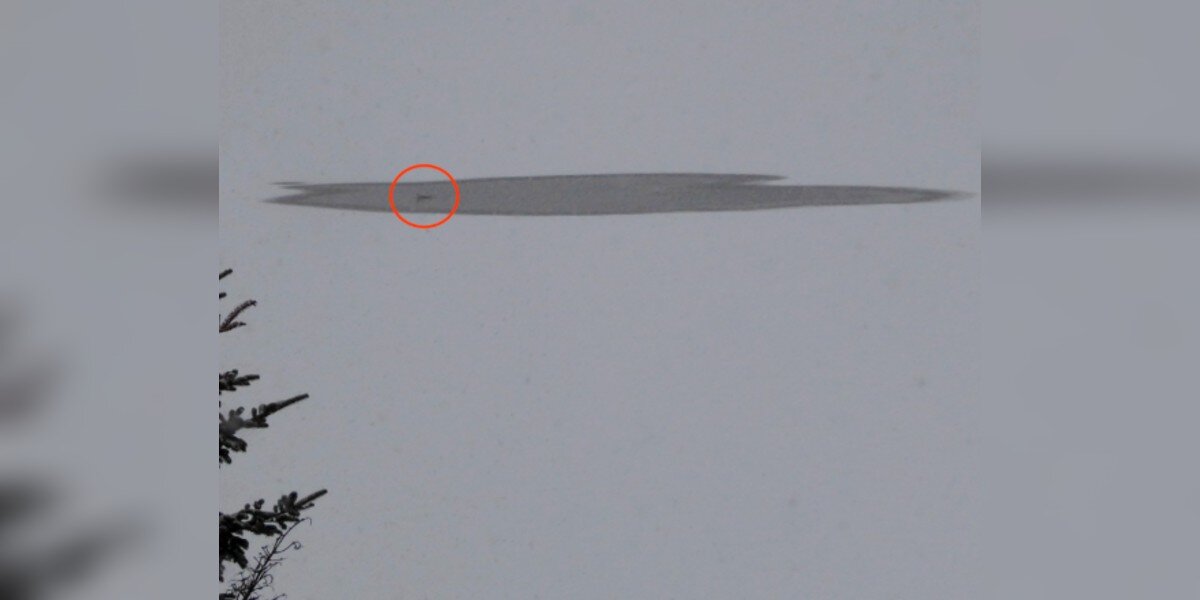
In early December, residents living on Big Diamond Pond in New Hampshire noticed a tiny, black speck floating in a small patch of water. The rest of the pond had frozen over, trapping whomever it was in the cold.
The residents quickly recognized the speck as a loon.
 Loon Preservation Committee
Earlier in the year, a loon family hatched a chick on the pond. All summer and fall, locals watched the juvenile grow up. As winter moved in, loons in New Hampshire began migrating south.
But for some reason, the young bird didn’t make it out before a cold snap hit the area. The loon, who needs a few hundred yards of open water to take flight, was iced in.
“There’s no hope for the loon if it truly gets stuck and isn’t able to take off,” John Cooley, a senior biologist with the Loon Preservation Committee, told The Dodo. “Once the open water is reduced to, say, ten feet or so, the loon just cannot get airborne from dry land.”
 A loon struggling to take off while sitting in snow. | Getty Images/John Morrison
Loons are fantastic swimmers and divers, but “they’re completely hopeless on land,” Cooley said. “They can’t walk on land and they can’t take off from dry land.”
The locals called Cooley and his team, who showed up on the shoreline with a small, flat-bottomed boat and dry suits, which they wear during ice rescues to keep them safe if they fall through.
 Loon Preservation Committee
“It took a long time to get out to the loon because I kept breaking through the ice,” Cooley said. “It was really thin, but you know, [you] just have to climb back in the [boat] and keep going.”
 Loon Preservation Committee
When Cooley finally reached the loon, he used a large net to scoop the bird into the boat. The loon wasn’t eager to get near a human and tried his best to escape on his own.
Cooley’s even seen loons dive under the ice during rescues.
“If it’s new black ice, you can be standing on the ice watching the loon swimming underneath you as it’s looking for a way out of the situation,” he said. “They’re panicked that way … we’ll make some loon calls just to pique their interest and keep them from getting too scared.”
 Loon Preservation Committee
Once he had the loon in the boat, Cooley wrapped the bird in a towel. “The loon is often exhausted at that point and will just settle down,” he said.
The Loon Preservation Committee used a portable X-ray machine to examine the bird when he was safe on land. Once they confirmed the loon was in good health, they gave him a ride to the Atlantic coast, where New Hampshire loons head before moving further south for the winter.
 Loon Preservation Committee
Cooley isn’t sure why this particular loon didn’t migrate on time. “Sometimes it may just be bad luck,” he said. It could’ve simply been the youngster’s inexperience with flying south.
Since loons are listed as a threatened species in New Hampshire, Cooley and his team make every effort to rescue each bird in need, ensuring the population continues to grow.
This juvenile loon is lucky he had so many folks in his corner. He swam out to sea as soon as he was plopped back into the water.
 Loon Preservation Committee
“Watching the loon flap [his] wings … It was cool,” Cooley said. “It feels like an adventure every single time, for sure.”
If you’d like to support the Loon Preservation Committee’s work, you can donate through their website.  Rare Animal Rescued From Traffickers Undergoes Risky Procedure To Save Her LifeAgainst all odds, she kept fighting.