
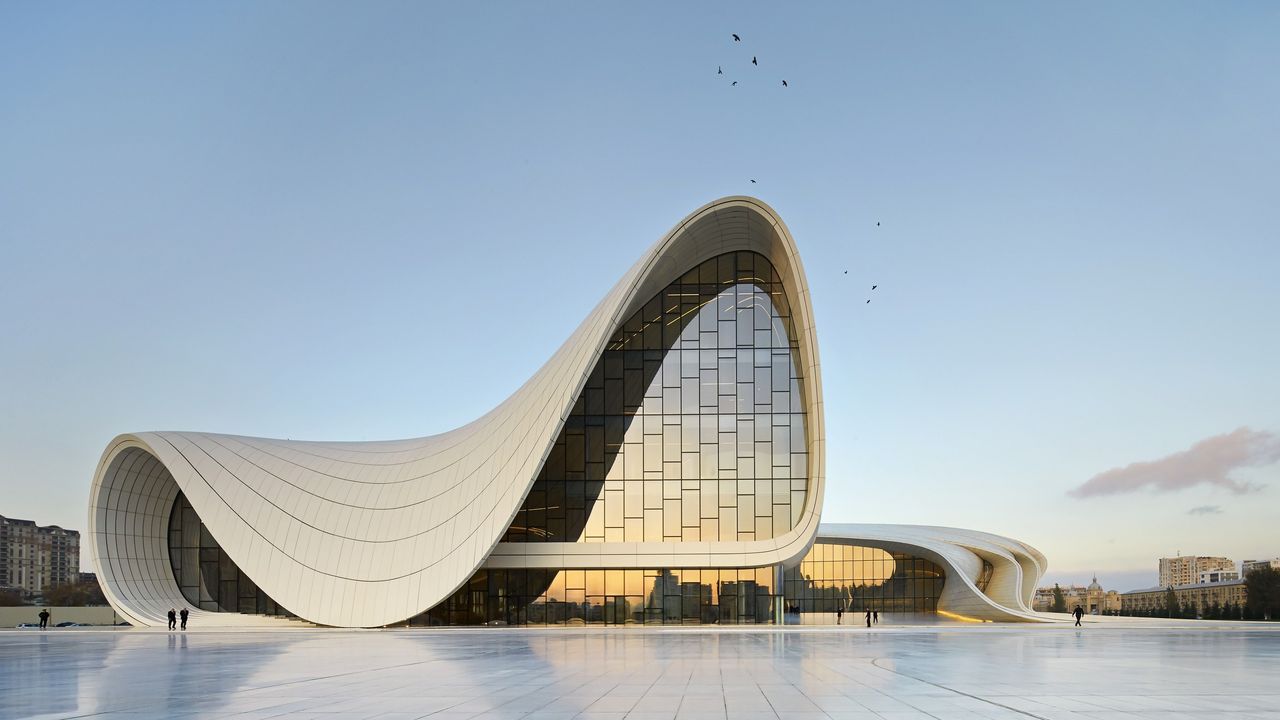
Opened in 2013, this cultural centre, designed by the late Zaha Hadid, sweeps aside the heavy monumental style of Azerbaijan’s Soviet past in favour of flowing, futuristic curves. The Heydar Aliyev Centre appears as a single continuous surface that rises from the surrounding plaza and folds into sinuous waves, housing a museum, auditorium and conference spaces. Its white fibreglass-reinforced concrete skin wraps the interior with barely a straight line in sight, embodying a sense of openness and optimism for the oil-rich nation’s future. In a city once dominated by masonry and right angles, Hadid’s design expressed a new cultural identity, and the building quickly became an icon of modern Baku. It also earned wide acclaim, winning the Design Museum’s 2014 Design of the Year award, making Zaha Hadid the first woman to win that honour.
2014: Bosco Verticale, Milan (Stefano Boeri)
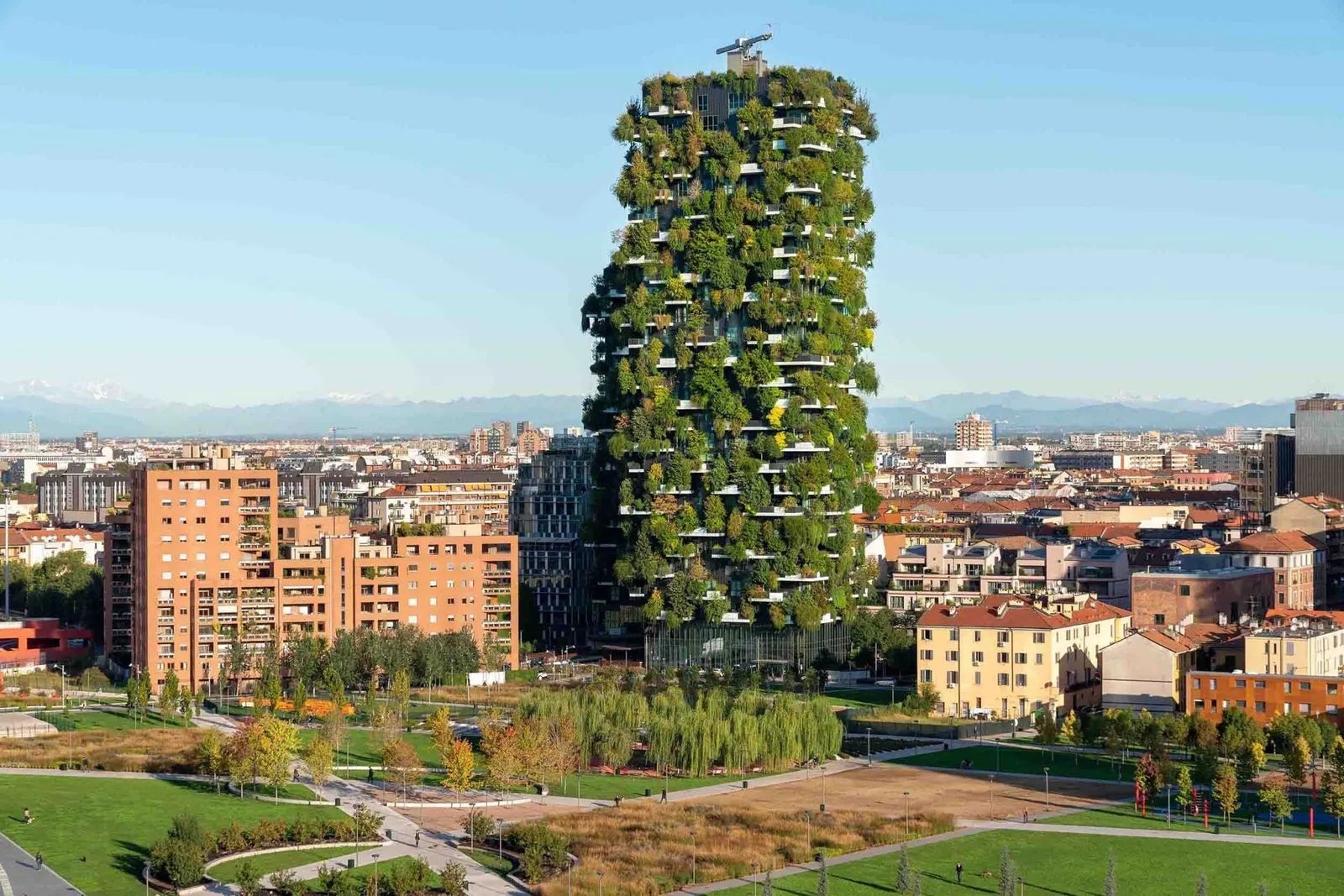
Photo: Dimitar Harizanov
From afar, they look like two apartment towers swallowed by trees. Up close, you see how each balcony in Bosco Verticale becomes its own garden, supporting hundreds of species that cleanse the air and soften the urban skyline. Completed in 2014, in total, over 13,000 plants thrive on the buildings’ exteriors, creating a green envelope that changes with the seasons and shelters residents from dust and noise. Bosco Verticale captured imaginations worldwide and sparked a newfound fascination with “vertical forests” and green architecture. It was named the 2015 Best Tall Building Worldwide by the CTBUH, beating out much taller skyscrapers. More significantly, it demonstrated that skyscrapers need not be steel-and-glass monoliths.
2015: UTEC Campus, Lima (Grafton Architects)
Lima’s mild desert climate has always blurred the line between indoor and outdoor living, and the UTEC Campus, completed in 2015, fully embraces that. Designed by Dublin-based Grafton Architects, the university is a vertical campus of concrete terraces, open-air courtyards, and shaded ramps cascading down a hillside in the Barranco district. Students move through breezy walkways and dramatic voids that frame views of the city and ocean. The design uses the climate as a feature: classrooms open to naturally ventilated circulation areas, making the building feel more like carved terrain than a traditional tower. Nicknamed a “modern-day Machu Picchu,” UTEC brought global attention to its architects, who later won the Pritzker Prize. It’s a bold yet welcoming structure that reimagines campus life as both monumental and connected to its environment.
2016: Grand Parc Renovation, Bordeaux (Lacaton & Vassal, Frédéric Druot, Christophe Hutin)
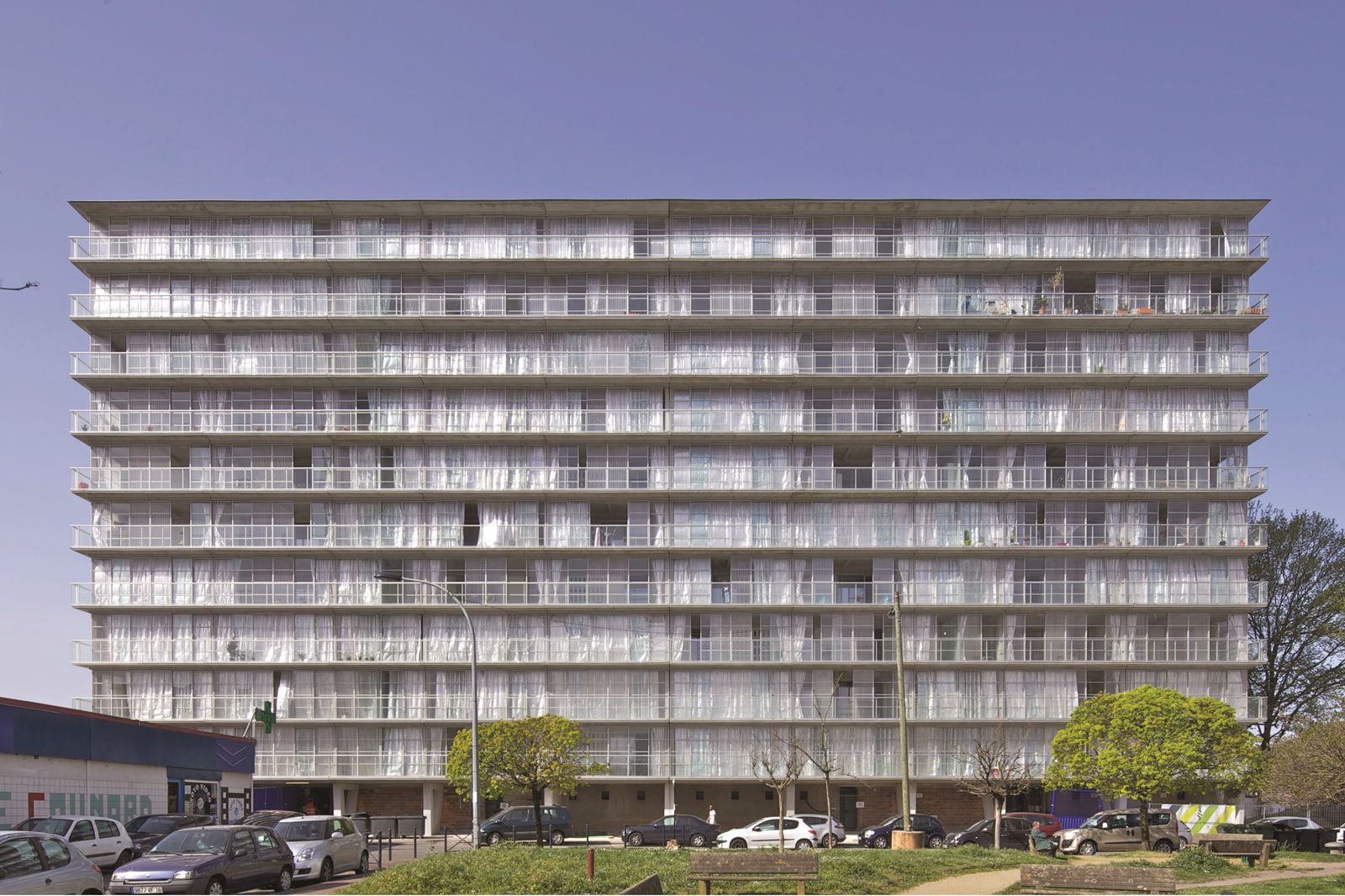
Photo: Supplied