
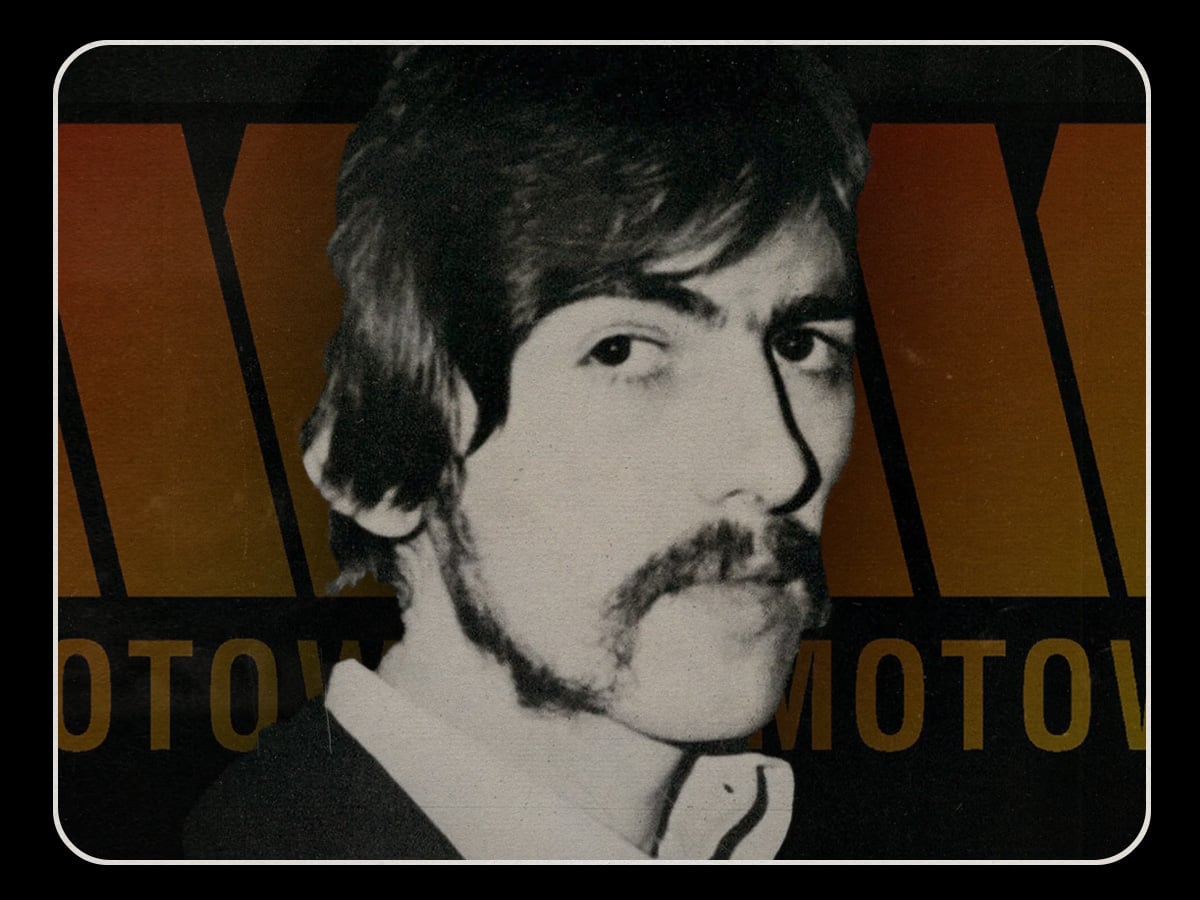
(Credits: Far Out / Bradford Timeline / Motown Records)
Sat 20 December 2025 16:00, UK
People think that the members of The Beatles, particularly George Harrison, were a law unto themselves in the 1960s, but that isn’t strictly true.
It does have certain aspects of salience. Put simply, you can’t ignore any part of culture within the decade without the influence of the Fabs creeping in somewhere, but that sometimes makes it seem like they were the only act of the decade worth mentioning, which is far from the case. What about The Rolling Stones, The Kinks, and The Who?
That’s only covering the British exports, too. When you crossed the Atlantic to America, it was a whole different ball game, with everything from The Beach Boys to The Monkees trying to have a shot at the rock and roll crown. But then you got to Motown, and the world seemed to spin on a completely different axis.
It’s where casual fans of The Beatles fail to understand the band as a whole, because to say that they were solely influenced by the Buddy Hollys and the Elvis Presleys of the world, with a bit of Merseybeat thrown in for good measure, only tells a small part of the story. Particularly when it came to George Harrison, his influences were as diverse and multicultural as they come.
“Personally, I think Indian music is where it’s at. There isn’t too much going on in Pop that I seem to like,” he later said, not really coming as any surprise to anyone, given the extent to which Indian culture permeated into the most prolific sections of the band’s back catalogue. But that was a long way off from where they started, when it was actually Motown that provided the holy grail.
“When the Beatles started off, our influences were Tamla-Motown and Chuck Berry, and that’s the music I still like,” Harrison continued. “My favourites are Smokey Robinson and Stevie Wonder.” The fact that the guitarist was The Beatles’ self-proclaimed special correspondent when it came to the cutting edge of the latest Stateside releases made the greatest sense, as he was most in tune with Motown.
But on top of this, it was clear that the band’s influence was reflected back into the spaces where they thought they were merely gleaning inspiration from, with Wonder being the most prominent example. The singer worked up a close relationship with the Fab Four after he delivered a storming cover of their 1965 hit ‘We Can Work It Out’ on his iconic 1970 album Signed, Sealed, Delivered, thus leaving the two endlessly entwined.
It speaks volumes about what can happen when two artists from completely different backgrounds and genres, but who are each as massive as the other, realise what they both have to offer. The Beatles cottoned on to the fact that a multicultural approach was their key to success very quickly, but this was mostly because genres like Motown were already leading the way.
In an age that was dominated by bands of every imaginable shape, size, and sound, it took a lot for The Beatles to actually admit to looking outwards. Yet it was always to their advantage and credit, as they found artists like Wonder and Robinson along the road. That meant a lot to them all, but you could see for Harrison that it took on an extra special significance.
Related Topics