
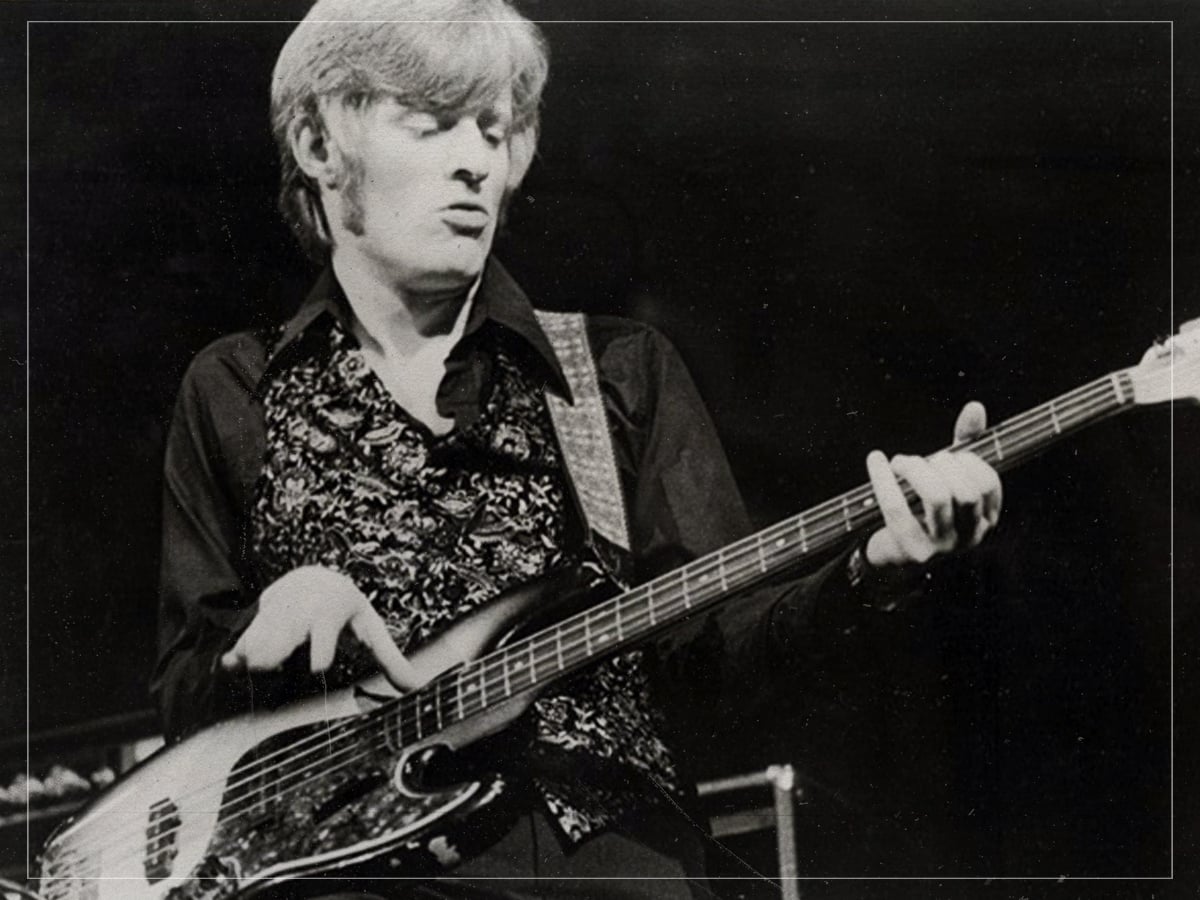
(Credits: Far Out / Led Zeppelin)
Sat 20 December 2025 16:30, UK
By the 1970s, there was no other band that could hope to match what Led Zeppelin had done.
All of the building blocks of hard rock were at their feet by the late 1960s, but from ‘Good Times Bad Times’ onward, they carved out their niche as one of the hardest-hitting rock and roll outfits the world had ever known. But for all of the great moments scattered throughout their history, John Paul Jones was always the sensible one, looking at how far the band was going to rise.
While Jonesy picked up the reputation as being the quiet member of the group more often than not, it’s not like he didn’t leave his mark when it came time to live. He was an absolute monster on nearly every single instrument you put in his hand, and when looking through some of his own masterpieces, his riffs were the ones that managed to keep the rest of the band on their toes, whether it was working on ‘Black Dog’ or keeping the groove going throughout ‘The Lemon Song’.
Everything was looking up for the band circa 1973, but it might have been going a little too well for Jones. He never anticipated being in a group of that stature, and when they started to reach beyond the level of bands like The Rolling Stones, he initially was looking to cut his losses and walk away from it all to become a choirmaster. While that would have been one of the greatest losses in music history, Jones did at least see a bit of a ceiling for Zeppelin.
Because as much as the band loved touring around the world and making one masterpiece after another, there were some limits that they put on themselves. Half of their appeal was the mystique they put into nearly everything they did, and while that did mean shying away from interviews from time to time, that didn’t matter so long as they kept delivering on every single album they made.
But compared to Zeppelin, Jones figured that The Beatles were in a whole separate category. The Fab Four were all distinct characters from the moment they stepped out onstage on the Ed Sullivan Show, and while not all of their tunes were meant to be absolute showstoppers, the chemistry that they had together was beyond anything that the Zeppelin could have ever fathomed at the time.
While Zeppelin got to the top through the power of their music, the key difference in Jones’s mind was that The Beatles had every basis of media covered, saying, “We were beginning to get quite a big following and the only other band we were comparable to, for them, was something like the Beatles — which wasn’t true because they were a household name and had television and films. We didn’t do any of that.”
And when they did finally decide to make a film, it’s not like they were looking to be the lovable goofballs that The Beatles were in their movies. The Song Remains the Same was a much different beast than A Hard Day’s Night, but it did at least give people a fair bit of insight into their career, even if it was intercut with fantasy sequences of everyone living out their medieval alter egos.
There was clearly some tongue-in-cheek humour in the way that Zeppelin marketed themselves, but perhaps the reason why Jones stuck around is because he knew he could still hide in some respects. The Beatles were never going to escape their status as the greatest band in the world, but Jones could put the Zeppelin legacy up on a shelf whenever he wanted to.
Related Topics
The Far Out Beatles Newsletter
All the latest stories about The Beatles from the independent voice of culture.
Straight to your inbox.