
(Credits: Far Out / Warner Bros. Records)
Sun 21 December 2025 20:30, UK
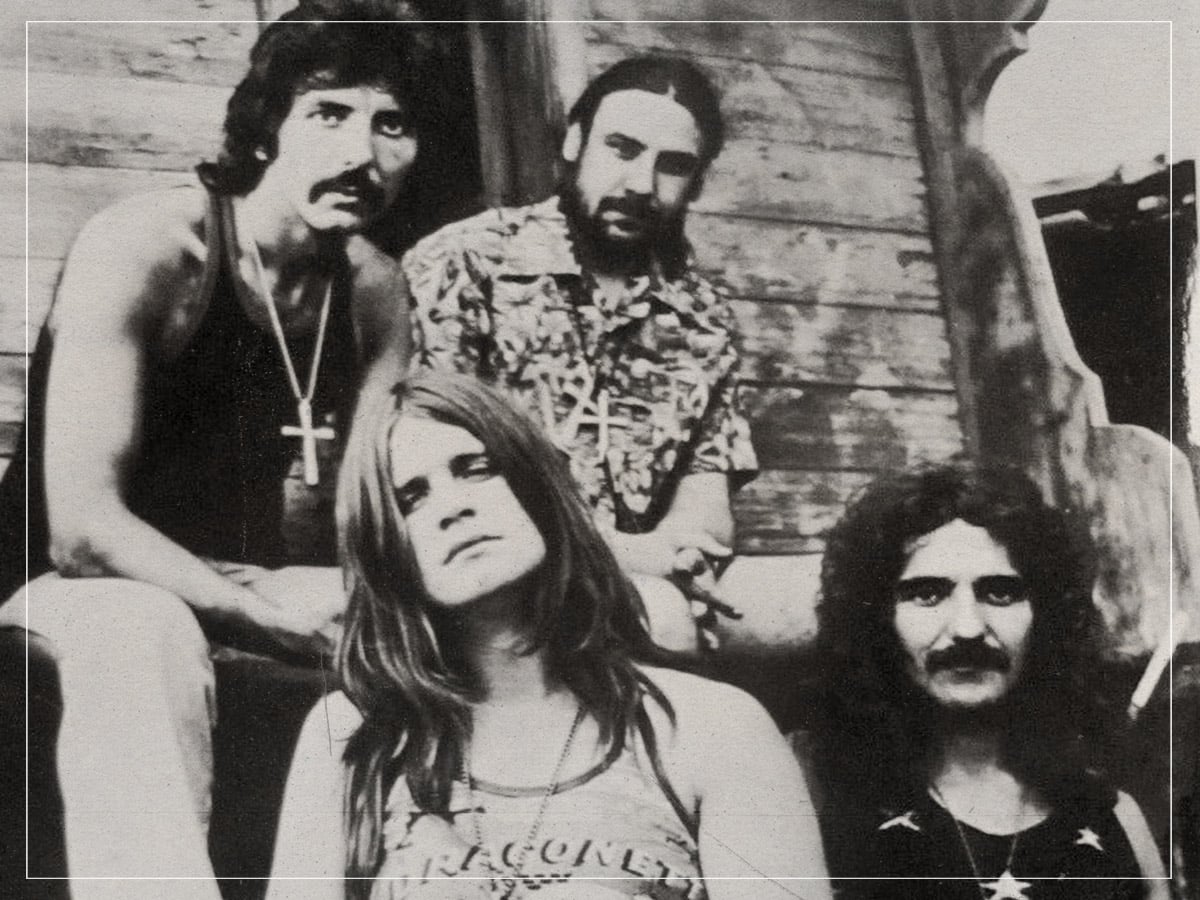
No one was ever going to come to a Black Sabbath record expecting a pick-me-up throughout every song.
This was the music that was made to scare the living daylights out of anyone, and judging by how much they brought up the sinister side of life, you had to be careful how often you played it around your grandmother for fear of potentially having her condemn your stereo system. But Ozzy Osbourne knew that playing music that sounded this scary and dangerous was all they could have ever hoped for.
I mean, think about where the band came from for a second. They had been from the streets of Birmingham, and while the rest of the rock and roll scene was talking about Flower Power and putting flowers into guns half the time, there was no way that they were going to feel the same way. They were watching kids getting beaten up outside those rehearsal room walls, so the last thing they were going to do was make sure that everything sounded chipper whenever they played.
At the same time, Osbourne wasn’t afraid to have a few melodic songs in the mix. He was a huge Beatles fan from the day he decided to pursue music full-time, and while a lot of his best vocals were pulled directly from the blues tradition half the time, he was more than happy to throw in a melody over the top that sounded vaguely reminiscent of what John Lennon and Paul McCartney were doing.
But looking at where they were in the charts at the time, it’s almost an anomaly that they were able to make such a dent in the charts to begin with. They had displaced Simon and Garfunkel at the top of the album charts when Paranoid came out, and when listening to the radio at the time, no one could have imagined hearing something as heavy as ‘Paranoid’ on the same stations that used to be play bands like the Carpenters.
It was weird, but it was also a good sense of variety. Sabbath never wanted to bother to tone down their sound for the masses, but even when they made ballads, they still had a bit of a strange edge to them. ‘Planet Caravan’ is absolutely haunting whenever it comes on, and while ‘Changes’ is the closest thing to a by-the-numbers pop song they ever made, there’s an almost-ghost-like quality to the way that Osbourne sings. It still had all the hallmarks of a ballad, but Osbourne said that they weren’t going to be infringing on Elton John’s territory.
Despite loving a lot of his songs, Osbourne felt that anything that the British piano legend played was forever outside of their wheelhouse, saying in 1972, “I’d like to do mellower stuff… but when I’m with Black Sabbath, I’m the fourth part of a jigsaw puzzle. We couldn’t do an Elton John type thing… it just wouldn’t work. It’s like Elton John going heavy. We just record what we feel is worth recording. If it’s a soft album… tough.” Then again, he probably didn’t realise how quickly he would have to eat those words.
Because by the end of Osbourne’s time in Sabbath, hearing Tony Iommi slowly start to get more keyboards thrown into the mix and trying to chase after what bands like Queen were doing wasn’t where Osbourne’s head was. He needed to move away from chasing trends, but even when striking out on his own, a song like ‘Goodbye to Romance’ is definitely coated with rock and roll dramatics that wouldn’t feel out of place on one of John’s records.
And considering that he and John would eventually work together years down the road for a few songs, Osbourne’s genre boundaries all but faded away over time. He knew that Sabbath needed to stay heavy, but as far as he was concerned, there wasn’t a single genre that was off the table for him so long as it sounded right whenever he sang it.
Related Topics