

Michaela Benthaus had wanted to leave the Earth’s atmosphere for as long as she could remember — at least since watching Star Wars as a child.
After finishing school in Bavaria she moved across the Austrian border to study mechatronics in Linz as preparation for a career in the space sector.
Then her other great obsession appeared to ruin everything: in 2018, on a downhill biking route in Spicak, Czech Republic, she crashed, damaged her spinal cord and lost the use of her legs. It was the day, she once said, that “I threw my life away”.
Seven years later Benthaus, now 33 and a European Space Agency engineer, has become the first paraplegic person and the first wheelchair user to visit space. “Honestly, that was the coolest experience of all time,” she said after a brief suborbital test flight arranged by the American company Blue Origin.
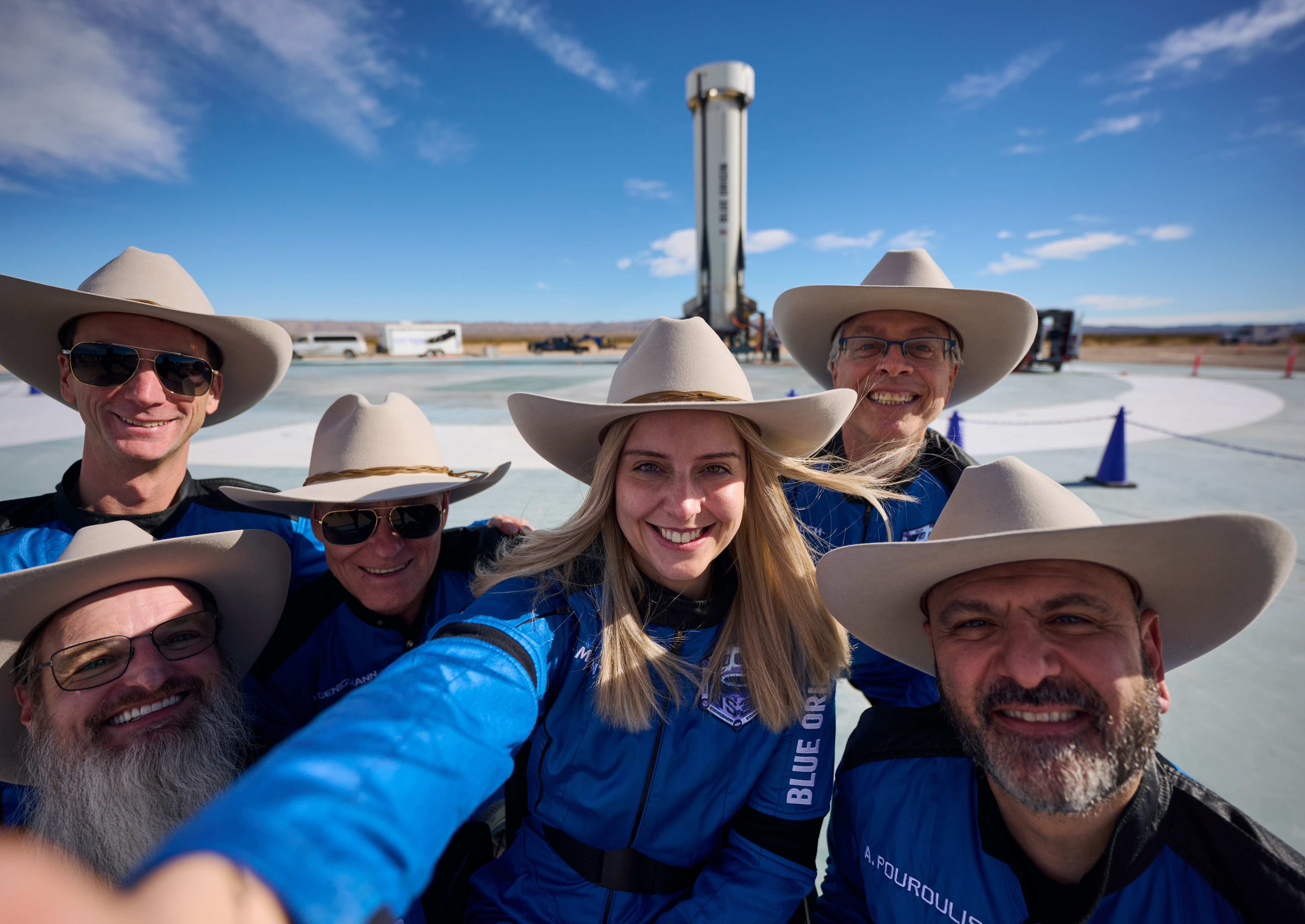
Michaela Benthaus and fellow astronauts
FELIX KUNZE
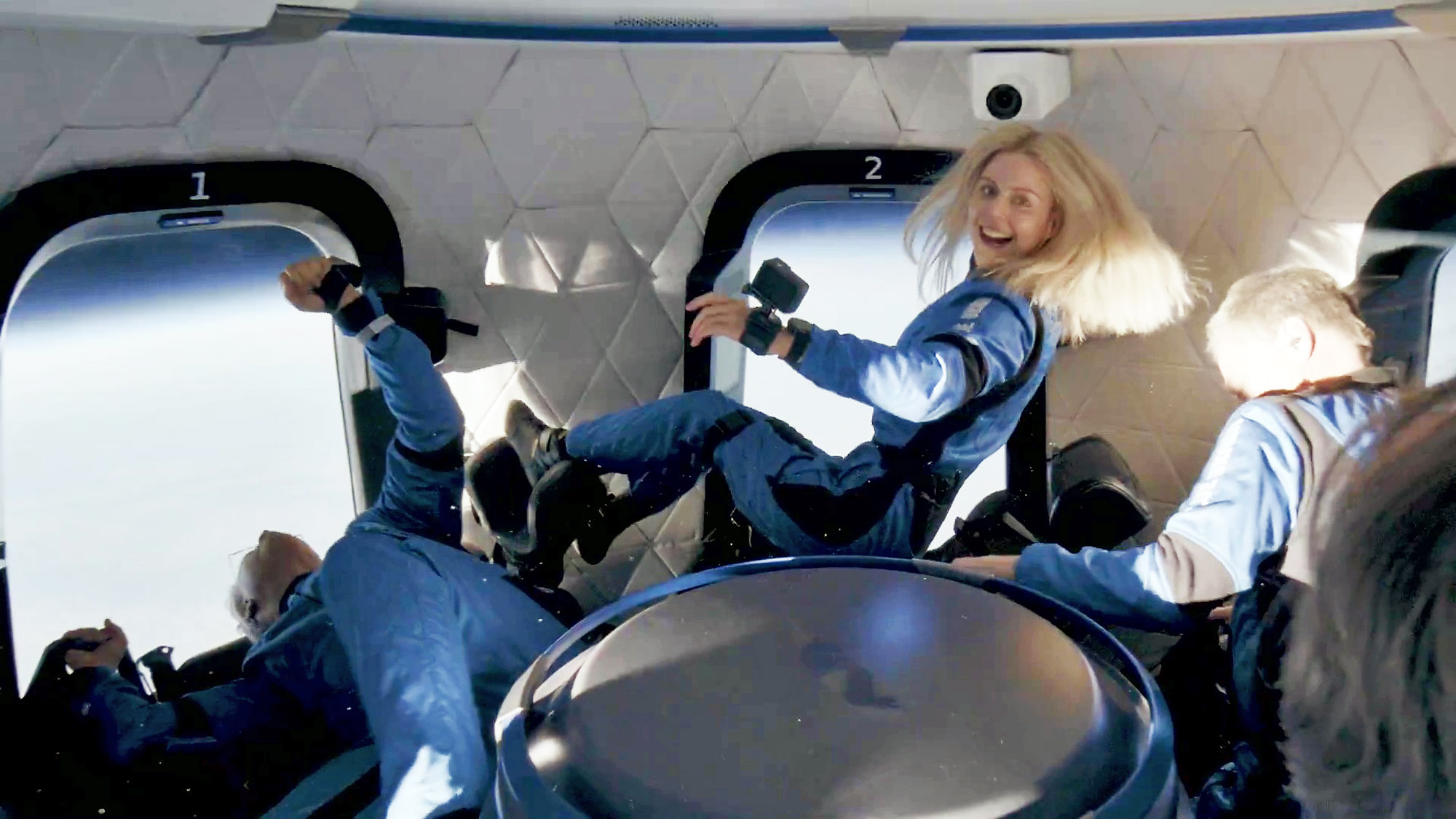
She laughed throughout the 11-minute ascent
It was the culmination of years of patient effort. After her crash she resumed studies at Linz and then took a master’s in aerospace engineering and astronautics at the Technical University of Munich, specialising in physics and Earth-monitoring satellites.
In 2022 she secured a place on a parabolic flight, a form of astronaut training that imitates microgravity, from Houston. Two years after that she took part in an “analogue” space mission at the Lunares research station in Poland, where crews are isolated in a space station simulator.
German engineer becomes first wheelchair user to go into space
The Blue Origin flight from the Texas desert was on a different level. In recent years the company, which was set up by the Amazon founder Jeff Bezos, has taken a series of unorthodox astronauts into space, including partially blind people, the pop star Katy Perry and a 90-year-old William Shatner, the actor who played Captain Kirk in Star Trek.
• William Shatner on going to space: ‘My grandkids said it was cool’
Benthaus’s trip was at least partly sponsored by Hans Königsmann, a distinguished German aerospace engineer who worked for almost two decades at SpaceX, Blue Origin’s main rival.
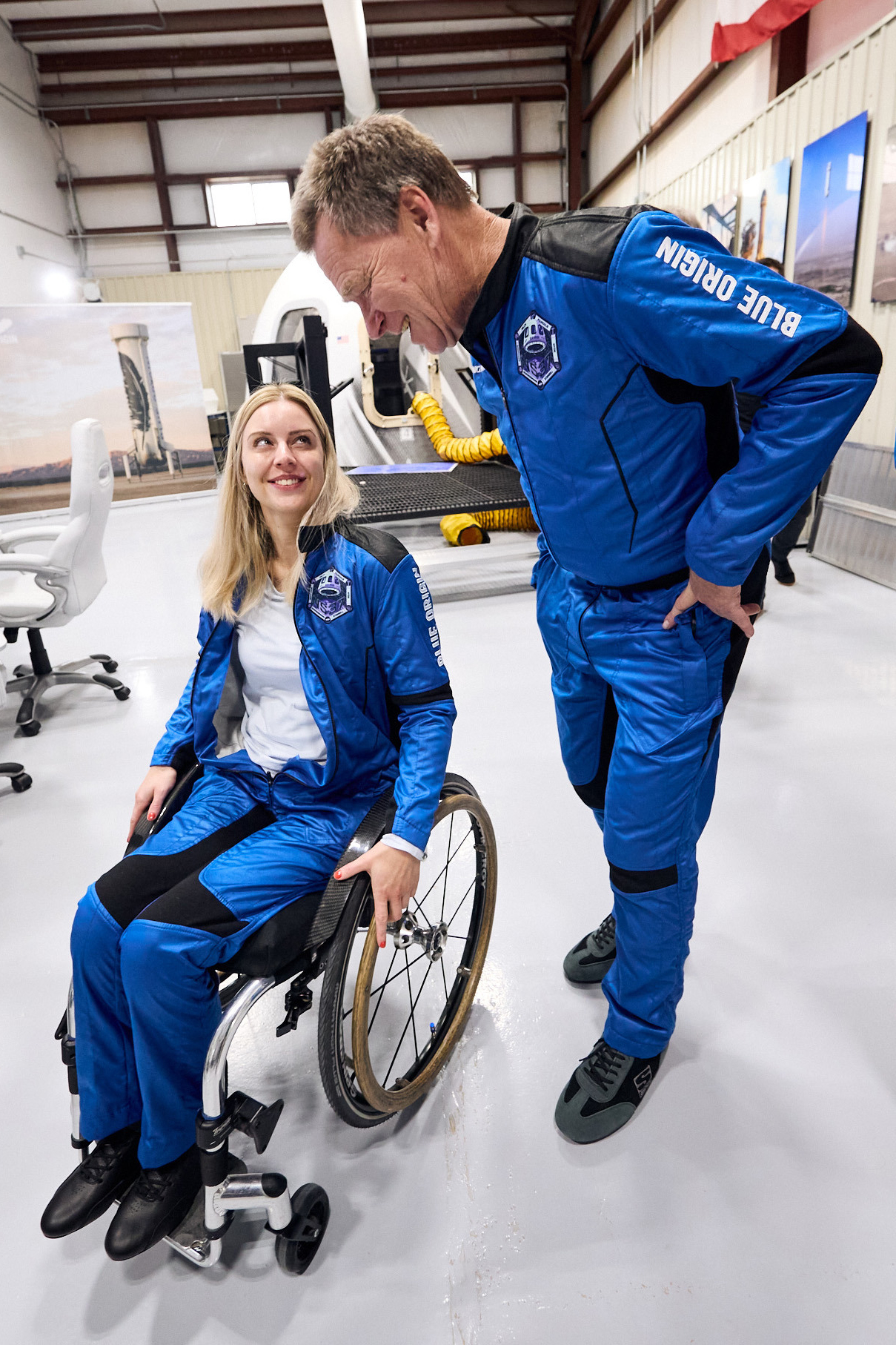
Michaela Benthaus and Hans Königsmann, who helped sponsor her flight and was one of the crew
BLUE ORIGIN VIA AP
“I thought my dream of going to space had ended for ever when I had my accident,” Benthaus wrote on LinkedIn before the flight. “But over the past few months, I’ve been working with an amazing and supportive team to make it possible for a wheelchair user to take part in a suborbital flight, something that’s never been done before … I might be the first, but I have no intention of being the last.”
The launch tower for Blue Origin’s New Shepard vehicle is already fitted with a lift but technicians added a patient transfer board — effectively a kind of lightweight bridge — so that Benthaus could slide from the entry hatch to her seat.
Over 11 minutes, the capsule rose to a height of 65 miles, just above the Karman line, which is generally held to mark the boundary of outer space. Benthaus said she had laughed throughout the ascent.