
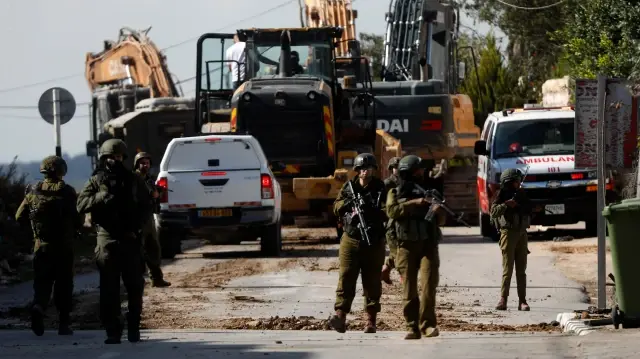
The United Kingdom has issued a formal condemnation of Israel’s decision to authorize the construction of 19 new settlements in the occupied West Bank. British Minister for the Middle East, Hamish Falconer, stated on social media that the settlements are illegal under international law and warned they risk undermining prospects for a long-term two-state solution between Israel and Palestine.
Details of the Israeli Settlement Plan
The condemnation follows an announcement by Israel’s far-right Finance Minister, Bezalel Smotrich, that the Cabinet had approved the proposal. This latest batch brings the total number of new settlements authorized by Israel in recent years to 69. The expansion of settlements on land captured by Israel in the 1967 war is considered illegal under international law by nearly the entire global community, and most world powers view them as a major obstacle to a negotiated peace based on two sovereign states.
Broader Context of International Law and Violence
Minister Falconer’s statement specifically cautioned that the move jeopardizes the 20 Point Plan, a framework associated with U.S. President Donald Trump aimed at ending the Gaza war and advancing regional diplomacy. The settlement expansion occurs amid heightened violence in the West Bank. According to Palestinian records, at least 1,102 Palestinians have been killed, nearly 11,000 injured, and approximately 21,000 detained by Israeli forces or settlers since October 2023. The move also directly contradicts a landmark advisory opinion issued by the International Court of Justice in July, which declared Israel’s occupation illegal and called for the evacuation of all settlements.
The Diplomatic Stakes and Future of Peace Efforts
The UK’s public rebuke highlights the growing diplomatic tension between Israel and some of its traditional Western allies over settlement policy. By framing the decision as a threat to the viability of a two-state solution—the long-standing bedrock of international peace efforts—the UK aligns itself with a broad consensus that views continued settlement growth as an act that pre-determines the outcome of any future negotiations on borders. This condemnation adds to the international pressure on Israel to halt such expansions, which are widely seen as entrenching the occupation and diminishing hopes for an independent Palestinian state.